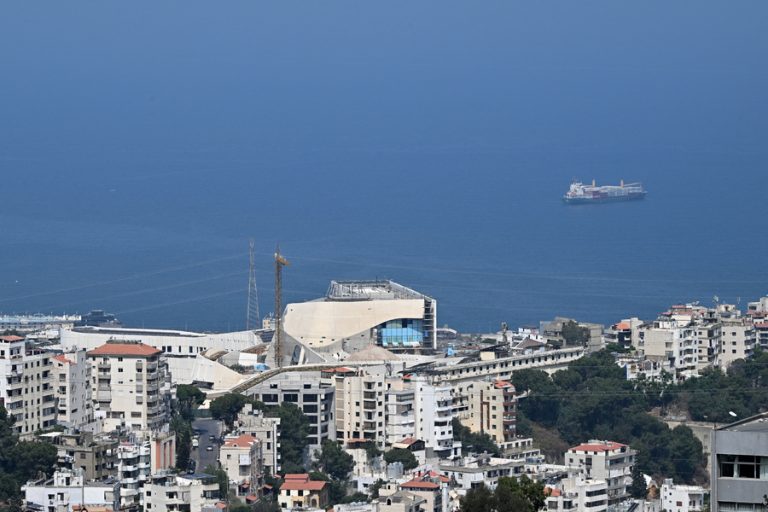
As U.S. warships and aircraft have been steadily deployed to the Middle East in preparation for a potential strike on Iran in the coming days, Washington on Monday, Feb. 23 evacuated dozens of non-essential personnel from its embassy in Lebanon.
According to The Guardian, amid rising U.S.-Iran tensions that could escalate into war, dozens of American personnel were evacuated via Beirut–Rafic Hariri International Airport to guard against potential Iranian retaliation. An estimated 30 to 50 U.S. embassy staff have left the country.
A senior U.S. State Department official said, “The State Department has ordered the departure of non-emergency U.S. government personnel and eligible family members from the U.S. Embassy in Beirut.” He added that the U.S. continues to assess the local security environment and, based on the latest evaluation, decided to reduce staff to essential positions only. “This is a prudent measure.”
The statement emphasized that the embassy is still operating normally, with core personnel remaining on duty. The arrangement is temporary, intended to ensure staff safety while maintaining operational capacity and assisting U.S. citizens in the area.
The U.S. and Iran are scheduled to hold the third round of indirect talks in Geneva on Thursday to discuss limiting Iran’s nuclear program. U.S. President Donald Trump previously stated he hopes to reach a “meaningful agreement” to prevent Iran from pursuing nuclear weapons, warning that failure to reach a deal would lead to “bad outcomes.”
Success
You are now signed up for our newsletter
Success
Check your email to complete sign up
U.S. officials have also warned that if tensions escalate further, Iran could launch missiles at U.S. embassies or military bases, or carry out asymmetric attacks through its regional proxy forces. In Lebanon, Iran-backed armed groups like Hezbollah are considered potential threats.

America’s past actions
In the past, the U.S. has evacuated personnel from embassies and military bases when preparing for potential armed conflict with Iran. In 2025, prior to strikes on Iran’s uranium enrichment and other nuclear-related facilities, the U.S. temporarily evacuated non-essential personnel from embassies in Iraq, Bahrain, and Kuwait.
Last week, Iran conducted joint military exercises with Russia and tested new anti-ship missiles. Iran could use these missiles to block the Strait of Hormuz, one of the world’s most important trade routes.
Trump’s envoy leading the U.S.-Iran negotiations, Steve Witkoff, said last Saturday that the president does not understand why Iran has not yet “yielded” in nuclear talks.
In an interview with Trump’s daughter-in-law, Lara Trump, Witkoff said, “I don’t want to use the word ‘frustrated,’ because he (Trump) knows he has many alternatives, but he is curious… why they have not yielded yet.”
He added, “The U.S. has deployed a substantial naval and maritime force in the region. Under this pressure, why have they not clearly stated they will not pursue nuclear weapons and outlined specific steps they are prepared to take? Yet it seems difficult to get them to that point.”
Reuters cited local sources saying the U.S. has also begun withdrawing some troops from military bases in Syria, seen as a move to reduce another potential Iranian target. However, the Trump administration denies that the Syria troop movement is related to a possible strike on Iran.
Currently, the U.S. has dispatched two aircraft carriers to the Middle East, along with dozens of fighter jets, combat vessels, and advanced equipment including AWACS planes. This is considered the largest U.S. military buildup in the region since the Iraq War. The second aircraft carrier, the USS Gerald R. Ford, has arrived near Souda Bay off Crete and will enter its deployment position in the coming days.

India urges citizens to leave quickly
Meanwhile, India has expressed deep concern over the situation. Fearing a potential U.S. military strike on Iran, the Indian government has asked its citizens in Iran to leave as soon as possible using all available means of transport.
According to the Central News Agency, India’s latest travel advisory notes that due to the rapidly changing situation in Iran, following the Jan. 5, 2026, security warning, Indian citizens—including students, pilgrims, businesspeople, and tourists—should depart promptly using all available transportation, including commercial flights.
The Indian embassy in Iran also urged all Indian nationals and people of Indian origin to remain highly vigilant, avoid areas where protests or demonstrations may occur, stay in contact with the embassy, and closely monitor local media updates. Citizens are advised to safeguard passports, visas, and other travel documents, and seek assistance from the embassy if needed.
Currently, the U.S. continues to strengthen its military presence near Iran, deploying ships, aircraft, and troops.
Iran has stated that it is prepared for any escalation and emphasized that diplomacy remains the path to resolving issues, rejecting any form of coercion. Iranian Foreign Minister Abbas Araghchi said he expects to meet U.S. envoy Steve Witkoff on Feb. 26, noting that resolving the nuclear issue through diplomacy “remains highly possible.”
In addition, Iran’s domestic situation remains volatile. Beyond the confrontation with the U.S., Iran has recently seen a new wave of anti-government protests, some escalating into clashes between pro- and anti-government groups, further complicating the situation.
By Gao Yun