By Shen Xue, Commentary
Since U.S. President Donald Trump began his second term, I’ve firmly believed that he’s attempting a fundamental correction of the flawed international order that emerged after World War II, particularly its structural tolerance of communist regimes, accommodation of terror networks, and the unchecked rise of far-left forces. At the same time, Trump is reversing what he sees as decades of globalization that eroded Western civilizational confidence.
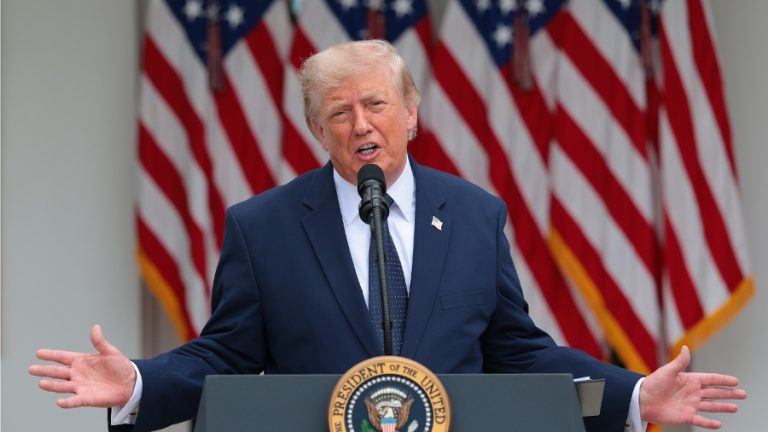
His latest State of the Union address laid out what can best be described as a comprehensive reconstruction of order, both domestically and globally.
RELATED: Trump Invokes Trade Act of 1974 to Sustain ‘Liberation Day’ Tariffs
A comprehensive reset
Domestically, Trump emphasized securing the border, combating crime, lowering drug prices, reducing taxes on tips and overtime, and lowering everyday consumer costs. These measures aim to deliver tangible benefits to working Americans while restraining large capital interests to prevent emerging industries from monopolizing public resources.
Success
You are now signed up for our newsletter
Success
Check your email to complete sign up
Internationally, he signaled a recalibration of alliances. A baseline 10 percent tariff, framed as a form of “entry fee,” would serve as the foundation of reciprocal trade relationships built on shared values. Toward adversarial regimes, the strategy shifts to maximum pressure—compel compliance or face decisive action, including asset seizures, financial isolation, and technological disruption.
Building a defensive ‘fortress economy’
Trump’s economic doctrine centers on constructing what could be called a defensive fortress economy. When the Supreme Court restricted presidential authority under the International Emergency Economic Powers Act (IEEPA) on February 20, Trump swiftly invoked Section 122 of the Trade Act of 1974, demonstrating his intent to preserve tariff leverage. The 10 percent tariff floor, he indicated, is merely a “moderate” starting point. Allies unwilling to adapt to a new trade order may face harsher terms.
He also proposed preventing large corporate entities, such as private equity firms, from purchasing single-family homes, declaring, “Homes are for people, not for companies.” The policy appeals directly to middle-class frustration over housing inflation while signaling a broader effort to curb what he describes as “internal colonization” by financial capital.
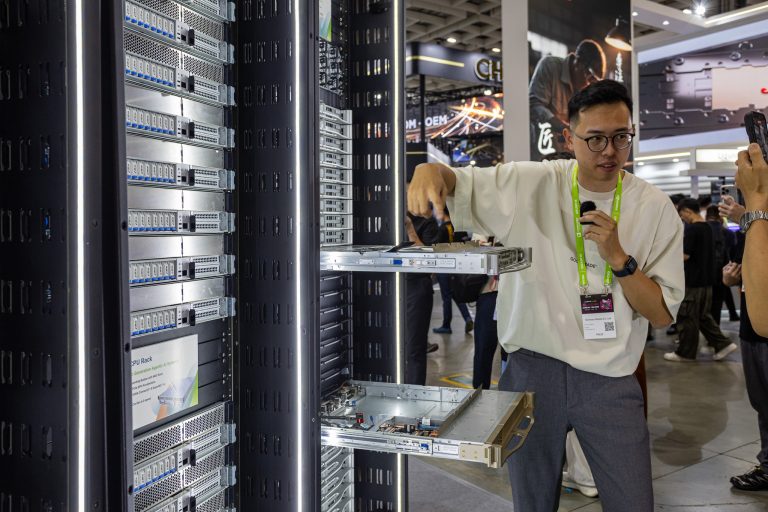
In energy and technology, Trump introduced a “Ratepayer Protection Pledge,” requiring major technology firms building AI data centers to construct their own power generation facilities rather than draw from public grids. The objective: shield ordinary consumers from cost transfers by corporate giants.
Perhaps most revolutionary was his suggestion that tariff revenue could eventually reduce reliance on income taxation. If realized, this would transform the United States from a nation primarily taxing domestic earnings to one taxing access to its market—a structural shift in fiscal philosophy.
He also announced that $18 trillion in capital had returned to the United States, attributing the influx to assertive policy measures. In this view, tariffs function not merely as trade tools but as instruments redirecting global capital flows.
Rebuilding the cultural contract
Trump framed governance as the defense of a cultural covenant. He declared that Vice President JD Vance would lead a “war on fraud,” targeting systemic abuse within federal programs. He openly challenged Democratic lawmakers, asserting that government’s first duty is to protect American citizens rather than illegal immigrants.
On border security, Trump stated that the United States now has the “most secure border in history,” claiming that over the past nine months there were “Zero illegal aliens admitted.” In his argument, a nation unable to control its borders becomes vulnerable to infiltration by authoritarian adversaries.
He designated fentanyl a “weapon of mass destruction” (WMD), asserting that cross-border flows had declined by 56 percent. This classification expands military authority to intercept related shipments globally, framing narcotics trafficking as a national security threat.
In one of the address’s most emotional moments, he invited families of victims of crimes committed by illegal immigrants and challenged Democratic lawmakers: “If you agree that the first responsibility of the American government is to protect American citizens, not illegal immigrants, please stand.” Republicans stood and applauded; Democrats remained seated.
He also invited the daughter of Hong Kong media founder Jimmy Lai to attend, linking Lai’s case to U.S.-China relations and trade negotiations. The gesture signaled a shift away from separating human rights from trade policy. Education reform formed another pillar. Trump advocated nationwide school choice, arguing that restoring parental authority in education is essential to safeguarding civilizational foundations.
Counterterrorism and de-communization
The speech outlined operations targeting hostile regimes. Trump referenced “Operation Absolute Resolve,” under which Nicolás Maduro was captured and 80 million barrels of Venezuelan oil were seized. He framed the move as dismantling a strategic energy hub tied to Beijing. He also described dismantling Southeast Asian “shadow banking” and fraud networks that functioned as offshore laundering channels.
Technological initiatives such as Freedom.gov were presented as tools to circumvent authoritarian information controls. Meanwhile, the proposed “Golden Dome” missile defense system, spanning land, sea, air, and space, aims to neutralize nuclear and missile threats.
Toward Iran, Trump issued what he called a final deadline in early March, asserting that U.S. forces had already destroyed Tehran’s nuclear facilities, an example of a “strike first, negotiate later” doctrine. Trump’s 1 hour and 48 minute address amounted to what could be described as a civilizational recalibration plan. Through tariffs, military leverage, cultural policy, and financial disruption, he seeks to reengineer the postwar global framework.
From the outset of his second term, I have maintained that Trump intends to correct the inherent flaws of the post–World War II order, particularly its accommodation of communist regimes and extremist forces, and to reverse what he views as globalization’s corrosive effects on Western civilization.
Editorial note: Views expressed in this article are the opinions of the author and do not necessarily reflect the views of Vision Times.