On Monday, March 2 the New Taiwan National Policy Think Tank held a diplomatic research roundtable titled “Japan-China Conflict and Taiwan Contingency.” Several experts, scholars, and political figures attended. Some scholars emphasized that Taiwan must first “grow up” and take care of itself, so Japan need not worry, which would allow Taiwan-Japan partnership to deepen and last.
On March 2, the New Taiwan National Policy Think Tank held the diplomatic research roundtable in Taipei. The forum was hosted by Chen Zhizhong, CEO of the think tank, with a keynote report by Lin Quanzhong, Distinguished Researcher at the University of Tokyo’s Institute for Advanced Studies on Asia. Multiple scholars were invited, attracting coverage from several Japanese media outlets.
According to Central News Agency, Lin Quanzhong noted that since Japan and China established diplomatic relations in 1972, almost every conflict has eased by the following year, except in 2012 when it took two years to restore exchanges. He preliminarily speculated that this current tension would likely resolve within two years.
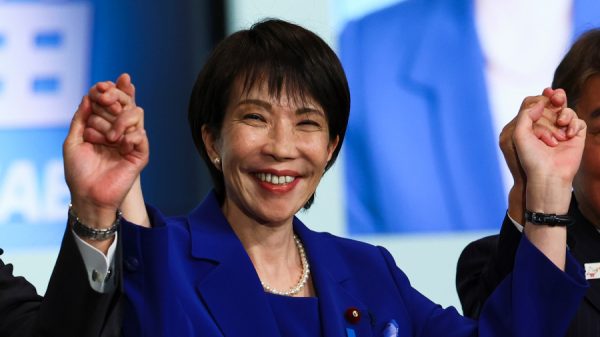
Lin also pointed out that although the Japan-China conflict shows no immediate sign of ending, observers can watch the Asia-Pacific Economic Cooperation (APEC) summit in Shenzhen later this year, particularly the interactions between Chinese leader Xi Jinping and Japanese Prime Minister Sanae Takaichi. Takaichi still hopes for stable Japan-China relations, as it benefits Japan’s overall national interests.
Regarding Taiwan-Japan cooperation, Lin suggested:
- Substantial progress in the Taiwan-Japan Economic Partnership Agreement (EPA), which could boost AI chip production.
- Collaboration on secure, non-Red supply chains for economic security.
- Institutionalized parliamentary exchanges.
- Deepening of security dialogue mechanisms.
Success
You are now signed up for our newsletter
Success
Check your email to complete sign up
Taiwan must ‘grow up’
Su Ziyun, Director of the National Defense Strategy and Resources Institute, stated that Taiwan and Japan share values, interests, and threats. If Taiwan were absorbed by China, Hualien would become China’s Eastern Theater Hualien Base, allowing Chinese forces to immediately block Western Pacific shipping—an existential problem for Japan. He stressed that China’s threat affects not only Taiwan’s survival but also regional stability.
Su noted that unlike Ukraine or Israel, Taiwan benefits from the wide Taiwan Strait, making it easy to defend and hard to attack. Still, Taiwan must first take care of itself and not make Japan worry to allow the Taiwan-Japan partnership to deepen and last. Reflecting on the 1996 Taiwan Strait missile crisis, he said Taiwan must “grow up,” which hinges on Taiwan’s determination for self-defense, urging Taiwan’s legislature not to disappoint its people.

Taiwan-Japan as an equal partnership
Jing Yuanzhou, adjunct professor at Tamkang University’s Institute of International Affairs and Strategic Studies, stated that historically, Japan-China relations “never got too bad,” usually improving after a year or two. This time, however, the tension is different due to the widening power gap between China and Japan, leading Xi Jinping to adopt more hardline measures. Post the U.S.-China leaders’ meeting in April, the development of Japan-China relations is worth watching.
Jing also noted that Prime Minister Takaichi currently enjoys the highest public mandate in history. If Taiwan-Japan relations cannot improve or achieve breakthroughs in security cooperation during her term, it’s unlikely future Japanese leaders will succeed either.
Democratic Progressive Party legislator Chen Guanting said that from the 2000s to 2010s, Taiwan-Japan narratives lacked agency, and hopes that Taiwan will develop relations on its own compass going forward.
On security cooperation, Chen emphasized that Taiwan and Japan are equal partners. Taiwan’s influence grows while Japan needs Taiwan for the first island chain, and Taiwan also needs Japan. With Japan’s defense investment gradually approaching 2 percent of GDP, there is potential for Taiwan-Japan collaboration in low-orbit satellites and unmanned vehicles.
Japan-China relations won’t improve, but no major war expected
Dong Liwen, CEO of the Asia-Pacific Peace Research Foundation, stated that Xi Jinping will continue a Cold War-style confrontation with Japan. Since 1990, Japan-China conflicts have become structural, encompassing historical, territorial, economic, and social issues. In China’s strategic view, there is only China-U.S. relations, not China-Japan—“deal with America, then deal with Japan”—based on comparative strength.
He added that after Takaichi’s remark on November 7 last year, “If Taiwan has a problem, Japan has a problem,” China applied compounded pressure on Japan. A month later, Xi apparently recognized that China’s two objectives toward Japan had failed.
Dong concluded that Japan-China relations will not improve but a major war is unlikely. One indicator to watch is whether the two countries sign an arms-limitation treaty, demonstrating genuine reconciliation.
By Li Jingyao