Interview by Xiao Ran, Vision Times
At the 2026 Winter Olympics in Milan, Italy, 20-year-old American figure skater Alysa Liu (Liu Meixian) captured gold in both the women’s singles and team events, ending a 24-year drought for the United States in Olympic women’s figure skating. Her victory made her a national hero in the U.S. while drawing widespread praise and attention among Chinese communities worldwide.
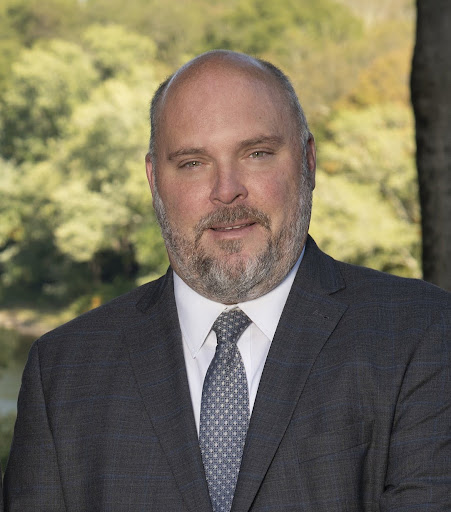
Behind her success stands her father, Arthur Liu (Liu Jun) — a lawyer and former participant in the 1989 Tiananmen Square pro-democracy movement who later fled to the U.S. In an exclusive interview with Vision Times, Liu reflects on his daughter’s Olympic triumph, her unexpected retirement and comeback, and how Chinese Communist Party (CCP) operatives attempted to monitor his family prior to the 2022 Beijing Winter Olympics. The following is Part 1 of the interview:
The road to gold
Vision Times reporter Xiao Ran: At the 2026 Milan Winter Olympics venue, you brought your family to watch Alysa complete her free skate and ultimately win gold. What were your feelings at that moment?
Arthur Liu: “I was extremely excited and very happy for Alysa, because her free skate was truly perfect. Whether it was the jumps, spins, or every other element, she executed them flawlessly.” Liu described watching the event in person as emotionally intense. Alysa entered the free skate trailing two highly ranked Japanese competitors after the short program.

Success
You are now signed up for our newsletter
Success
Check your email to complete sign up
“Watching on site, our hearts were racing with excitement,” Liu said. “There were still two very strong Japanese skaters, and their short program scores were a bit higher than hers.”
As the results unfolded, the family realized Alysa had secured at least a bronze medal. When the final competitor finished and the scores confirmed her victory, the tension finally lifted. “So step by step, we were right there on site, truly in a state of extreme tension, paying close attention to every skater and every move.”
RELATED: Olympic Skier Eileen Gu Learns of Grandmother’s Passing After Gold Medal Win
When the American flag was raised during the medal ceremony, Liu said the moment carried deep significance. “When she won the championship and the American flag was raised, I was incredibly moved because Alysa had reached the peak of her athletic career. On the sacred Olympic stage, winning gold is a tremendous honor.”
Her victory also ended more than two decades without a U.S. Olympic champion in women’s singles skating. “It broke the 24-year drought for U.S. women’s singles gold, so the whole country cheered for her, and everyone was thrilled.”
Achieving her Olympic dreams
Vision Times: As Chinese immigrants in the United States, many people feel proud seeing Alysa win Olympic gold. How do you view this achievement?
Arthur Liu: “I came to the U.S. 36 years ago and started everything from zero.” He described the long journey from newly-arrived immigrant to practicing lawyer and father supporting a world-class athlete. “Then school, passing the bar exam, becoming a lawyer. I’ve been a lawyer for almost 30 years now.”
Raising an elite figure skater, however, required enormous sacrifice. “Figure skating is an extremely expensive sport,” he said. “15 years ago, many coaches already charged over $100 per hour.”
Even with a professional career, supporting Alysa’s training was financially difficult. “Although as a lawyer I earn a decent living, paying such high training fees was still very difficult. So I lived with my five children in a one-bedroom, one-living-room apartment, and the kids and I slept on three bunk beds.”
RELATED: China ‘Outsources’ Transnational Repression, Triggering Calls for Action
Despite the hardship, Liu said the family still remembers those early years with a sense of nostalgia. “Sometimes Alysa still misses that time… Kids just like to have fun, I guess.”
Recognizing Alysa’s extraordinary talent
Vision Times: When did you realize your daughter had exceptional skating talent?
Arthur Liu: “Back when she was eight or nine, she could already do a double Axel.” In figure skating, jumps range from single rotations to triple and quadruple jumps. Landing a double Axel at such a young age is rare. “At 10, she competed in the U.S. intermediate women’s nationals and won first place, becoming the youngest intermediate women’s champion,” said Liu. “That’s when I realized she truly had talent.”
Training quickly intensified. “At 11, she could do triple jumps in combination,” said Liu, “Her technique had already reached the level of adult women worldwide.” Her achievements only continued to reach new heights from there, said Liu.
- At 12, she won the U.S. junior women’s title.
- At 12, she also landed a triple Axel at the Asian Cup in Thailand.
- At 13, she became the youngest U.S. women’s national champion.
- By 14, she had landed quadruple jumps.
“She was incredibly talented in jumps,” Liu said. To support her development, he arranged training with many of the world’s leading coaches. “I spared no money or time; I even took her to Japan and Canada to study.”
Rigorous training
Elite figure skating required a relentless training schedule. “Yes, back then she trained seven days a week,” Liu said, adding, “Monday to Saturday, at least three or four hours on ice each day, and weekends at least one hour.” The intensity was necessary to maintain technical consistency. “The coach was worried that if she didn’t train, she’d forget the jumps.”
After winning Olympic gold, Alysa told reporters she did not focus on medals or rankings — a comment that surprised many fans. Her father believes the mindset is key to her success. “She really doesn’t care about rankings or medals,” Liu said. Instead, he said she focuses on the experience of performing. “She emphasizes the process, the journey,” said her father.
In competitions, she aims to deliver her best performance for the audience. “If I can deliver two perfect short programs and free skates for the audience, she’s satisfied.” That mindset also reduces pressure. “With that mindset, she’s extremely relaxed — her jumps are bigger, higher, her movements more extended, her skating speed faster.”
Liu also pointed to her remarkable comeback as evidence. “After training for just six or seven months, she won the World Championship.” Returning to elite competition after two years away from the sport is nearly unheard of. “Coming back and immediately winning worlds is unprecedented, simply unbelievable.”
A shocking retirement
After the 2022 Beijing Winter Olympics, Alysa Liu unexpectedly announced her retirement. The decision, Liu said, stemmed from multiple factors. “There were many factors in her retirement, I can’t go into every detail right now,” he said.
One factor was coaching changes. But another issue, he says, involved surveillance connected to the Chinese Communist Party (CCP). “Before the Beijing Olympics, the CCP sent spies to track me, gather intelligence on me [by] planting bugs in my car, coming to my home, even impersonating the U.S. Olympic Committee to demand our passports,” said Liu.
According to Liu, the operative was an American hired by Chinese authorities. “Yes, a white person,” he said. “He was hanging around near my office… and came to my home.”
When Liu learned the individual was approaching his house, he immediately relocated his daughter away from the Bay Area. “Sometimes it feels just like a movie,” he said. The experience contributed to Alysa’s decision to step away from the sport after the Olympics.
Standing up for human rights
Liu’s own political history also shaped the environment in which Alysa grew up. A participant in the 1989 Tiananmen Square democracy movement, Arthur Liu said he began sharing those experiences with his daughter when she was entering adolescence.
“Around when she was 11 or 12, I told her about my personal experiences — why I left the mainland, what role I played in the 1989 democracy movement, organizing student marches and demonstrations demanding democracy and freedom, etc.”
According to Liu, Alysa reacted with curiosity and pride when learning about her father’s activism. “After hearing it, she thought, ‘Dad’s experiences are so wild and cool.’” He added that growing up in the United States meant democratic values were already part of her daily life.
“In the U.S., freedom and democracy are everyday things… You can criticize whoever you want, that’s a basic human right that can’t be taken away.” The family’s awareness of political issues extended beyond history. Liu said Alysa also paid attention to contemporary human rights concerns in China. “In 2018, I remember she reposted news reports on her Instagram about the Chinese government having concentration camps in Xinjiang… So you can see she does care about human rights.”
RELATED: State-Led Matchmaking for Chinese Soldiers Revives Controversial Xinjiang Legacy
Liu believes such public expressions may have drawn the attention of Chinese authorities. “The CCP may have paid more attention to her… I think that’s one reason why before the 2022 Winter Olympics, the Communist Party went to great lengths to send spies to collect intelligence on me and her.”
Liu also revealed that representatives connected to China had previously contacted the family about Alysa potentially competing for China. “There was contact… But my attitude was very clear.”
He said his refusal was rooted in political principle. “For such a big country, not allowing people basic freedom of speech… no amount of money would make me betray my own beliefs and let her represent China (the CCP) at the Olympics. That’s my stance.”
Life after skating
During her two-year retirement, Liu said his daughter wanted to experience a normal teenage life. “She wanted to live a normal teenager’s life: getting her driver’s license, attending concerts, climbing the Himalayas, going to UCLA for college.”
Since she had been homeschooled from sixth grade onward, attending university in person allowed her to experience everyday life with peers. But her return to skating began almost accidentally.
In early 2024, Liu took the family skiing. “Skiing is so fun, it reminds me of how skating felt,” Alysa told friends afterward. Encouraged by them, she decided to try skating again. “In the first hour on ice, she landed a double Axel; in the second hour, triples,” said Liu, “It was as if she had never stopped skating.”
Her father initially didn’t even know she was planning a comeback. “Parents are often the last to find out.” Eventually she visited his office to share the news. “She said, ‘Daddy, I have something to tell you in person,’ I’ve decided to come back to skating.'”
Liu’s response was calm. “I said, ‘Okay… do what you want.’ But inside I was very happy.”
Blazing her own path
Looking back, Liu says the most important lesson he learned was not forcing his daughter to continue skating. “Even if I’m sad, I have to respect her choice.” Athletes must have their own motivation, he said. “If parents, friends, or coaches force her, it backfires.”
He believes allowing her to choose her own path ultimately made her comeback possible. “When she came back on her own, she had motivation.”
After the Olympics, Alysa Liu quickly resumed skating exhibitions and media appearances. Her father says he barely sees her schedule anymore. “I see her news online just like everyone else.” When asked whether she plans to compete at the 2030 Winter Olympics in France, Liu said she appears interested. “She said she loves France, so she really wants to go.”
“So I guess she’ll keep skating,” said Liu.