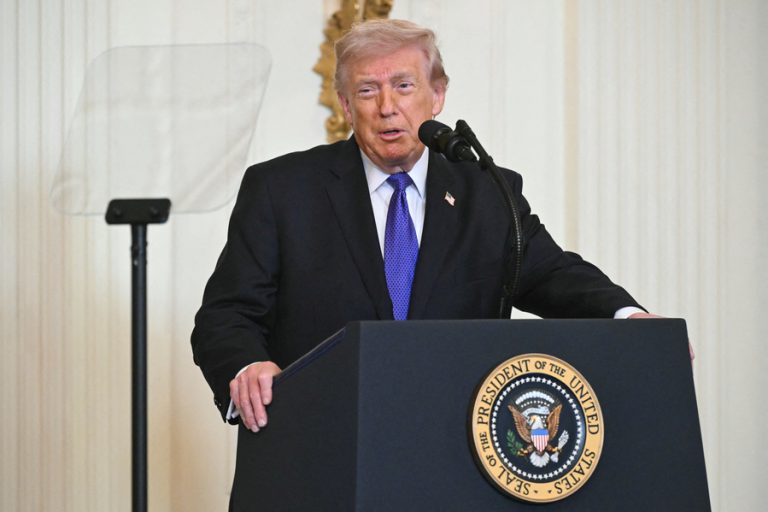
With Operation Epic Fury still underway, President Trump directed Secretary of State Marco Rubio to handle Cuba negotiations and said he must personally approve Iran’s next leader. He rejected the prospect of Khamenei’s son taking power and disclosed that Washington already has candidates in mind.
In a CNN interview on March 6, Trump indicated that Cuba is the next regime in his crosshairs.
“They really want to make a deal, so I’m going to let Marco handle things over there and we’ll see what happens. We’re focused mainly on this one thing right now,” Trump said, referring to the Iran campaign while signaling that Cuba is next in line.
“I’ve been watching this for 50 years. Now it’s landed right in my lap, because of me, it’s collapsed. Anyway, it’s landed in our laps, and we’re doing very well with it,” Trump added.
Cuba has been a persistent irritant in American foreign policy since 1959, when Fidel Castro led a revolution that toppled the U.S.-backed dictator Fulgencio Batista. The relationship deteriorated rapidly. A CIA-backed invasion by Cuban exiles at the Bay of Pigs in 1961 failed spectacularly, providing Castro’s government with a rallying point for domestic support. Soviet leader Nikita Khrushchev subsequently stationed nuclear missiles on the island, triggering the Cuban Missile Crisis and placing the country at the center of Cold War tensions.
Success
You are now signed up for our newsletter
Success
Check your email to complete sign up
The United States imposed a comprehensive economic embargo on Cuba that has remained in place, with modifications, for more than six decades. The United Nations has repeatedly condemned the embargo.
Under President Barack Obama, relations briefly thawed in 2015. Some travel restrictions were eased, and trade permits were loosened. The shift attracted foreign investment and appeared to signal a new chapter. That changed when Trump won the presidency in 2016. He reimposed and strengthened the embargo during his first term beginning in 2017, and has tightened restrictions further since returning to office in 2025.
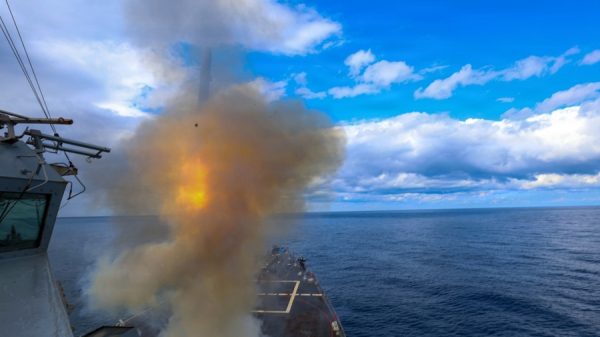
Trump demands Iran’s unconditional surrender and promises economic rebuilding
Earlier on March 6, Trump posted on Truth Social: “There will be no deal unless Iran surrenders unconditionally!”
He continued: “After that, and after choosing a great and acceptable leader, we and many brave and wonderful allies and partners will work tirelessly to bring Iran back from the brink of ruin, and to make it bigger, better, and stronger economically than ever before.”
Trump signed off with the slogan: “MAKE IRAN GREAT AGAIN, MIGA!”
The post formalized a position Trump has maintained throughout the conflict: total capitulation, with no room for a negotiated settlement or ceasefire.
Trump says he must personally approve Iran’s next leader
According to reports from The Hindu and Iran International published on March 4, Trump indicated that he favors a leader from within Iran’s existing power structure over an exiled opposition figure. He acknowledged former Crown Prince Reza Pahlavi as a possible candidate but expressed a preference for someone currently inside Iran who commands domestic support.
On March 5, Trump went further, stating explicitly that he must participate in selecting Iran’s next leader. He rejected the prospect of Mojtaba Khamenei, the late supreme leader’s son, assuming power.
“They’re wasting their time. Khamenei’s son is a nobody. I have to be involved in this appointment, just like with Delcy Rodriguez in Venezuela,” Trump told Axios. He was referring to Rodriguez’s installation as interim president after the United States captured Venezuelan president Nicolás Maduro.
Trump made clear that Washington will not accept any successor who continues Khamenei’s policies.
In a phone interview with NBC, Trump said: “We want to go in and clean everything up.” He added: “We don’t want somebody who’s going to take 10 years to slowly rebuild.”
Trump said the United States already has candidates in mind who “would do a great job,” though he declined to name them. He also disclosed that the U.S. is taking steps to ensure those individuals survive the current fighting.
“We’re watching them,” Trump said.

The CCP’s alliance network keeps shrinking
Trump’s comments on Cuba and Iran fit into a pattern that has defined his second term. Venezuela’s government was toppled earlier in 2026. Iran’s theocratic regime has been destroyed. Cuba, the oldest surviving communist state in the Western Hemisphere, now faces a president who says its collapse is imminent and has assigned his secretary of state to manage the transition.
For the CCP, the implications are direct. Each regime in Beijing’s network of authoritarian partners that falls or weakens reduces the CCP’s global strategic depth. Iran was a key energy supplier and Belt and Road partner. Venezuela was another oil source. Cuba has been an ideological ally and intelligence-sharing partner for decades. The sequential erosion of these relationships leaves the CCP increasingly isolated alongside Russia and North Korea, with fewer options for circumventing Western economic and diplomatic pressure.
Trump’s willingness to combine military force, economic leverage, and personal involvement in regime transitions signals a posture that treats authoritarian governments as problems to be solved. The CCP, watching its partners fall one by one, has every reason to take that signal seriously.
By Gao Yun