By Li Muzi, Vision Times
On March 9, fuel prices across China rose sharply, triggering mass panic among motorists and long lines at gas stations nationwide as drivers rushed to fill their tanks before the increase took effect.
The price adjustment, driven in part by rising global oil prices amid escalating tensions and strikes on Iran in the Middle East, quickly became a trending topic on Chinese social media platforms. Hashtags such as “fuel price adjustment” and “oil prices surge” climbed to the top of Weibo’s trending lists.
RELATED: Iran Strikes Signal New Phase in US Strategy Toward China, Indo-Pacific Region
Prices surging at the pump
According to China’s National Development and Reform Commission (NDRC), domestic gasoline and diesel prices increased at midnight on March 9 under the country’s current fuel pricing mechanism. The agency announced that gasoline prices would rise by 695 yuan per ton, while diesel would increase by 670 yuan per ton.
Success
You are now signed up for our newsletter
Success
Check your email to complete sign up
China’s official news agency Xinhua reported that global oil prices climbed sharply during the latest adjustment cycle, with analysts attributing much of the volatility to developments in the Middle East. The NDRC’s Price Monitoring Center stated that geopolitical shifts in the region are expected to remain the most significant factor influencing global oil prices in the near future.
Other Chinese media outlets, including Red Star News and Fast Technology, reported that international crude oil futures recorded one of their largest weekly increases since modern records began in the 1980s and early 1990s.
Long lines to fill up
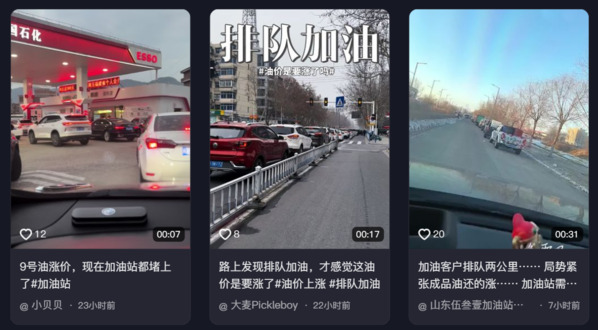
With the price hike looming, many drivers rushed to gas stations before the adjustment took effect. Videos circulating on Douyin, China’s version of TikTok, showed long lines of vehicles stretching far beyond station entrances. In some cities, the waiting vehicles formed traffic queues extending onto nearby roads.
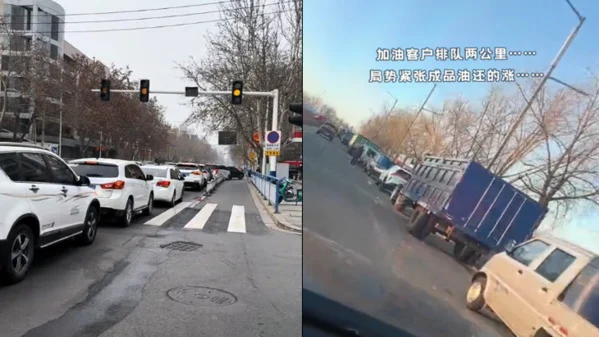
In certain locations, drivers reportedly waited in lines stretching nearly two kilometers. Local residents described the scenes as overwhelming. “Cars everywhere, it’s like a sea of vehicles,” wrote one user on Douyin. Another commenter joked that gas stations had effectively turned into “large parking lots.”
The adjustment represents the largest fuel price increase since March 2022. After conversion to retail prices, the increase translates to approximately:
- 0.55 yuan per liter for 92-octane gasoline
- 0.58 yuan per liter for 95-octane gasoline
- 0.57 yuan per liter for diesel
Following the adjustment, prices for 92-octane gasoline in many regions are approaching or exceeding 7.5 yuan per liter, while 95-octane gasoline in some areas has entered the “8-yuan era.” For a typical private vehicle with a 50-liter fuel tank, filling up with 92-octane gasoline will now cost roughly 27.5 yuan more per tank.
Fuel prices have already been rising throughout 2026. In the first two months of the year, authorities adjusted prices four times, with three increases and one unchanged cycle. The March 9 adjustment marks the fifth fuel price revision of the year.
Energy security concerns
The price surge follows reports that the U.S. and Israel launched military operations against Iran, one of the world’s major oil-producing countries and an important supplier within China’s long-term energy strategy. Because China imports more than 70 percent of its oil, analysts say instability in the Middle East can quickly translate into higher domestic energy costs.
Xie Tian, a professor at the University of South Carolina, warned that rising oil prices could trigger broader inflationary pressure. He said Beijing’s typical approach is to pass increased energy costs directly on to consumers. If regional tensions persist, Xie warned, prices across the economy could rise, affecting both households and businesses.
But already, low-income workers, including farmers, delivery drivers, and other gig-economy workers, are feeling the pinch. Xie warns that they will likely feel the impact most sharply.
Frustrated residents
The sudden increase sparked heated discussions online, with many drivers expressing frustration about rising costs. One user commented: “I’m starting to ride a bicycle again.” Another wrote sarcastically: “The oil from the war zone hasn’t even been shipped yet, and the refineries haven’t processed it, but drivers’ wallets are already empty.”
Others criticized the pricing system itself: “Why do they have to announce price increases like this? When supermarkets lower prices they advertise it, but announcing price hikes only makes people anxious.” Another commenter suggested the geopolitical explanation was being used as justification: “Finally they found a reason to raise prices.”
Several drivers interviewed in online videos expressed disbelief at the rapid price changes. One motorist said: “I don’t understand it. The war hasn’t even affected the oil supply yet, but prices are already rising here.” He added that gasoline he bought the previous day cost 5.78 yuan per liter, but had jumped to 6.08 yuan the next morning.
Another driver described the sudden surge: “The Middle East is on fire, and somehow the flames reached our fuel tanks.” Gas station employees reportedly warned that the increases may not be over. “These price hikes aren’t finished yet,” one attendant told customers. “Prices could keep going up.”