By Li Deyan, Vision Times
Geopolitical developments stemming from US-Israeli strikes on Iran have raised questions about the effectiveness of Chinese-made air defense systems deployed abroad. Analysts suggest the issue could carry political consequences inside Beijing.
According to commentary circulating among Chinese political observers, the performance of Chinese weapons systems in recent conflicts, particularly in Iran and Venezuela, has drawn renewed attention to senior Chinese officials connected to the country’s defense industry, including Vice Premier Zhang Guoqing.
RELATED: China’s Political Advisory Body Under Scrutiny as Top Level Officials Go Missing
Zhang’s ties to China’s defense industry
On March 10, Zhang attended the Second Nuclear Energy Summit in Paris as a special representative of Chinese leader Xi Jinping. The appearance suggested Zhang remains a trusted figure within the top echelons of the Chinese Communist Party (CCP).
Success
You are now signed up for our newsletter
Success
Check your email to complete sign up
Before entering politics, however, Zhang spent decades working in China’s state-run arms industry. Born in August 1964 in Henan Province, Zhang joined China North Industries Corporation (Norinco) in the late 1980s and spent many years working on the company’s Middle East business. His roles included serving as assistant chief representative in Tehran and later overseeing regional operations across the Middle East.
Over the following decade, Zhang rose rapidly through the company’s ranks, becoming vice president in 1996 and later chairman of affiliated defense engineering firms. When Norinco was placed under the newly established China North Industries Group Corporation during reforms of China’s defense industry in 1999, Zhang continued to hold senior management roles.
By 2008, he had become the group’s general manager and deputy party secretary. During his tenure, the conglomerate expanded dramatically. In 2011, the state-owned defense group became the first Chinese military contractor to surpass 300 billion yuan in annual revenue, and Zhang was sometimes described in Chinese media as a rising “young marshal” of the defense industry.
Observers note that his long career within China’s weapons manufacturing sector allowed him to build extensive connections across the country’s military-industrial network.
China-Iran military cooperation
Recent reports have highlighted China’s alleged military cooperation with Iran. A source identified under the pseudonym “Yao Li,” who claims familiarity with Chinese defense enterprises, told The Epoch Times that Iranian officials had sought assistance from Beijing amid rising regional tensions.
“Iran has repeatedly asked China for support, including components for drones, unmanned boats, and smart naval mines,” the source said, adding that the equipment could be assembled domestically by Iranian manufacturers.
According to the same source, Zhang’s background in the arms industry has made him a key coordinator in China’s overseas weapons trade. “He has become a central figure linking China’s conventional weapons exports and parts of the military technology development system,” Yao Li said. “Within the leadership, he is no longer simply a technocrat but increasingly a representative of the defense industry.”
Another analyst identified as “Liu Jun” described Zhang as an “Iran expert” within China’s leadership. “In the upper ranks of the Chinese Communist Party, he is regarded as someone deeply familiar with Iranian affairs,” Liu said. “Major decisions involving Iran are largely overseen by him, and Xi Jinping has placed considerable trust in him.”
Foreign media reports have also noted cooperation between China and Iran. According to Iran’s foreign minister Abbas Araghchi in an interview with NBC, “Russia and China are our strategic partners. We have had close cooperation in the past and it continues today, including military cooperation.”
Air defense systems under scrutiny
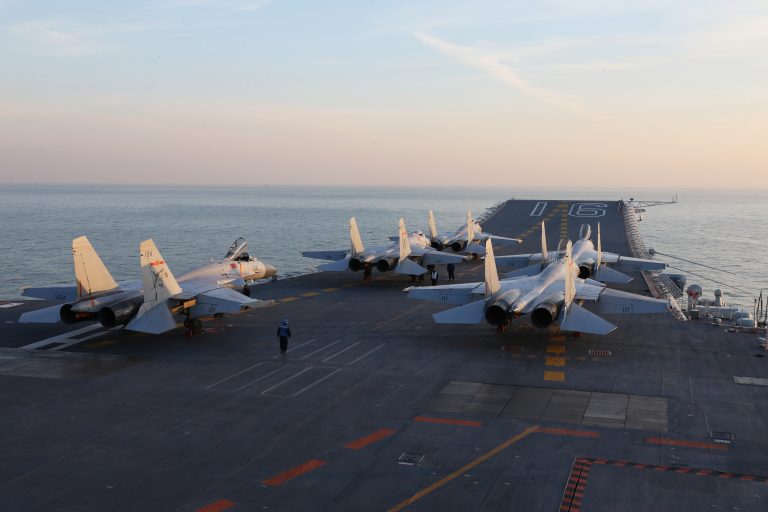
Iran’s air defense network is composed of equipment from multiple sources, including Chinese-made HQ-9B missile systems and JY-26 radar, Russia’s S-300 systems, and domestically produced Iranian defenses, according to reports by The Economist.
In July 2025, the outlet Middle East Eye reported that Iran received a shipment of Chinese long-range air defense systems following clashes with Israel. The delivery reportedly included HQ-9B missiles and associated radar equipment and may have been structured as an “oil-for-weapons” arrangement to circumvent international sanctions.
Iran later publicly displayed several Chinese radar systems, including the JY-26 long-range anti-stealth radar and the JY-10 air defense command system. Despite these capabilities, recent conflicts have raised questions about the real-world effectiveness of these defenses.
Chinese political commentator Chen Pokong argued in a recent online program that the systems failed to prevent major military strikes. “The fact that American and Israeli aircraft were able to operate inside Iranian airspace suggests that the Chinese air defense systems there were ineffective,” Chen said. He further claimed that the issue could increase political pressure on officials linked to the weapons programs.
China’s military-industrial network
Chen also noted that several senior figures connected to China’s defense industry have faced investigations or disciplinary actions in recent years. Former China North Industries Group chairman Yin Jiaxu, once Zhang’s subordinate, was placed under investigation in 2021. Other senior executives in the conglomerate have also been removed or disappeared from public view.
At the same time, Beijing has launched sweeping anti-corruption campaigns across the military and defense sectors. At the 20th Party Congress, several Politburo members, including Zhang Guoqing, Ma Xingrui, Liu Guozhong, Yuan Jiajun, and Li Ganjie, had backgrounds in China’s defense or aerospace industries, highlighting the growing influence of the sector within China’s political leadership.
Chen suggested that the current scrutiny could signal broader tensions within the military-industrial establishment. “If problems are found among the subordinates and associates of these officials, it will be difficult for them to remain untouched,” he said.
While there is no official indication that Zhang himself faces disciplinary action, analysts say the controversies surrounding overseas weapons exports and the performance of Chinese military equipment could continue to draw attention to China’s powerful defense industry and the political figures associated with it.
Editorial note: This article is based on publicly circulating reports and commentary from independent analysts. The claims described have not been independently verified by Vision Times, and relevant authorities have not publicly confirmed the allegations.