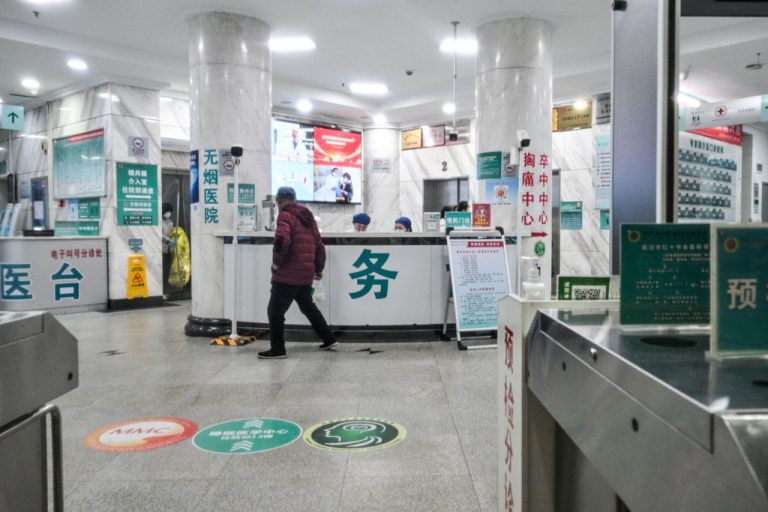
A Chinese woman is publicly accusing Beijing Hospital of removing multiple organs after what she says was an unclear diagnosis and missing medical documentation, raising new concerns among Chinese netizens about patient rights, hospital accountability, and medical transparency.
In a video circulating online on June 24, a woman holding her identification card identified herself as Yuan Jinghui and said she was filing a real-name complaint against Beijing Hospital, located at No. 1 Dahua Road in Beijing’s Dongcheng District.
“I, Yuan Jinghui, am filing a real-name report against Beijing Hospital,” she says in the video. Yuan alleged that on the evening of May 15, 2023, a nurse from the gynecology ward led her from her hospital room to what she described as a non-public “dark room.” There, she said, a physician named Zhang Han asked her to sign two copies of an agreement related to research on diseased organs.
According to Yuan, she asked to keep one copy of the agreement but was refused. “Because the room was dark, I could not see any of the contents of the agreement,” Yuan said. She also alleged that Zhang told her not to inform her family.
Yuan said Beijing Hospital has retained both copies of the document and has refused to provide them despite repeated requests. She further claimed the agreement was not included in copies of her medical records that she later obtained.
Success
You are now signed up for our newsletter
Success
Check your email to complete sign up
RELATED: Bill to Sanction Forced Organ Harvesting in China Clears Senate Committee
Suspicious diagnosis and missing records
Yuan said her surgery took place on May 16, 2023, from 2:15 p.m. to 9:50 p.m. She said she has repeatedly asked the hospital to provide operating room surveillance footage because of the length of the procedure, but claimed the hospital refused for various reasons.
“What exactly happened to me during such a long surgery?” she asked. Yuan alleged that her preoperative and postoperative examinations did not show cancer, yet multiple organs were removed, including her cervix, uterus, ovaries, and fallopian tubes.
She also claimed that intraoperative pathology records were destroyed and that the number of specimens listed in the surgical record did not match the organs described in the pathology report.
“My preoperative hospital diagnosis was cervical cancer,” Yuan said. “It was based on consideration and visual observation, without any pathology. The intra-operative pathology report was destroyed, and the surgical record lists only three submitted specimens, which seriously conflicts with the many organs in the pathology report. I suspect Beijing Hospital of illegally trafficking organs.”
China’s ruling government, the Chinese Communist Party (CCP), has long faced international scrutiny over allegations of forced organ harvesting from prisoners of conscience, including practitioners of Falun Gong, Tibetans, Muslim Uyghurs, and other disenfranchised groups.
A hospital with ties to China’s top leadership
Beijing Hospital is a major Grade-A tertiary hospital directly affiliated with China’s National Health Commission. Public records show it is also designated as a central healthcare facility for senior Chinese Communist Party officials and has long provided medical services for Party leadership and veteran cadres.
That status has drawn additional attention to Yuan’s allegations, especially amid broader public concern over transparency inside China’s healthcare system.
Online reactions to the video were intense, with many users expressing distrust toward state-run institutions and demanding an independent investigation. Some comments described ordinary citizens as having little ability to challenge hospitals or government-linked institutions when disputes arise.
Previous medical disputes fuel public concern
Yuan’s case follows other high-profile medical disputes in China involving allegations of unnecessary organ removal, misdiagnosis, or malpractice.
In one widely reported case, 77-year-old Zhang Yuhua underwent total pancreas and spleen removal at the University of Hong Kong-Shenzhen Hospital in 2018 after being diagnosed with pancreatic cancer. According to Chinese media reports, her family later questioned the diagnosis after pathology records allegedly failed to show a pancreatic tumor or lesion. Zhang died months later from severe liver failure and hepatorenal syndrome.
In November 2023, a Chinese court ordered the hospital to assume full liability and pay the family more than 620,000 yuan (about US$86,000) in compensation. Zhang’s daughter continued to argue that five healthy organs had been removed unnecessarily and sought a criminal investigation, but Chinese media reported that police had not opened a criminal case as of the latest publicly available reports.
Another case that sparked nationwide outrage involved Liu Xiangfeng, a former deputy chief physician at Xiangya Second Hospital of Central South University in Hunan Province. In 2022, online whistleblowers accused Liu of reckless treatment, excessive surgeries, and misdiagnoses. Chinese media reported that some patients or family members alleged he treated benign conditions as malignant tumors and performed unnecessary procedures.
These cases have contributed to a broader climate of public suspicion toward China’s hospital system, particularly when patients are unable to obtain complete records, pathology reports, or clear explanations for major surgical decisions.
Editorial note: This article is based on publicly-circulating reports and commentary from netizens. The claims described have not been independently verified by Vision Times, and relevant authorities have not publicly confirmed the allegations.