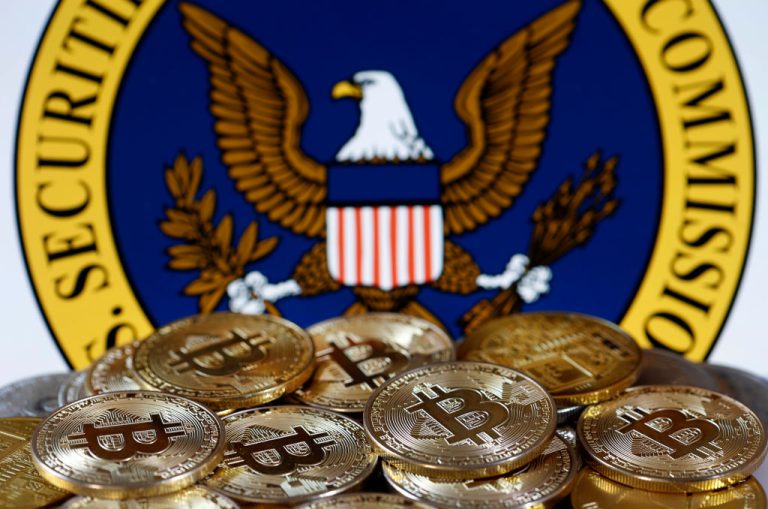
On Tuesday, March 17, the U.S. Securities and Exchange Commission (SEC) released a long-anticipated interpretation clarifying which cryptocurrencies qualify as securities and which types of digital assets fall outside federal securities laws.
The SEC defines a security as any investment in which people expect profits based on the efforts of a central team or organization. This is determined by the “Howey Test.”
The Howey Test is the American legal standard used to determine whether an asset or transaction qualifies as an “investment contract,” and therefore a security.
While a fixed list of cryptocurrencies that qualify as securities is not published, the SEC has indicated that many tokens issued through fundraising or controlled by a central team may qualify. These include XRP, SOL, ATOM and MANA to name a few.
A crypto asset is more likely to be considered a security if it was sold to raise funds for a project, buyers expect profits and the project remains centrally controlled.
Success
You are now signed up for our newsletter
Success
Check your email to complete sign up
However, if the cryptocurrency functions mainly as a currency or commodity it is less likely to be considered a security. These include cryptocurrencies like Bitcoin and Ethereum.
SEC Chair Paul Atkins posted to X (formerly Twitter) following the release of the interpretation, saying, “After more than a decade of uncertainty, this interpretation will provide market participants with a clear understanding of how the SEC treats crypto assets under federal securities laws,” adding, “This is what regulatory agencies are supposed to do: draw clear lines in clear terms.”
International ripple effects
Since several countries look to the SEC’s approach as a reference point, regulators in Canada, the EU, Singapore, and Japan are expected to consider similar classifications for their own laws.
International crypto exchanges, like Binance, Coinbase and Kraken, that operate in multiple jurisdictions may align their token offerings to comply with U.S. law to avoid legal risks.
In addition, startups looking to raise funds may also tailor their offerings to adhere to U.S. regulations with the understanding that many investors lend significant credence to the SEC’s guidance.
So, even though the ruling is domestic, it sets a global benchmark, meaning countries with developing crypto regulations will most likely use the SEC’s guidance as a launching point.
Global regulatory clarity may encourage institutional participation which could accelerate adoption and confidence in digital assets beyond the U.S. market.
According to a global policy review of crypto regulation spanning more than 30 jurisdictions, “Increasing regulatory clarity also created major tailwinds for institutional adoption, with financial institutions in about 80 percent of jurisdictions announcing new digital asset initiatives.”
Following the release of the interpretation, Binance founder, Changpeng Zhao, called it a “monumental step” that provides clearer definitions for crypto tokens and helps categorize most digital assets, Coinfomania reported.
Impact on retail investors
Retail investors now have clearer rules about which digital assets are considered securities, reducing the uncertainty that has long affected cryptocurrency investing. Tokens classified as securities may require registration or only be offered through compliant platforms, meaning investors will need to check listings and disclosures carefully before investing.
Popular cryptocurrencies like Bitcoin and Ethereum can generally be traded without fear of SEC enforcement. However, tokens tied to specific projects or companies — where profits depend on a central team’s efforts — may carry additional legal and financial risks. Holders of tokens now deemed securities may face short-term trading restrictions or limits on which platforms they can use, as exchanges and funds work to comply with federal securities laws. Over the long term, however, the rules provide greater transparency and legal protections, potentially making compliant tokens more stable and credible.
According to securities law experts citing the SEC’s guidance, tokens classified as securities remain subject to the same federal disclosure and compliance requirements as traditional securities, meaning holders could encounter different trading conditions, reporting obligations, or market access issues compared with non‑security crypto assets.
In short, retail investors now have a clearer framework to assess risk, but must remain vigilant when investing in lesser-known tokens that could be classified as securities, and holders of such tokens will need to navigate new regulatory requirements that could temporarily disrupt trading.