On Thursday, March 19, the U.S. Congressional Special Committee released a major investigative report titled “Inside China’s Strategy to Reshape the United Nations.” The report provides a detailed exposé of how the Chinese Communist Party (CCP) manipulates the UN system through financial leverage, personnel infiltration, control of peacekeeping forces, and the fabrication of civil society voices.
The report notes that the CCP’s actions not only undermine the UN’s impartiality as a multilateral international institution but also distort it into a tool serving the CCP’s authoritarian rule and national strategic interests.
It emphasizes that, in response to the UN’s increasingly bloated bureaucracy and China’s expanding malign influence, the Trump administration and U.S. Ambassador to the UN Mike Waltz have begun implementing a series of “tough love” reforms aimed at restoring the UN to its core mission and defending the interests and values of the U.S. and the free world.
Based on extensive analysis of government documents, internal investigations, and UN data, the Special Committee outlined four core strategies through which the CCP manipulates the UN:
1. Financial leverage: Weaponizing contributions to subsidize domestic economy
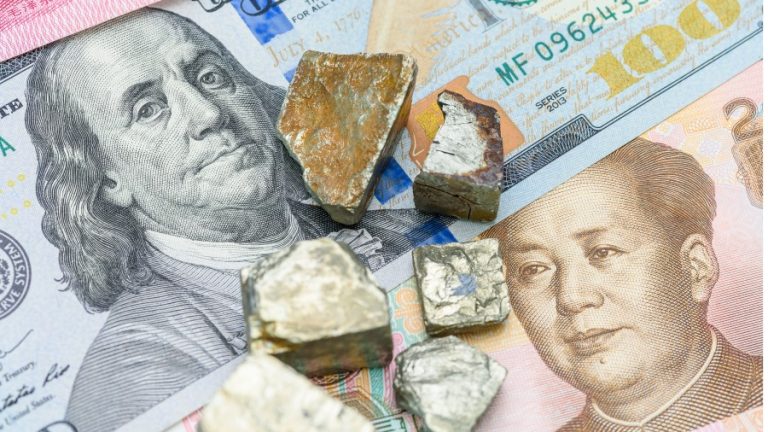
The CCP strategically uses its growing financial contributions to redefine UN operations. Over the past 20 years, China’s share of the UN’s regular budget rose sharply from 2.053 percent in 2006 to 20.004 percent in 2026, making it the second-largest contributor after the U.S. Yet China’s contribution remains far below that of the U.S., which contributed $14.26 billion to the UN in 2024—5.7 times China’s contribution.
Success
You are now signed up for our newsletter
Success
Check your email to complete sign up
The report reveals that China uses these contributions as political leverage, even “weapons.” For example, in 2023, the UN froze hiring and suspended some human rights investigations due to a liquidity crisis caused by Beijing deliberately delaying its dues, successfully blocking inquiries in Sudan and Ukraine that China opposed.
China also secretly exploited the International Fund for Agricultural Development (IFAD), where voting power is proportional to contributions. In 2024, China made voluntary contributions far exceeding other members ($27.49 million). Since joining in 1981, China contributed about $361 million to IFAD but received $1.31 billion in favorable financing—over $3 returned for every $1 invested. Despite being an economic superpower, China maintains its “developing country” status to divert UN funds meant for poorer countries back home to support its domestic “rural revitalization” strategy.
2. Personnel infiltration: Placing loyalists to control key UN bodies
To complement financial control, China has conducted targeted personnel infiltration. From 2005 to 2023, the number of Chinese staff at the UN surged 187 percent (from 579 to 1,664). China focused on placing personnel in departments like DESA, which manage Global South and Belt and Road initiatives, and held leadership in 4 of 15 major UN specialized agencies.
The report details multiple cases where Chinese officials violated the UN’s pledge of neutrality:
- Interfering with independent investigations (FAO): Director-General Qu Dongyu (joined CCP in 1986) allegedly forced representatives from developing countries to photograph ballots in the 2019 election. Once in office, he delayed UN Joint Inspection Unit investigations into FAO until 2024.
- Suppressing dissent (DESA): Former Under-Secretary-General Wu Hongbo in 2017 ordered the removal of Uyghur activist Dolkun Isa from a UN forum.
- Covering hacking and illicit arms trafficking (ICAO): In 2016, ICAO headquarters suffered major cyberattacks by China-linked group Emissary Panda. Secretary-General Liu Fang allegedly concealed the attacks. Subordinate Chinese official James Kuang Chi Wan (詹姆斯・万) was later arrested by the FBI in 2023 for conspiring to sell $1.54 billion worth of Chinese TB-001 combat drones and missiles to Libya in violation of UN arms sanctions, claiming one co-conspirator was “a special adviser to Chinese President Xi Jinping.”
Personnel infiltration also allowed ideological implantation: in 2017, Chinese staff successfully inserted Xi Jinping’s “Community of Shared Future for Mankind” into two UN General Assembly resolutions.
3. Peacekeeping forces: Using ‘Blue Helmets’ to protect China’s overseas assets
UN peacekeepers, or “Blue Helmets,” are supposed to remain neutral, maintaining peace and protecting civilians. The report shows that China exploits its position as the largest troop-contributing P5 member to deploy forces in areas of strategic economic interest.
According to China’s 2015 Military Strategy White Paper, the PLA’s core task includes protecting overseas “interests-critical areas.” Of China’s 1,659 peacekeepers as of January 2026, most were in East Africa, especially South Sudan (UNMISS). South Sudan is a key oil supplier to China, with Chinese investment in oilfields. During the 2013 civil war, China deployed hundreds of peacekeepers. Chinese peacekeeping engineers even repaired key roads near Chinese-operated oilfields in 2025.
The committee concludes that China uses UN peacekeeping legitimacy to shield its unilateral protection of overseas economic assets, turning “soft power into hard power.”
4. Astroturfing: Filling the UN with fake NGOs
NGOs are supposed to represent independent civil society. “Astroturfing” refers to government-backed groups creating the illusion of grassroots support.
The report finds China heavily engages in astroturfing at the UN. By 2022, 134 Chinese NGOs held ECOSOC consultative status; most were government-organized NGOs (GONGOs). At least 59 had direct ties to China’s United Front or government agencies, and 46 were led by party officials. Examples:
- CPAFFC: Led by senior diplomat Yang Wanming, recognized by U.S. intelligence as a quasi-official influence entity.
- CCG: Founded by Wang Huiyao, former vice president of a United Front-controlled alumni association.
- CAST: Overseen by the Chinese People’s Political Consultative Conference, recruits overseas scientific talent.
These GONGOs flood UN meetings to drown out genuine criticism, praise the Chinese government, and sometimes engage in international crimes, such as CEFC’s Patrick Ho bribing African officials while using UN consultative status.
Six policy recommendations: Restructure the multilateral order and counter CCP infiltration
- Return to core mission: Reduce UN bureaucracy, halt ideological projects, focus peacekeeping on actual security, strengthen U.S. leadership in standards-setting bodies.
- Strengthen accountability: Hold UN bodies accountable for harming U.S. interests, dissolve heavily infiltrated agencies (e.g., UNRWA).
- Strategic dues payments: Tie U.S. contributions to national security interests, counter narratives of underfunding, and push back against Chinese influence.
- Eliminate “developing country” privileges: Prevent developed economies like China from exploiting UN aid and special status.
- Mandatory annual reporting: Require the Secretary of State and U.S. UN representatives to report annually on Chinese personnel, funding flows, peacekeeping deployments, and NGO infiltration.
- Targeted counter-strategy: The State Department should develop strategies against China’s misuse of GONGOs and “independent experts” in UN consultative roles.
By Tian Jingxin