Keiji Furuya, chairman of the Japan-Taiwan Parliamentary Friendship League and a member of Japan’s House of Representatives, has been sanctioned by China for his long-standing support of Taiwan. On Monday, March 30 the Chinese Ministry of Foreign Affairs announced that Furuya’s frequent visits to Taiwan and interactions with Taiwanese senior officials constitute interference in China’s internal affairs. As of now, his assets in China are frozen, and he is banned from entering China. Furuya responded, saying, “I haven’t been to China in decades; this sanction doesn’t affect me at all.”
According to the Central News Agency, the Chinese Foreign Ministry stated in a March 30 announcement that the 73-year-old Furuya repeatedly led delegations to Taiwan despite objections from Chinese authorities. China regards this as “collusion with Taiwan independence forces, a serious violation of the ‘One China’ principle and the spirit of the four Sino-Japanese political documents, gross interference in China’s internal affairs, and severe damage to China’s sovereignty and territorial integrity.”
The Chinese Foreign Ministry said that, under the “Anti-Foreign Sanctions Law of the People’s Republic of China,” Furuya will be sanctioned, including freezing his movable and immovable property and other assets in China; banning his entry into China, including Hong Kong and Macau; and prohibiting organizations and individuals in China from engaging in transactions or cooperation with him.
NHK and TBS reported that Japan’s Deputy Chief Cabinet Secretary Masanao Ozaki said at a press conference on the afternoon of March 30, “As representatives of the people, members of parliament have freedom of speech, which is fundamental to our democracy and must be respected.” Ozaki criticized China for taking intimidating unilateral measures against those with differing views, calling it “absolutely unacceptable” and “regrettable from the perspective of Japan-China relations.” Japan has already engaged with China through diplomatic channels, demanding the sanctions be immediately withdrawn.
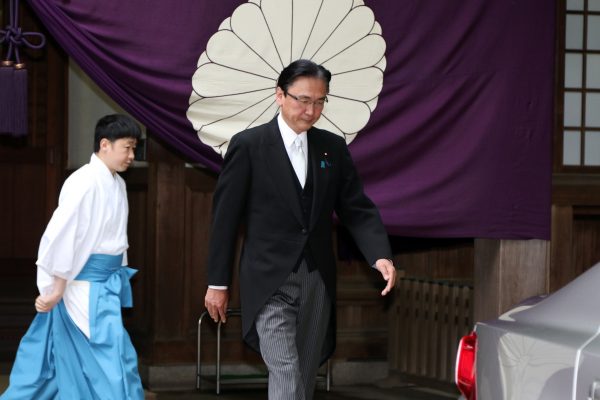
Sanction has no effect as he hasn’t been to China in decades
In response to the Chinese sanctions, Furuya said he learned of the news from media reports. He stated plainly: “I haven’t been to China in decades, and I don’t have any personal assets there. These sanctions probably have no effect on me at all.”
Success
You are now signed up for our newsletter
Success
Check your email to complete sign up
Furuya further emphasized that as part of a parliamentary alliance sharing values with Taiwan, “exchanges are only natural.” He also mocked the Chinese authorities over the sanctions, saying, “To issue such a sanction—truly, only China would do this!”
According to Newtalk, at a routine press briefing on the morning of March 31, Taiwan’s Ministry of Foreign Affairs spokesperson Hsiao Kuang-wei said China’s actions can be explained in two points. First, he reaffirmed that the Republic of China (Taiwan) is a sovereign, independent country, not subordinate to the People’s Republic of China. “The Chinese regime has never ruled Taiwan, and Taiwan is not part of the PRC. Taiwan’s sovereignty belongs to all the people of Taiwan. Both sides are not subordinate to each other, which is recognized internationally as an objective fact and the current situation.”
Second, Hsiao stated that Taiwan’s friendly cooperation and exchanges with like-minded countries are sovereign acts, and China has no right to intervene. He said, “China uses so-called ‘sanctions’ to threaten and pressure Taiwan’s international friends, fully exposing its authoritarian mindset and bullying nature. The Ministry of Foreign Affairs expresses strong protest and stern condemnation.”
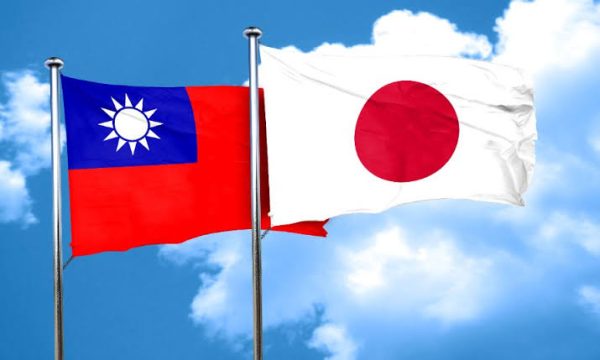
Taiwan welcomes and supports Japan-Taiwan friendly exchanges
Hsiao emphasized that Furuya is an important international friend of Taiwan who has supported Taiwan for many years, visiting dozens of times, most recently in March to attend the “Yushan Forum” hosted by Taiwan’s Ministry of Foreign Affairs. Since becoming chairman of the Japan-Taiwan Parliamentary Friendship League in 2018, Furuya has led annual delegations to Taiwan to celebrate National Day, facilitated multiple public statements supporting Taiwan’s participation in WHO and CPTPP, organized Taiwan-U.S.-Japan security dialogue forums, and actively promoted registration of Taiwan in Japanese family registry nationality columns, all concrete actions deepening Japan-Taiwan cooperation across fields.
Hsiao said: “The Ministry sincerely welcomes and thanks all Japanese parliamentarians who support Japan-Taiwan friendly exchanges and Taiwan’s democratic development, and looks forward to continued close cooperation with Japan and other like-minded countries to contribute to peace, stability, and prosperity in the Indo-Pacific region.”
Furuya, a member of the ruling Liberal Democratic Party, currently serves as chairman of the House of Representatives’ Constitutional Review Committee and leads the Japan-Taiwan Parliamentary Friendship League. He visited Taiwan in mid-March 2026 to attend the Yushan Forum and meet President Lai Ching-te. Last October, he led a delegation to Taiwan for the tenth consecutive year to participate in National Day celebrations and met with Lai to deliver a handwritten letter from Sanae Takaichi.
By Li Jingyao