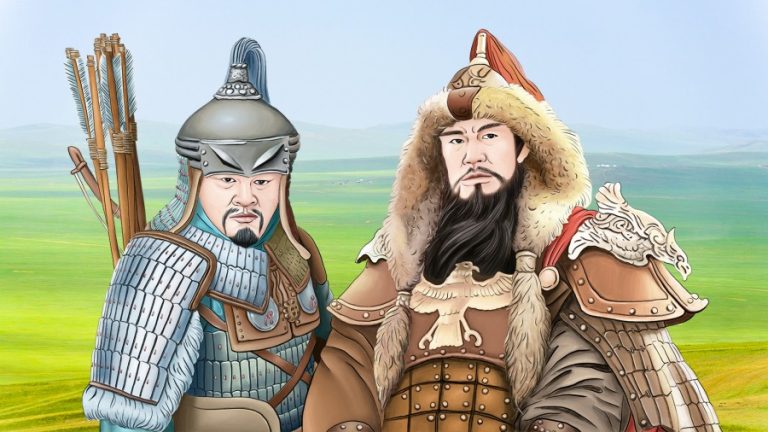
The debate reflects a broader shift in historical interpretation. In modern discourse, particularly under the influence of nationalism, political legitimacy is often tied to ethnic identity. Dynasties established by non-Han peoples are therefore sometimes viewed as external to China’s historical narrative.
Scholars have long debated this question, with some emphasizing ethnic distinctions, while others focus on institutional and cultural continuity.
Traditional Chinese political thought leaned toward the latter. Legitimacy was not determined solely by origin, but by whether a ruling power adopted and sustained the institutional order, cultural practices, and moral framework associated with Chinese civilization.
From this perspective, multiple dynasties founded by non-Han groups—including the Liao, Jin, Western Xia, and Qing—have historically been incorporated into the broader civilizational narrative.
One of the clearest examples of continuity under the Yuan dynasty can be found in its capital, Dadu (present-day Beijing).
Success
You are now signed up for our newsletter
Success
Check your email to complete sign up
Rather than imposing a purely nomadic model, Yuan planners designed the city in accordance with principles described in classical texts such as the Rites of Zhou. The capital’s grid structure, ritual layout, and spatial hierarchy reflected long-standing traditions of imperial governance.
The placement of ancestral temples, altars of state, administrative centers, and markets followed established norms. These features suggest not a rejection of earlier systems, but a conscious integration of them into Yuan rule.
Economic expansion and trans-Eurasian exchange
The Yuan period also marked a significant expansion in long-distance connectivity.
Under Mongol rule, overland routes across Eurasia became more stable, allowing merchants, envoys, and travelers to move between regions with greater frequency. Accounts from foreign visitors describe a level of wealth and urban organization that left a lasting impression.
At the same time, the incorporation of artisans and specialists from across the Mongol Empire contributed to the transfer of technical knowledge. Developments in craftsmanship and construction during the Yuan period continue to be studied for their sophistication and durability.
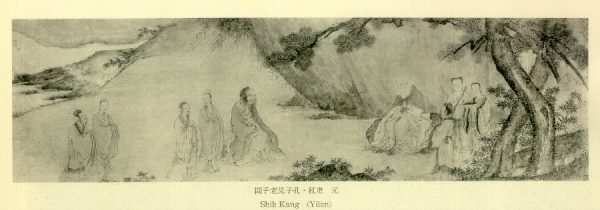
Culturally, the Yuan dynasty produced one of the major literary forms in Chinese history: qu, encompassing both drama and lyric compositions.
Scholar Wang Guowei observed that each historical era in China generated its own defining literary expression—Tang poetry, Song lyrics, and Yuan drama among them. Yuan qu combined structured poetic form with a degree of flexibility that allowed for expressive variation.
This suggests that the Yuan period did not mark a break in cultural development, but rather a transformation within an ongoing tradition.
Criticism of the Yuan dynasty often centers on social hierarchy, differential treatment of ethnic groups, and violence during the Mongol conquests.
Some widely circulated claims remain debated among historians, with limited direct corroboration in primary sources. Interpretations vary depending on the sources consulted and the analytical framework applied.
It is also important to note that large-scale violence was not unique to non-Han regimes. Dynastic transitions throughout Chinese history, including those led by Han rulers, were frequently accompanied by warfare and population loss.

Rethinking the definition of ‘China’
The question of whether the Yuan dynasty was “Chinese” ultimately depends on how China itself is defined.
If understood primarily as an ethnic entity, the Yuan dynasty may appear external.
If understood as a civilizational system—characterized by shared institutions, cultural traditions, and intellectual continuity—the distinction becomes less clear.
From this perspective, the Yuan dynasty did not stand outside Chinese civilization, but became part of its historical evolution.
The Yuan dynasty occupies a complex place in history. Its origins lay beyond the traditional heartland of earlier Chinese states, yet its governance, institutions, and cultural contributions became intertwined with the broader civilizational framework.
Whether it is considered “Chinese” may depend less on origin than on definition.
Viewed through the lens of cultural continuity, the Yuan dynasty can be understood not as an interruption, but as one chapter in the long development of Chinese civilization.
Editor’s Note: This article presents a civilizational interpretation of the Yuan dynasty’s place in Chinese history. Historical interpretations vary across academic traditions, and the views expressed here reflect one perspective that emphasizes cultural continuity over ethnic definition.
By Li Qingcheng