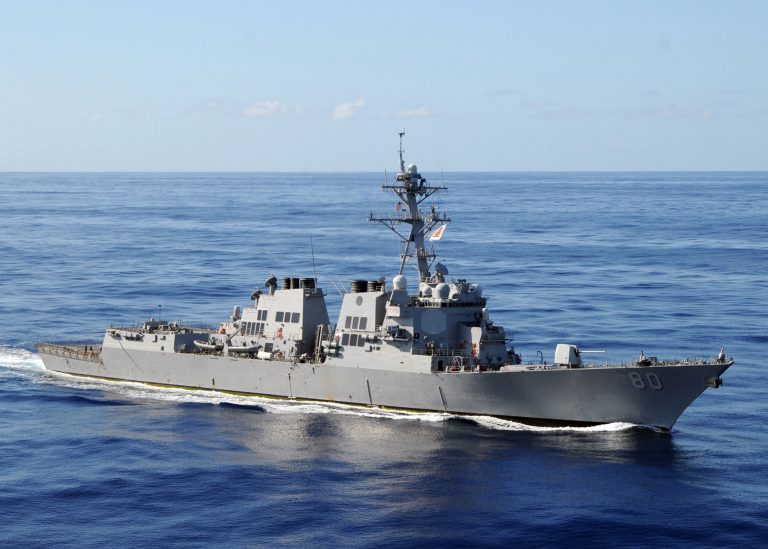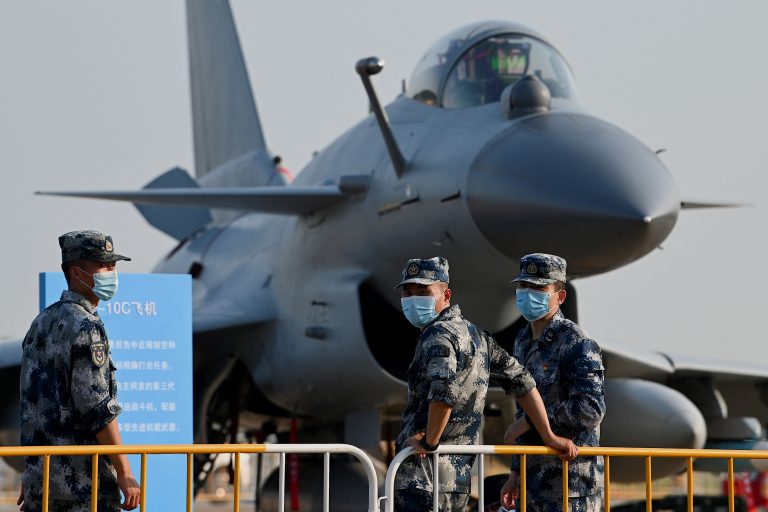
The U.S. military’s recent operations in Venezuela, along with its overwhelming battlefield superiority demonstrated in the Middle East, are exposing critical weaknesses within the Chinese Communist Party’s (CCP) military system, while potentially dismantling it from within, according to Miles Yu, Senior Fellow and Director of the China Center at the Hudson Institute.
In an analysis titled “How China’s Enormous Bet on Iran Failed,” published by The Washington Post on March 6, Yu argues that Chinese-made air defense networks, radar systems, and missile platforms have collectively failed when confronted with the U.S. military’s advanced stealth and electronic warfare capabilities. These failures, he notes, not only undermine the CCP’s external propaganda about its technological strength but have also triggered sweeping political purges targeting military leadership and the core of defense research.
Yu’s analysis highlights a recurring pattern in China’s military development: major advances by the People’s Liberation Army (PLA) often follow decisive demonstrations of U.S. military superiority. From the 1991 Gulf War, which underscored the importance of precision strikes, to the 1999 bombing of the Chinese embassy in Belgrade and the 2001 mid-air collision between U.S. and Chinese military aircraft over the South China Sea, Beijing’s modernization efforts have largely been reactive rather than driven by sustained internal innovation.
RELATED: Iran General Jamshid Eshaghi Killed in US-Israeli Airstrike
This pattern, Yu argues, reveals deep structural flaws, including overreliance on reverse engineering, limitations in materials science, corruption linked to military-civil fusion, and systemic self-deception reinforced by propaganda.
Internal turmoil within the CCP
Success
You are now signed up for our newsletter
Success
Check your email to complete sign up
In real-world deployments, these weaknesses have become increasingly apparent. In recent conflicts in Venezuela and Iran, Chinese-supplied air defense and radar systems reportedly performed poorly under pressure, failing to detect or intercept advanced threats. According to Yu, the CCP’s response has not been transparent technical evaluation, but intensified internal upheaval.
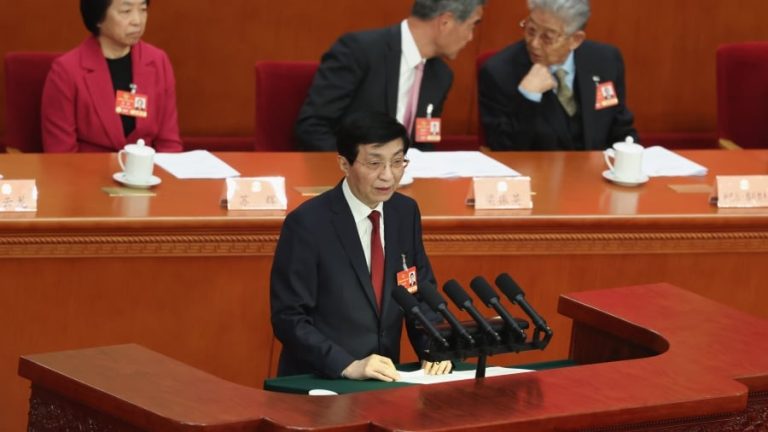
Following the U.S. military’s decisive victory in Venezuela in January 2026, a significant number of senior PLA commanders were “removed” and disappeared from public view. During the “Two Sessions” political meetings in March, only six out of 26 senior generals were present, an indication of unusual instability. Among the six members of the CCP’s top military body, the Central Military Commission, four have reportedly already been purged.
The wave of purges has extended into the scientific and industrial core of China’s defense system. Several key figures overseeing major national defense projects have been dismissed or have disappeared, including Hu Yongming, chief scientist of the PLA’s naval aviation and aircraft carrier programs; Yang Wei, chief designer of advanced fighter jets such as the J-10 and J-20; Wu Manqing, a leading expert in radar and counter-stealth technologies; Wei Yiyin, a senior air defense missile specialist; and Zhao Xiangeng, a key figure in advanced nuclear weapons design.
Yu believes the collective disappearance of these top scientists signals a broader breakdown in the technological leadership underpinning China’s military modernization. At the same time, turmoil has spread through the industrial sector. Tan Ruisong, former chairman of the Aviation Industry Corporation of China (AVIC), has been sentenced to death on corruption and dereliction charges, highlighting how political pressures can distort research and development processes.
China’s defense research environment is also described as increasingly opaque and high-pressure. Two prominent researchers in hypersonic weapons and advanced aerodynamics, 68-year-old Fang Daining and 57-year-old Yan Hong, recently died under unclear circumstances while actively engaged in their work. The lack of official explanation has fueled speculation about internal pressures.
Systemic vulnerabilities
Yu argues that this cycle, where “political purges replace technical reform,” is eroding China’s capacity for genuine innovation. An atmosphere of fear discourages honest reporting of failures and encourages exaggerated claims, widening the gap between perceived and actual combat capability.
He concludes that competition between China and the United States is ultimately a contest of systems, not just weapons. The U.S. model, which tolerates failure as part of progress, enables continuous adaptation and improvement.
By contrast, the CCP system tends to turn technical shortcomings into political crises. The removal of experienced leaders weakens institutional learning and undermines long-term development. As long as this dynamic persists, Yu argues, each demonstration of U.S. military superiority will not only challenge China externally but also deepen internal instability.
Editorial note: Views expressed in this article are the opinions of the author and do not necessarily reflect the views of Vision Times.