The latest U.S. intelligence disclosures reveal that Iran is systematically evading international sanctions and gradually rebuilding its suicide drone forces through a highly covert and complex multinational procurement network. This network involves multiple layers of shell companies, transit points, and supply chain nodes, with firms registered in mainland China and Hong Kong reportedly playing key roles in supplying critical components, allowing the military project to continue despite sanction pressures.
According to the UK Daily Telegraph, citing a recent investigative report by U.S. intelligence firm Strider Technologies, Iran is not relying solely on domestic production. Instead, it exploits “gray areas” in the global commercial system, constructing a hard-to-trace supply chain through “decentralized procurement.” The core of this system is the use of intermediary companies to obscure the true buyer, allowing critical drone parts to enter markets under civilian product labels and later be repurposed for military use.
The report shows that in the operational chain, an Iranian company, Pars Aero, acts as a “distributor,” coordinating with external suppliers and managing logistics. Pars Aero conducts external transactions through a Hong Kong-registered company, Foxtech Hobby, to hide the final destination, while also sourcing other key components from China’s Huixinghai Technology (Tianjin) Co. These parts include flight control systems, engine components, and electronic modules—all classified as dual-use technology, which can be exported as ordinary commercial products, circumventing strict military export controls. Foxtech Hobby shares a Hong Kong address with three companies previously sanctioned by the U.S.—two of which were sanctioned in 2023 for alleged involvement with organized crime and money laundering related to Russia, and the third for facilitating international transactions on behalf of Iranian entities.
This model is not a simple single-point transaction but a highly dispersed network structure. Intelligence analysis indicates that Iran deliberately avoids centralized sourcing, instead establishing multiple “transit nodes” across countries including Turkey, India, the UAE, as well as Central and Southeast Asia, making each transaction appear independent and greatly increasing regulatory tracing difficulty. This “segmented supply chain” strategy allows the overall network to continue operating even if individual nodes are identified or sanctioned.
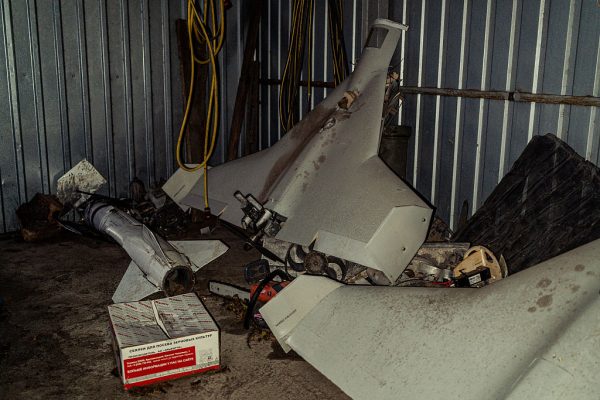
The ultimate goal of this system is to support the continued production of Iran’s Shahed-series suicide drones. These drones have been widely used in multiple conflicts in recent years. They are low-cost, structurally simple, yet highly effective—sometimes referred to as “cruise missiles for the poor.” Because they use a large number of commercial electronic components, they have relatively low dependence on traditional military-industrial supply chains, giving them higher survivability under sanctions.
Success
You are now signed up for our newsletter
Success
Check your email to complete sign up
The intelligence report also notes that Iran’s current strategy is not only to restore production capacity but also to expand output and optimize supply chain stability. By continuously introducing parts from different sources and alternative suppliers, Iran reduces reliance on any single channel, giving its drone program a “resilient structure” under long-term sanctions. Recent Middle East incidents have shown this capability: multiple drone attacks demonstrate that Iran retains sustained deployment capacity despite external pressures.
At the same time, exposure of this network has renewed international concern over loopholes in global supply chain oversight. Analysts note that many dual-use products in the current international trade system are difficult to fully regulate under export controls, allowing components like drone electronics to circulate through legitimate channels and then enter gray networks for military use. Additionally, cross-border registered companies, offshore financial systems, and multinational transit mechanisms significantly increase challenges for accountability and enforcement.
The U.S. has repeatedly sanctioned similar networks in recent years, targeting Chinese and Hong Kong companies involved in Iranian drone procurement. However, the latest report indicates that the network is continually restructuring, using increasingly complex paths to evade oversight. This demonstrates that traditional sanctions are limited against “decentralized supply chains,” prompting the U.S. and allies to consider strengthening export controls, financial regulations, and technology restrictions.
On a broader level, this case underscores the rapidly rising strategic importance of drone technology in modern warfare. Compared with traditional missiles, suicide drones are cheaper, have shorter production cycles, and can be deployed in large numbers for “saturation attacks,” putting pressure on air defense systems. Against this backdrop, global competition over drone technology and supply chains is intensifying, extending beyond military confrontation to global trade systems and industrial chains.
Analysts believe that the secret network exposed in Iran is not merely a continuation of a single military project but represents an “adaptive strategy” developed under long-term sanctions. By exploiting the complexity of globalized supply chains and regulatory blind spots, Iran has maintained and expanded its key military capabilities under international pressure. This model could be emulated by other sanctioned countries, posing an ongoing challenge to the existing international sanctions regime.