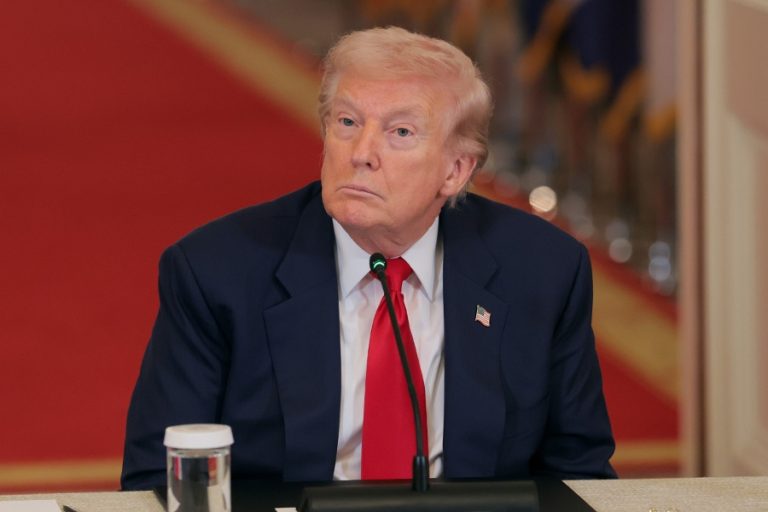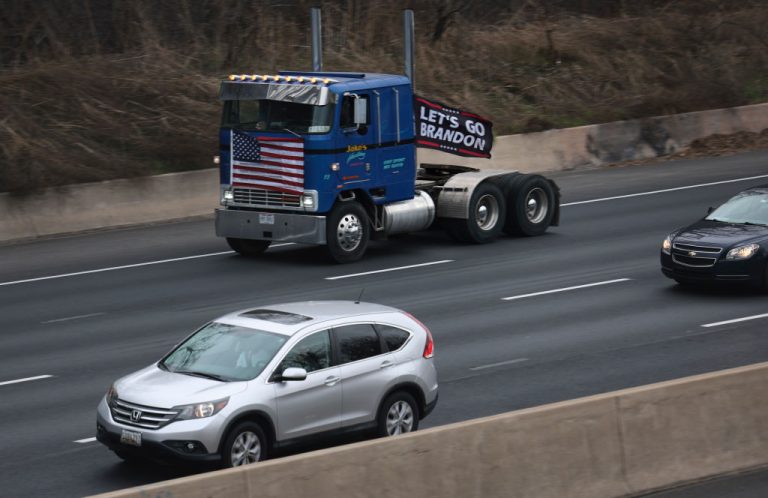
The war with Iran has significantly eroded profits in the U.S. trucking industry, with retail diesel prices rising roughly 50 percent since the conflict began and disruptions in the Strait of Hormuz tightened supply. However, markets showed signs of stabilization Wednesday, April 15, after President Donald Trump announced a possible second round of U.S.-Iran talks in Pakistan.
During the six weeks of fighting since Feb. 28, fuel prices have climbed sharply, pushing up transportation costs and contributing to broader inflation. Diesel prices have risen by $1.89 nationwide, increasing costs for trucking firms and, in turn, for consumer goods.
A study by the Philadelphia-based DAT Freight & Analytics found that smaller trucking companies have been hit the hardest by the surge, as reported by Reuters.
Key logistics hubs such as California and Texas have been particularly affected due to their reliance on imported crude. According to The Wall Street Journal, California imports about 75 percent of its oil, with roughly one-third coming from the Middle East — much of it passing through the Strait of Hormuz before traveling about 6,000 miles to the U.S. West Coast.
Dean Croke, principal analyst at DAT iQ, noted in an April 14 industry analysis that while the national average diesel price rose to $5.40 per gallon, California saw prices spike to a record $7.60 per gallon.
Success
You are now signed up for our newsletter
Success
Check your email to complete sign up
“The 50.2-point gap between transportation prices (89.4) and transportation capacity (39.2) is the widest positive inversion since November 2021, signaling a harder and more expensive market for finding trucks,” Croke wrote.
A March survey by DAT of 540 trucking firms found that 18 percent had halted operations due to rising fuel costs. Meanwhile, 44 percent said they had become more selective about loads, and 45 percent reported driving fewer miles.
Patrick De Haan, head of petroleum analysis at GasBuddy, told Reuters that fuel prices could rise further after U.S.-Iran talks on April 11 failed to produce a breakthrough, leaving uncertainty over the Strait of Hormuz despite a temporary ceasefire.
“The move toward a full blockade of the Strait of Hormuz is compounding global supply concerns and risks further disrupting flows,” he said.
Ripple effects spread across economy
Rising fuel costs are not limited to transportation: they are feeding into broader inflation, affecting everything from manufacturing to retail.
“Including not only products like fertilizer and plastics that have a gas or petroleum input, but also anything that is transported, since diesel prices have increased even more than gasoline,” Eamon Kircher-Allen wrote in an analysis for the Century Foundation.
The war has also disrupted refining operations globally, pushing up gasoline and jet fuel prices. Airlines have begun passing costs on to consumers — United Airlines and JetBlue raised baggage fees in early April — while Amazon added a 3.5 percent “fuel surcharge” for sellers, CNBC reported, warning of a potential “price shock across the board.”
Kircher-Allen also noted that the conflict has disrupted helium supplies used in semiconductor manufacturing, raising the risk of shortages similar to those seen during the pandemic.
“These disruptions will linger; supply chains can break overnight, but take months or sometimes years to recover,” he said.
Markets show signs of optimism
Despite ongoing uncertainty, markets showed tentative signs of stability following Trump’s comments on renewed diplomacy.
Trump told the New York Post on April 14 (Tuesday) that U.S.-Iran negotiations could resume within days in Pakistan. He later told ABC News that extending the current two-week ceasefire might not be necessary.
Following the announcement, markets remained relatively calm, with investors expressing cautious optimism, Bloomberg reported. While the outcome of renewed talks remains uncertain, many investors are betting that the administration is seeking to end the conflict.
“That means doomsday scenarios may be avoided, and potentially crude shipments could increase from their low levels,” the report said.
Oil prices reflected that sentiment. U.S. crude remained largely flat Wednesday, with slight improvements in some regions. West Texas Intermediate crude fell 17 cents, or 0.2 percent, to $91.11 per barrel, according to Reuters.