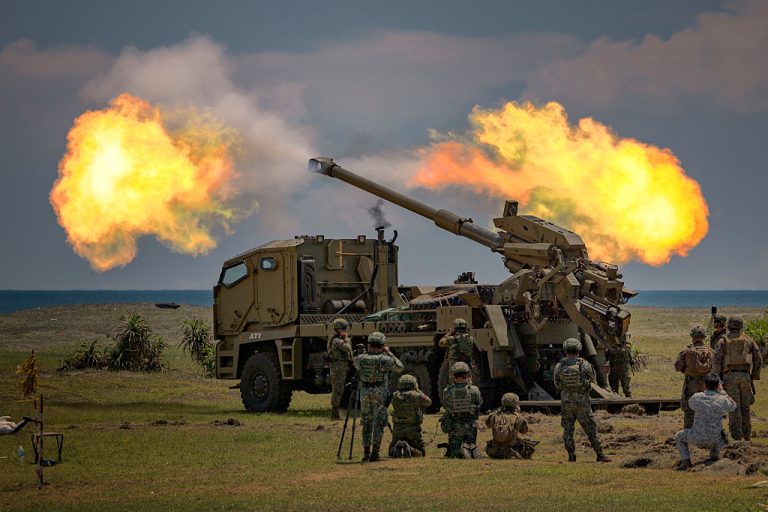
Japan will take part in the latest round of U.S.-Philippines military drills in the South China Sea from April 20 to May 8, marking its first large-scale participation in the annual Balikatan exercises. Analysts say the move reflects Tokyo’s growing focus on Taiwan’s defense and the broader Indo-Pacific security environment.
“Japan has provided considerable military support to the Philippines and seems to be focusing efforts there. Tokyo considers this as related to Taiwan’s defense,” Grant Newsham, a retired U.S. Marine and author of When China Attacks: A Warning to America, told Vision Times in an email.
The annual “Balikatan,” or “shoulder-to-shoulder,” joint military exercises will involve more than 17,000 troops in a multinational effort featuring complex operations across air, land, sea, cyber, and space domains at multiple locations across the Philippine archipelago, Reuters reported.
Rupal Kalebere, an analyst focusing on Japan’s strategic ties with Indo-Pacific partners, said the region’s shifting Indo-Pacific geopolitics is driving Tokyo’s expanded role.
“Japan joined the United States and the Philippines because it now sees the Indo-Pacific security environment as far more severe, and it is moving from a largely symbolic role to a more operational one,” she told Vision Times.
South China Sea tensions and China military buildup
Success
You are now signed up for our newsletter
Success
Check your email to complete sign up
Tensions in the South China Sea remain high, particularly in areas surrounding the Philippines. Kalebere said the situation reflects sustained confrontation that falls just short of open conflict.
“We are seeing a pattern of sustained confrontation below the threshold of open conflict, especially around flashpoints such as Scarborough Shoal and Second Thomas Shoal, where Chinese and Philippine activities continue to collide,” she said.
Newsham said that Japanese participation in Balikatan is a response to China’s military buildup in the region, including infrastructure development and the deployment of coast guard and maritime militia forces.
“China has de facto control of the South China Sea and continues to tighten control, “he said,
including “by building and improving manmade islands and bases it started in the early 2010s.”
“Never forget that the SCS [South China Sea] is international waters and Chinese behavior is illegal — akin to what pirates would do.”
US military logistics and Balikatan exercise buildup
Preparations for the Balikatan exercises 2026 are already underway. U.S. Marines and Sailors, alongside Armed Forces of the Philippines personnel and civilian partners, completed logistics operations known as the Marine Prepositioning Force (MPF) offload from March 1 to March 28.
MPF operations enable rapid deployment of equipment and coordination between allied forces.
“MPF operations are a unique capability of the Marine Corps. They allow us to deliver capabilities anywhere in the world, providing critical combat power to Marine Air-Ground Task Force commanders,” Col. Coby Moran said in a U.S. Marines statement.
Philippine officials have emphasized that the drills are not directed at any specific country.
Col. Dennis Hernandez, a Philippine military spokesperson for the exercises, said the drills are intended to enhance regional security cooperation rather than target any nation, according to Reuters.
Japan Self-Defense Forces deployment marks ‘significant shift’
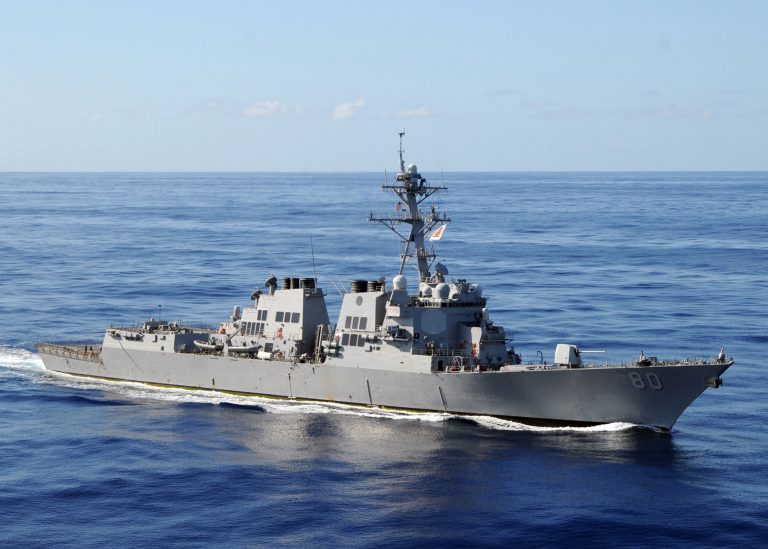
Japan’s participation this year stands out in both scale and scope. The country’s Joint Staff said the Japan Self-Defense Forces will deploy about 1,400 personnel, along with warships, aircraft, and anti-ship missile systems, as reported on April 14 by Japan Today.
While Japan sent observers to Balikatan in 2012 and participated in a limited capacity last year, this year’s deployment will include personnel from the Ground, Maritime, and Air Self-Defense Forces, as well as cyber and medical units — a move Japanese media have described as a “significant shift” in Japan military policy.
Newsham said Japan has been working in recent years to strengthen its capabilities through expanded cooperation with allies in the Indo-Pacific alliance network.
“The JSDF has never fought an actual war and isn’t fully prepared to do so. As a result, it is trying to improve the skills necessary for combat operations,” he said. “Balikatan is a valuable exercise in this regard and provides the opportunity to work closely with allies.”
Japan-Philippines defense agreement and regional strategy
Japan’s participation is also enabled by the Japan-Philippines Reciprocal Access Agreement, signed in 2024 and brought into force on Sept. 11. Kalebere said this year’s deployment demonstrates that the agreement is already translating into real military coordination.
“It is significant because Japan–Philippines ties have evolved from a difficult wartime past into a relationship of strategic trust, making Japan’s visible participation alongside both Manila and Washington especially meaningful,” she said.
She added that Japan’s involvement in command-and-control coordination and live-fire exercises underscores a shift in posture.
Japan Today reported that the scale and complexity of the deployment signal Tokyo’s intent to play a more active role in Indo-Pacific defense strategy. The report highlighted the inclusion of the Ground Self-Defense Force’s Type 88 ground-based anti-ship missile system, designed for island defense operations.
“This looks less like routine military scheduling and more like a deliberate signal of deterrence, readiness, and alliance coordination,” Kalebere said.
According to her, Japan’s role is expanding in both scale and substance, reflecting its evolution from a cautious security actor into a more deployable strategic partner.
“This is not just about one exercise; it reflects a longer-term effort to build interoperability, legal access arrangements, and a more durable security architecture in the maritime Indo-Pacific,” she said.