China’s banks issued fewer credit cards in 2025 than in previous years, and newly released data points to a broad pullback across the sector. Total credit card circulation fell to 696 million by the end of the year, down 31 million from 2024 and 111 million below its peak. Spending declined by more than 10 percent at major lenders, overdue balances increased, and one regional bank reported a default rate above 11 percent. The figures indicate a coordinated retrenchment across China’s consumer credit market, driven by tighter regulation, weakening household finances, and banks reassessing earlier expansion strategies.
Recent announcements from several banks outline the scale of the adjustment. China Minsheng Bank said on April 2 that it would discontinue 11 credit card products, including several co-branded cards tied to retail partners. From May 18, affected customers renewing or replacing cards will receive standard Minsheng-issued cards instead.
Agricultural Bank of China, one of the country’s largest state-owned lenders, said on March 31 it would stop issuing student-focused “Youth Cards” under both UnionPay—China’s state-backed payment network—and Mastercard starting May 15. Earlier in March, the bank had already withdrawn its Tianzhushan-themed card. Guangfa Bank also said it would end a co-branded card partnership with a Guangdong-based cable television network from April 1.
Official statements cited “business adjustments” and the expiration of agreements. The timing and breadth of the changes, however, suggest a broader shift in strategy.
Co-branded and themed cards had been a primary growth channel. Banks partnered with airlines, retailers, universities, and local governments to issue cards tailored to specific consumer groups. This approach boosted headline issuance numbers but left many cards inactive after initial use.
Success
You are now signed up for our newsletter
Success
Check your email to complete sign up
The People’s Bank of China, the country’s central bank operating under Party oversight, has in recent years pushed lenders to reduce so-called “dormant cards”—accounts that remain unused or inactive. As a result, total card numbers peaked and then began to decline.
Thirteen major banks listed in both mainland China and Hong Kong—often referred to as “A+H banks”—held about 799 million cards at the end of 2025, down roughly 4.69 million from the previous year.
Xue Hongyan, a banking sector researcher, told reporters the decline reflects a shift away from expansion toward customer quality. He said the market had reached saturation, leaving fewer creditworthy individuals without access to credit cards.
Credit card spending falls across all major lenders
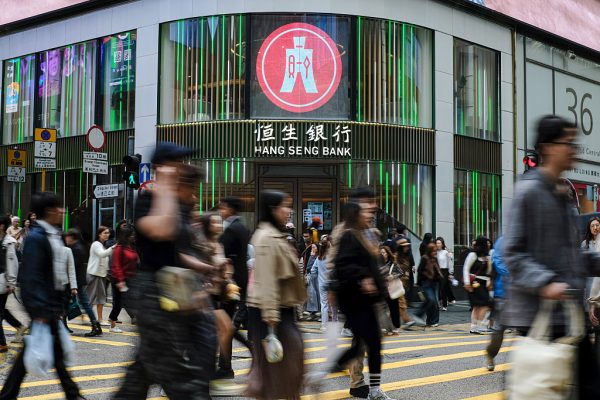
Spending trends show a similar pattern. Ten major listed banks reported total credit card transactions of 18.79 trillion yuan (about $2.6 trillion) in 2025, a year-on-year decline of 10.39 percent. All ten recorded declines, with seven—including Industrial and Commercial Bank of China and Bank of China—seeing drops between 10 and 15 percent.
These figures reflect changes in consumer behavior, indicating that households are reducing reliance on credit cards. The decline may also reflect increased use of mobile payment systems or reduced discretionary spending.
Outstanding credit card balances also fell at most banks. This measure reflects total debt held by cardholders and can decline either through repayment or reduced lending.
Industry observers say both factors are contributing. Xue said banks are tightening credit standards, closing higher-risk accounts, and limiting exposure after several years of rising defaults. The focus has shifted from expansion to risk control.
Five banks, including Shanghai Pudong Development Bank and Zhejiang Commercial Bank, reported increases in balances, while the majority recorded declines.
Non-performing loan rates provide a clearer picture of financial stress. Of 14 listed banks reporting this data, nine saw default rates increase in 2025, while five reported improvements.
Dongguan Rural Commercial Bank reported a default rate of 11.03 percent, up from 6.02 percent a year earlier. Zhongyuan Bank reported 5.31 percent, while Industrial and Commercial Bank of China reported 4.61 percent. Minsheng Bank reported 3.87 percent, and Industrial Bank 3.34 percent.
Among banks with improving figures, Shanghai Pudong Development Bank recorded the largest decline. China Merchants Bank, Ping An Bank, Postal Savings Bank of China, and Industrial Bank also reported lower default rates.
The variation suggests uneven exposure. Banks that expanded more aggressively into higher-risk lending are facing greater losses, while those that maintained stricter controls have seen more stable outcomes.
Some banks continue to expand despite industry-wide contraction
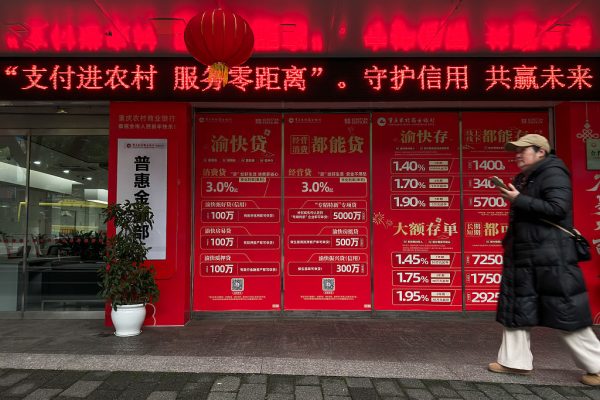
Not all institutions are reducing their card portfolios. China CITIC Bank added about 6 million cards in 2025, while Bank of China and Hua Xia Bank each reported increases of more than one million.
Four large banks now each hold more than 100 million cards: Bank of China, Industrial and Commercial Bank of China, China CITIC Bank, and China Construction Bank.
These banks appear to be pursuing targeted expansion focused on borrowers with stronger credit profiles. The effectiveness of this strategy will depend on broader economic conditions and household income trends.
Online discussions on Chinese social media platforms have highlighted repayment difficulties among borrowers. Commenters responding to reports on credit card cutbacks pointed to rising financial strain.
“Stop using credit cards, and you reduce both bank losses and personal risk,” one user wrote. Another commented that banks expanded aggressively but encountered repayment challenges later. A third noted that many borrowers now struggle to repay debt, increasing risk exposure for lenders.
These views align with broader concerns about household finances. Years of rapid credit expansion extended lending to borrowers with weaker income stability. As economic conditions shifted, repayment pressures increased, leaving both banks and borrowers exposed.