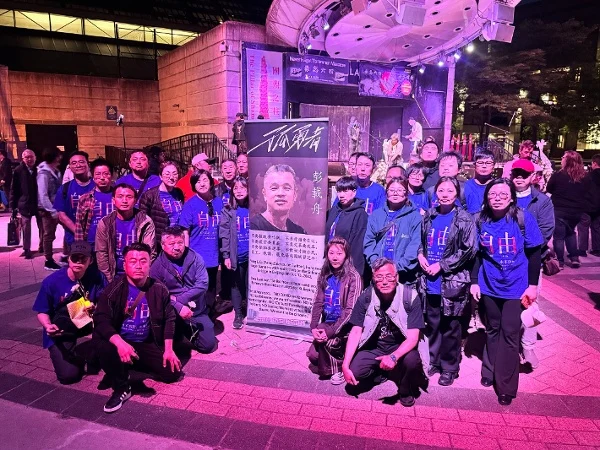
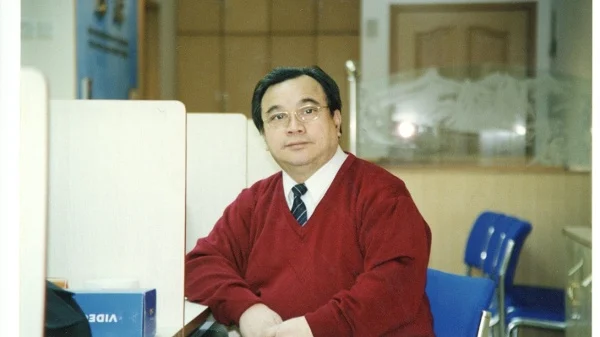
A yellowed newspaper clipping. A signed agreement bearing the names of scholars and student representatives. A father who walked to a neighborhood market and never came home. 37 years later, in an exclusive interview with Vision Times, Cao Siyuan’s daughter, Cao Zhifang, and her husband, Chen Zhong, have pieced together the fragments of a story they believe history should not forget.
For the Cao family, it’s not just family history. It is also the story of an insider-turned-reformer who spent decades asking how China could prevent future tragedies through constitutional limits on power.
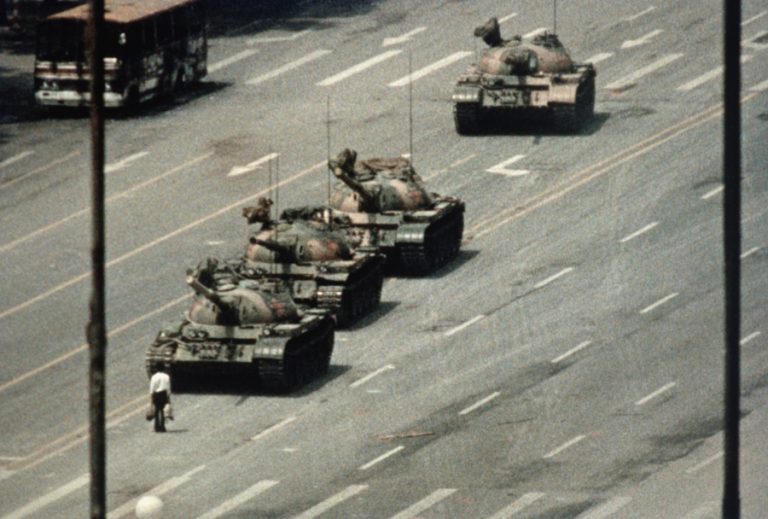
On June 4, 1989, the Chinese Communist Party (CCP) deployed troops and tanks to crush a nationwide pro-democracy movement led largely by students. Though publicly-available information is scarce, the military assault ended weeks of peaceful demonstrations centered in Beijing’s Tiananmen Square and resulted in the deaths of hundreds, and according to some estimates, thousands of civilians.
RELATED: ‘It’s My Duty’: Global Projection Campaign Launches on Tiananmen Anniversary
From Tiananmen survivor to reform advocate
To understand why Cao Siyuan became so deeply involved during the turbulent spring of 1989, his family says one must begin much earlier. According to Cao Zhifang, her father had already completed his university education before the Cultural Revolution. He studied concepts from Marxism and Mao Zedong at a Party school in Nanchang before being sent to work at a pharmaceutical factory in Jingdezhen during the political upheaval.
Success
You are now signed up for our newsletter
Success
Check your email to complete sign up
Still, being exiled to the factory floor did not silence him. “He had already written his ideas down,” Cao recalled. “When graduate studies resumed, he submitted a paper analyzing leftist political mistakes. At that time, very few people dared to openly criticize those issues.”
He was later admitted to the Chinese Academy of Social Sciences, taught at the Central Party School, and eventually worked within the State Council. The Cultural Revolution convinced him that China’s most fundamental problem was the absence of constitutional restraints. “He believed China needed constitutional government because so many injustices had happened during the Cultural Revolution,” Cao Zhifang said. “People’s lives and rights could be overturned overnight.”
Recognizing the political realities of the time, Cao pursued reform incrementally. He helped draft China’s first bankruptcy law and advocated economic reforms that challenged rigid state control. Chen Zhong, who later worked closely with him, said Cao became widely known in reform circles. “He was still relatively young when he promoted bankruptcy reform,” Chen said. “At the time, he was regarded as one of Zhao Ziyang’s key policy advisers.”
Opening China’s political system from within
After leaving the State Council, Cao moved closer to civil society. His family credits him with helping promote public observation of sessions of China’s National People’s Congress, arguing that legislative proceedings should not remain entirely closed to ordinary citizens. “He believed people had the right to know what their representatives were discussing,” Cao Zhifang said.
RELATED: US Lawmakers Spotlight China’s Transnational Repression on Tiananmen Anniversary
Chen added that Cao also pushed for broader public visibility into political deliberations. “Ordinary people could finally see discussions that had previously been hidden from view,” he said. “That was significant.” These reforms may have appeared modest, but his family believes they challenged entrenched assumptions about political authority.
As student demonstrations expanded in Beijing in the spring of 1989, Cao became involved in efforts to ease tensions. According to accounts he later gave, officials from the Communist Party’s United Front Work Department contacted him and other scholars to help facilitate dialogue with student leaders. “I did not participate in the demonstrations because I didn’t care,” Cao later recalled. “I was deeply anxious. I did not want the movement to continue to the point where events became uncontrollable.”
He helped draft a four-point proposal that called for dialogue, recognition of the students’ patriotic intentions, assurances against retaliation, and an end to the hunger strike accompanied by a withdrawal from Tiananmen Square.
Student representatives eventually signed the document. “If the central authorities had accepted it,” Cao later said, “the hunger strike could have ended and the students could have withdrawn from Tiananmen Square.” The proposal was then delivered to senior officials, but after hours of waiting, no agreement was reached.
The following day, the text appeared in China’s state paper Science and Technology Daily. For Cao’s family, the document remains evidence that alternatives to confrontation were still being pursued even as the crisis deepened. But whether those efforts could have changed the outcome remains impossible to know now.
A lifetime devoted to constitutional reform
On June 3, before the military crackdown unfolded in Beijing, Cao Siyuan left home to buy groceries. “He never came back,” Cao Zhifang said. According to the family, he was detained and taken to Beijing’s Qincheng Prison without notification. “My mother didn’t know what had happened,” she recalled. “She searched everywhere.”
After persistent efforts, the family was eventually allowed to see him. Even in detention, they say, Cao continued discussing constitutional principles with those around him. “He would explain constitutional rights to anyone who would listen,” Chen said. “Even the guards.”
Nearly a year later, Cao was released. Despite opportunities to leave China permanently, he chose to remain. “He believed people needed to stay and continue the work inside China,” his daughter said. Following his release, Cao supported himself through consulting work while continuing to study and write about constitutional issues. In 2002, he organized a private conference proposing constitutional reforms, including broader electoral participation and structural political changes.
The event drew international attention and according to his family, intensified official scrutiny. Clients disappeared. Visitors were questioned. Surveillance became routine. Yet Cao persisted. “He never stopped trying to influence people,” Chen said. “If he had an opportunity to speak, he would take it.”
Cao Zhifang believes her father’s life’s purpose remained unchanged. “He wanted to improve the lives of Chinese people,” she said. “Everything he did, whether through law, economics, or constitutional reform, was aimed at giving ordinary people rights and protections.”