Japan has taken a major step away from its post-World War II pacifist stance by allowing arms exports to more than a dozen countries, marking a significant shift in its long-standing defense policy.
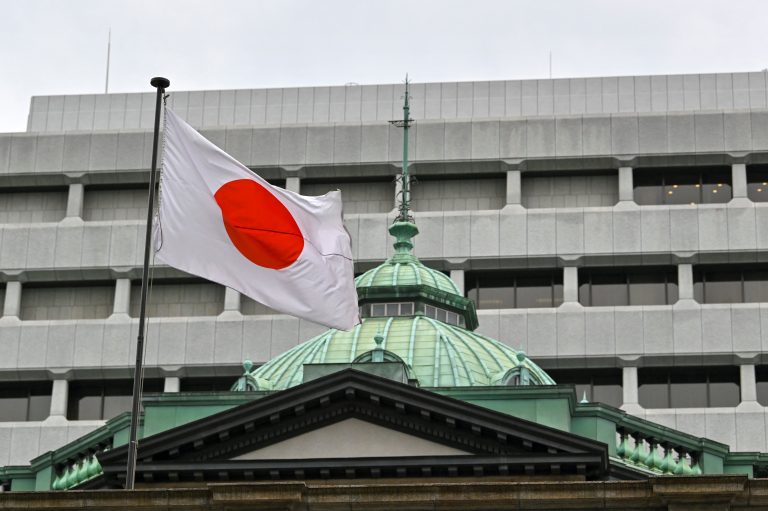
The Japanese government announced Tuesday, April 21 that it had revised limits on defense equipment exports, following approval by the cabinet and the National Security Council, as reported by Kyodo News. The move aims to strengthen defense cooperation with partner nations amid a worsening Indo-Pacific security environment.
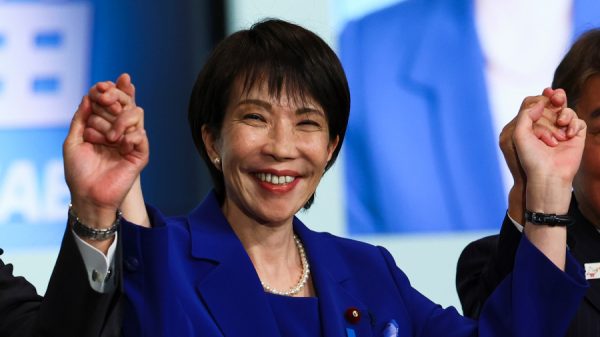
Prime Minister Sanae Takaichi said in a post on X that the changes were enabled by revisions to Japan’s “Three Principles on Transfer of Defense Equipment and Technology” and their implementation guidelines.
Policy shift expands Japan defense exports and cooperation
Japan’s arms export policy has been governed by these principles since 1967, when they were introduced during a session of the Diet. The rules originally prohibited exports to communist bloc countries, nations under U.N. Security Council arms embargoes, and countries involved in or likely to be involved in international conflicts.
Additional restrictions introduced in 1976 effectively banned arms exports to most other regions, reinforcing Japan’s identity as a “peace-loving nation.” According to the Japanese Ministry of Foreign Affairs (MOFA), the government had long maintained a policy of not allowing arms exports regardless of destination.
Success
You are now signed up for our newsletter
Success
Check your email to complete sign up
Takaichi said the latest revisions significantly expand the scope of permissible exports.
- Japan Joins US-Philippines Military Drills in South China Sea
- US Space Force Report: China Accelerating Space Warfare Capabilities Toward 2040
- China Builds Barricade at Scarborough Shoal, Raising South China Sea Tensions With Philippines
Previously, Japan limited defense exports to five categories: rescue, transportation, surveillance, and mine countermeasures under its policy of senshu-boei (専守防衛), or “exclusively defense-oriented policy.” Those restrictions will now be lifted, allowing a broader range of military equipment exports, including potentially lethal systems.
“In an increasingly severe security environment, no single country can now protect its own peace and security alone, and partner countries that support each other in terms of defense equipment are necessary,” she said.
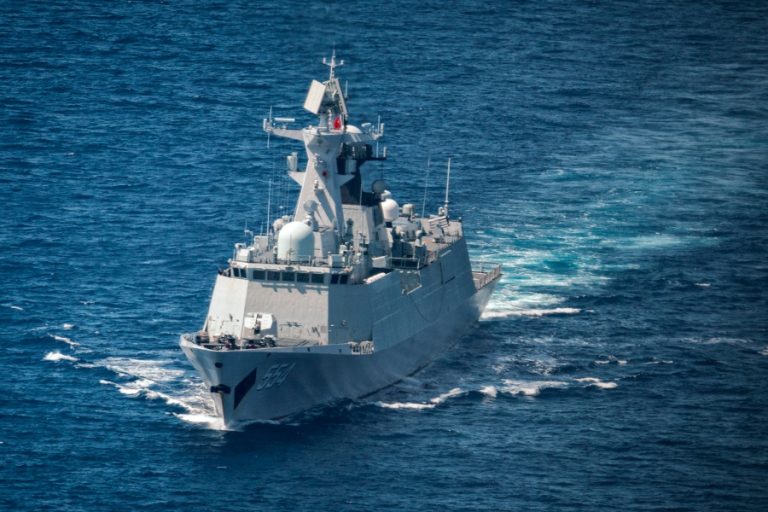
Japan’s defense industry has already begun moving in this direction. On April 18, Japan and Australia signed a $7 billion agreement for upgraded Mogami-class frigates, marking a major Japan-Australia defense deal. New Zealand has also expressed interest in the vessels, according to The Japan Times.
Lethal weapons exports and partner countries
Under the revised framework, Japan will classify exports into two categories: weapons and non-weapons, based on lethality.
The changes mean Japan can now export lethal weapons to 17 countries with which it has defense agreements, including Australia, India, the Philippines, Vietnam, the United Arab Emirates, Norway, the United Kingdom, and the United States, BBC reported.
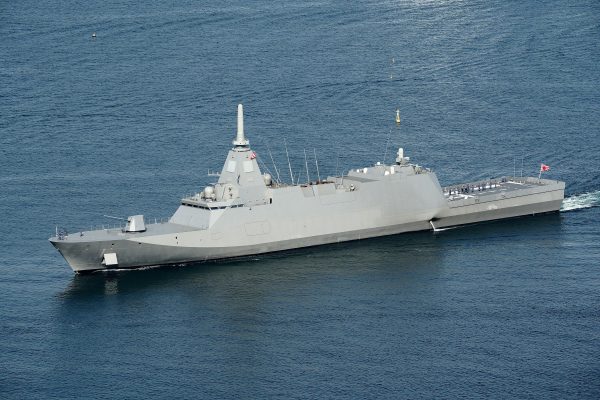
Takaichi emphasized that closer alignment in defense equipment would improve interoperability among allies.
“If the partner countries have the same equipment as Japan, they can share parts through mutual cooperation,” she said.
“Meeting such needs and carrying out transfers of defense equipment will contribute to enhancing the defense capabilities of these countries and ultimately, to preventing the outbreak of conflicts, thereby contributing to Japan’s security.”
Kyodo News reported that export decisions will be made by the government or the National Security Council, with parliament notified afterward — a process that may draw criticism from opposition parties seeking greater oversight.
Balancing military expansion with pacifist identity
The policy shift comes as Japan deepens its role in regional security, including joint projects such as a next-generation fighter jet being developed with the United Kingdom and Italy, expected to be deployed by 2030.
China has voiced concern over Japan’s decision to ease arms export restrictions.
People’s Republic of China (PRC) Foreign Ministry spokesman Guo Jiakun said Beijing views the move as inconsistent with Japan’s stated commitment to peace.
“Japan’s recent dangerous moves in the military and security fields defy its self-proclaimed ‘dedication to peace’ and adherence to the ‘exclusively defense-oriented’ policy,” he said at a regular press conference on April 21.
Despite the expansion of Japan’s military exports, Takaichi stressed that the country remains committed to its postwar principles of non-aggression.
“There’s absolutely no change in our commitment to upholding the path and fundamental principles we have followed as a peace-loving nation for over 80 years since the war,” she said.
“Under the new system, we will strategically promote equipment transfers while making even more rigorous and cautious judgements on whether transfers are permissible.”