By Biancheng Hudiemeng, Vision Times
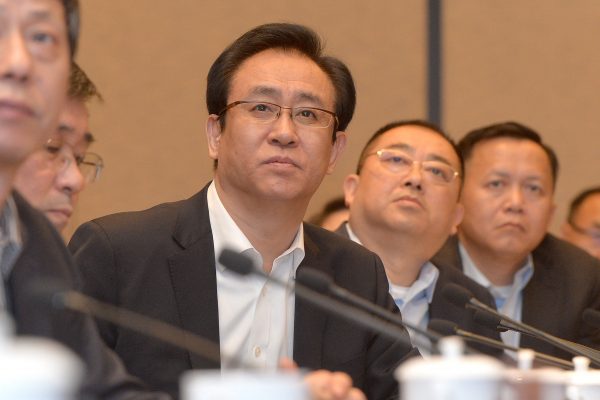
Behind the rise of Evergrande Group, once known as one of China’s largest property developers, internal documents point to a corporate culture shaped as much by personal authority as by business strategy, centered on founder Xu Jiayin and enforced through elaborate displays of obedience.
Now, newly-surfaced materials from an internal document known as the “President’s Office Daily Inspection Briefing,” once circulated as a “model template” for other regional offices to emulate, provides insight into how that culture operated in practice. The documents came to light following Evergrande’s financial collapse in 2021, when a wave of staff departures exposed previously confidential records detailing executive protocols and internal expectations that were not being met.
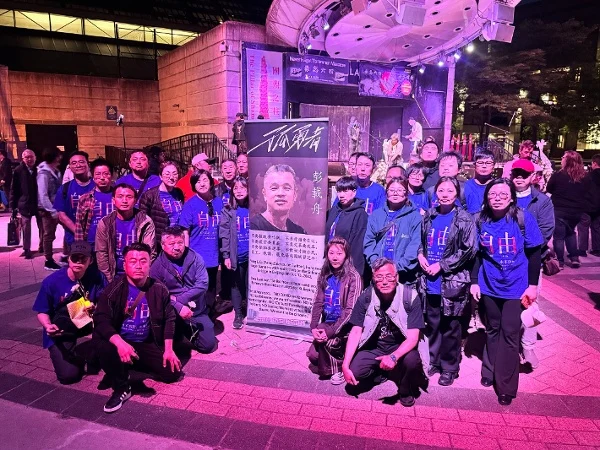
Xu also faces multiple counts of financial misconduct, including corruption and fraud, tied to Evergrande’s debt crisis, as authorities continue to investigate the company’s collapse. The fallout has left hundreds of Chinese investors facing significant losses, prompting some to organize coordinated efforts to press authorities for updates on the failed property developer.
RELATED: The Politics of Evergrande’s Collapse
A logistical nightmare
Success
You are now signed up for our newsletter
Success
Check your email to complete sign up
What emerges is a portrait less of corporate efficiency and more of excess, where operational logistics became a form of ritualized obedience. In April 2018, ahead of Xu’s inspection visit to Shenyang, the local branch entered what employees described as a “wartime state.” A dedicated reception team was formed, coordinating dozens of planning calls with headquarters. The itinerary was mapped down to the minute, even involving provincial-level government coordination.
Xu insisted on traveling exclusively in a Rolls-Royce. With no suitable vehicle available locally, a long-wheelbase Phantom was rented from Dalian at a daily cost of 22,000 yuan.
RELATED: Evergrande Founder Xu Jiayin Faces Trial as Case Unveils Debt Flows, Political Ties
The company reserved the entire 18th floor of the Shenyang Marriott Hotel, where Xu stayed in a presidential suite priced at 28,880 yuan per night. Air vents were deep-cleaned, humidity was fixed at 50 percent, and a silent air purifier was flown in from headquarters.
To ensure complete quiet, access to adjacent floors was restricted. Staff were required to wear soft-soled shoes and move silently. Carpets were brushed in a single direction to eliminate visual inconsistencies, while all lightbulbs were replaced with warm tones (3000K–3500K) so that “the boss’s complexion would appear healthiest.”
Precision, performance, and control
Even minor details were tightly controlled. Xu’s hair had to remain “perfectly in place,” requiring a stylist to carry industrial-strength spray at all times. Personal toiletries replaced hotel amenities, with water temperature pre-adjusted shortly before arrival.
Food arrangements were equally elaborate. Nearly 40,000 yuan worth of fruit was flown in from Japan, including premium melons costing up to 1,000 yuan each. Staff inspected each piece under magnification, discarding any with minor imperfections. Drinking water, reportedly priced at 2,700 yuan per bottle, was prepared in advance, with labels aligned for optimal visibility and temperatures maintained between 10°C and 12°C. Measurements were checked every 30 minutes.
Even the placement of objects such as cigar cutters and matchboxes followed strict guidelines. Elevators were reserved exclusively for Xu’s use, avoiding contact with other hotel guests.
Choreographed inspections
Preparations extended to Xu’s site visits. At construction projects, teams rehearsed movements down to the second, including handshake angles and walking distances. The exact number of steps Xu would take, from vehicle to inspection point, was calculated in advance to ensure ideal camera positioning.
Work at construction sites was temporarily halted to eliminate noise and odors. Workers present on inspection day were carefully selected for appearance, with strict requirements on cleanliness and uniformity.
A temporary “executive restroom” was constructed on-site, equipped with a temperature-controlled toilet and scented environment. Even the presence of foam on the water surface was specified to prevent splashing. These efforts culminated in brief inspection appearances lasting only minutes, yet requiring days of preparation and hefty expenses.
China’s workplace culture
Such practices raise broader questions about corporate culture in parts of China’s private sector. While administrative support is meant to enhance efficiency, many of these measures appear to have crossed into symbolic performance.
The emphasis was no longer functionality, but the demonstration of absolute compliance with authority. In this environment, employees often internalized the logic of hierarchy. The more elaborate the display of service, the greater the perceived status of those closest to power. Over time, this dynamic could intensify, with subordinates competing to exceed expectations, even beyond what was explicitly required.
RELATED: Growing ‘Lying Flat’ Movement Threatens to Derail China’s Ambitions
Observers suggest that such patterns reflect deeper cultural and structural influences. In systems where hierarchy is deeply embedded, professional relationships can shift toward dependency rather than contractual equality.
Today, China’s workforce sits at a crossroads. On one side is a legacy model that prioritizes control, loyalty, and hierarchy. On the other is an emerging emphasis on professionalism, mutual respect, and individual dignity. The contrast is particularly visible among younger generations, who tend to value flatter organizational structures and clearer boundaries between roles and authority.
Editorial note: Views expressed in this article are the opinions of the author and do not necessarily reflect the views of Vision Times.