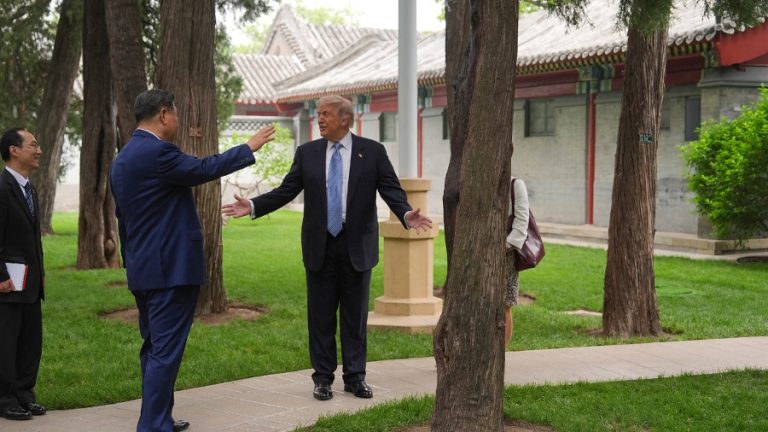
According to Fox News, on April 25, U.S. president Donald Trump called off a planned diplomatic mission to Islamabad. His special envoy Steve Witkoff and son-in-law Jared Kushner had been preparing to fly to Pakistan for a new round of talks on the Iran war when the president made the call to keep them home.
Writing on his Truth Social platform, Trump said too much time had already been wasted on travel. Iran’s leadership, he said, is consumed by serious infighting and confusion, with no one — including the Iranians themselves — clear on who is in charge. If they want to talk, he wrote, they only need to pick up the phone.
In a phone interview with Fox News earlier in the day, Trump described the reasoning. “I told my team, who were already getting ready to go, ‘No, you don’t need to take an 18-hour flight over there.’ We hold all the cards. They can contact us anytime. You don’t need to fly 18 hours just to sit there and talk in circles.”
Asked by Axios whether the cancellation signaled a return to active warfare against Iran, Trump said it did not. “No, it doesn’t mean that. We haven’t even thought about that yet.”
Earlier on Saturday, Iran’s foreign minister Abbas Araghchi held meetings in Islamabad with Pakistani prime minister Shehbaz Sharif and army chief of staff Asim Munir. The Pakistani military, not the civilian government, holds the country’s real foreign-policy weight on regional security questions, and Munir’s presence at the table signaled Islamabad was treating the visit seriously.
Success
You are now signed up for our newsletter
Success
Check your email to complete sign up
Araghchi posted on Telegram that the discussions focused on the latest developments in US-Iran negotiations and called the visit “highly productive.” He left Islamabad before the U.S. envoys were scheduled to arrive and continued on to Oman.
Pakistan’s foreign minister Ishaq Dar said the meetings lasted about two hours.
Oman has long positioned itself as a potential mediator in the region. Compared with several of its Persian Gulf neighbors, the sultanate maintains closer diplomatic ties with Tehran, and it has previously helped facilitate communication between Iran and the United States.
Iran has also floated a proposal that, if a future deal with Washington is reached, ships could be allowed to transit the Strait of Hormuz along the Omani side, a concession that would give Oman direct economic stakes in any settlement.

Iran’s public posture vs. supposed private outreach
A spokesperson for Iran’s foreign ministry said on X that Tehran had no plans to meet directly with U.S. representatives, and that all communication would be relayed through Pakistan.
That public stance is at odds with what is happening behind the scenes. White House press secretary Karoline Leavitt has said it was Iran that initiated contact with Washington, asking to open a fresh round of dialogue.
Republican senator Lindsey Graham endorsed the president’s decision, calling the cancellation “very wise.”
Writing on X, Graham said the United States should now prioritize firm control over the Strait of Hormuz, and warned that achieving that goal could require additional military action in the short term.
“Restoring freedom of navigation through the strait is worth that risk,” Graham wrote. A close Trump ally, Graham has consistently taken a hard line on Iran and recently visited the White House for policy discussions on the war.
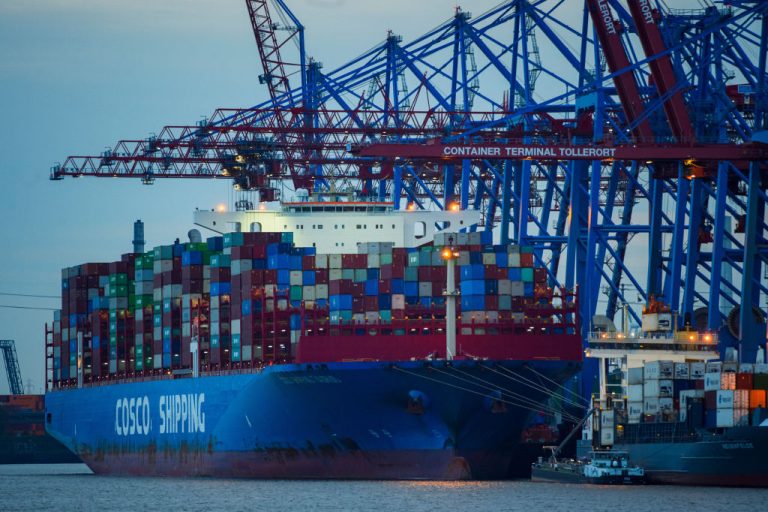
With the diplomatic track on hold, Washington is keeping up military pressure on the regime in Tehran. The United States is maintaining a naval blockade and using it to bring the regime back to the negotiating table on American terms. Trump recently ordered the US Navy to strike any vessel laying mines in the Strait of Hormuz, and American forces have already intercepted two very large crude carriers attempting to evade the blockade.
Bloomberg has reported that the war has killed more than 5,000 people since it began, the vast majority of them inside Iran.
Trump recently ordered the US Navy to strike any vessel laying mines in the Strait of Hormuz, and American forces have already intercepted two very large crude carriers attempting to evade the blockade. The blockade is squeezing Iran’s oil exports, the regime’s main source of hard currency, and the strait remains the chokepoint Washington intends to control.