The April 25 appeal was a peaceful gathering of roughly 10,000 Falun Gong practitioners outside Zhongnanhai, the walled compound that houses the senior leadership of the Chinese Communist Party in central Beijing, on April 25, 1999. The practitioners came to ask Chinese authorities to release fellow practitioners detained in Tianjin and to rescind a state media article defaming the practice. The Party later recast the gathering as a “siege of Zhongnanhai” and used it as the pretext for the nationwide persecution of Falun Gong launched on July 20, 1999. That persecution continues 27 years later.
I am a former employee of the Tianjin municipal government, and I was there. What I saw on April 25, 1999 is not what the Party has spent nearly three decades telling the world.
Why I, a Tianjin civil servant, started practicing Falun Gong in 1998
Before I began the practice, I suffered from severe insomnia and chronic stomach disease. I had reached a point where I felt my life had run out of meaning. I asked myself constantly why people bother to live at all. I considered leaving everything behind to enter a Buddhist monastery.
In July 1998, I woke up around three or four in the morning, unable to sleep yet again, and went outside to walk. On the street I came across a group of people sitting together along the roadside. I went over and asked what they were doing. They told me they practiced Falun Gong, a meditation and self-cultivation discipline drawing on Buddhist and Taoist traditions, founded in northeast China in 1992 by Li Hongzhi and rapidly adopted by tens of millions of Chinese citizens during the 1990s.
I asked whether I could practice with them. They handed me a cushion and showed me how to sit. I was able to fold both legs into the full lotus position right away, and they told me I had a connection with the practice. Within a short time, my insomnia and stomach problems were gone.
Success
You are now signed up for our newsletter
Success
Check your email to complete sign up
Why Tianjin police beat Falun Gong practitioners in April 1999
In April 1999, a magazine published by the Tianjin Education Institute ran an article defaming Falun Gong. Several of us decided to go to the publication and explain, calmly, that the article’s claims did not match reality.
Officials would not speak with us. Instead, several military police vehicles arrived, and officers waded into the crowd and beat people with electric batons. Many practitioners had their heads split open and were bleeding heavily. Some had their arms dislocated.
We went to the Tianjin city government to ask officials to address what had just happened to peaceful citizens on the street. The officials refused. They told us this matter was beyond their authority and that we should take our complaint to Beijing the next day. That instruction is what produced the April 25 appeal at Zhongnanhai. The Tianjin government sent us there.
What the April 25 appeal at Zhongnanhai actually looked like
The April 25 gathering was peaceful, lawful, and organized in direct response to a Tianjin government instruction to petition Beijing. There was no siege, no confrontation, and no breach of the Zhongnanhai compound.
The next morning, April 25, 1999, we bought train tickets and traveled to Beijing. Once we arrived, I asked a police officer where the State Bureau for Letters and Calls, the official petitioning office of the Chinese government, was located. The officer asked whether I was a Falun Gong practitioner, and gave me directions.
As I made my way through the city, I asked several more officers along the route, and each pointed me in the same direction. They directed me straight to Zhongnanhai. By the time I arrived, thousands of Falun Gong practitioners were already there.
About 10,000 of us stood quietly along the wall outside Zhongnanhai, without chanting, without blocking traffic, and without pushing against the gates. We waited while a small group of practitioner representatives went inside to present three concerns: the release of those detained in Tianjin, an end to the police beatings, and the freedom to continue practicing within Chinese law.
Zhu Rongji’s promise to Falun Gong practitioners on April 25, 1999
After some time the representatives came out and reported that the matter had been resolved. Zhu Rongji, the prime minister of China at the time and the head of the State Council, had received them personally. He told them Falun Gong was a beneficial practice, that he had previously issued instructions to that effect, that lower-level officials had failed to follow those instructions, and that the practice was lawful. We were told we could go home and continue. The crowd quietly dispersed.
We had been invited to petition by the Tianjin government, we had gathered peacefully, and we had received a verbal assurance from the head of the Chinese government.
Why the Chinese Communist Party banned Falun Gong on July 20, 1999
Three months after Zhu Rongji’s assurance, on July 20, 1999, the Communist Party launched a deliberate reversal: the campaign of mass persecution against Falun Gong that continues today. CCP general secretary Jiang Zemin, who personally ordered the crackdown, established the 610 Office, an extra-judicial security body created to target Falun Gong practitioners across China. The state that had told us our practice was legal began arresting us by the hundreds of thousands.
I was arrested several times after July 20. I was sent to forced labor camps twice and dismissed from my position with the Tianjin government, and eventually I left China.
Life as a Falun Gong refugee in Canada
Canada operates by entirely different rules from those that govern China under the Communist Party. The Canadian government has shown real concern for Falun Gong refugees and has offered me significant help, and Canadian officials have continued to look out for our wellbeing. Here, I have human rights. I can hold and practice my beliefs openly, in peace, with the freedom to follow my own conscience. The contrast with China, where the Party permits none of this, is enormous and constant.
The Chinese Communist Party is now targeting Falun Gong practitioners on Canadian soil
I did not expect the Party’s campaign against Falun Gong to follow me to Canada. The persecution inside mainland China has not stopped for a single day in 27 years, and it has now reached overseas as well, with Beijing’s hand extending into the lives of people who came to Canada to escape it. Canadian intelligence and parliamentary reports in recent years have documented growing Chinese government interference operations targeting Falun Gong, Uyghur, Tibetan, and Hong Kong communities on Canadian soil.
I hope Canadians and the Canadian government will recognize that the Party is still actively persecuting Falun Gong practitioners, both inside China and beyond its borders. I hope they will see the regime for what it is.
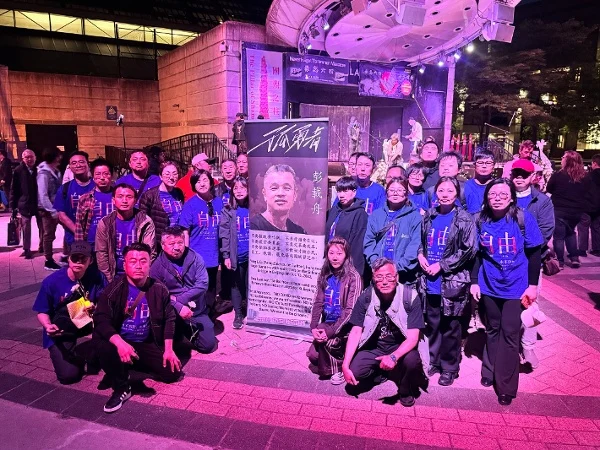
— Feng Xiumin, speaking at the April 25 commemorative rally in Toronto, Canada, on April 25, 2026.
By Feng Xiumin