Facing the escalating threat from the Chinese Communist Party (CCP), Taiwan’s Executive Yuan has proposed a NT$1.25 trillion special defense budget. However, the bill has long been stalled in the Legislative Yuan. After three rounds of cross-party negotiations failed to reach consensus, reports now indicate a serious internal conflict and factional struggle within the Kuomintang (KMT).
According to China Times, new Taipei City Mayor Hou You-yi stated on the 30th that the defense budget should be passed as soon as possible and should not be lower than 3 percent of GDP.
Taiwan’s “Special Defense Budget Act” remains blocked in the legislature, while internal divisions have also emerged within the KMT. The party is split between two factions: one led by party chair Cheng Li-wen and caucus whip Fu Kun-chi, pushing a NT$380 billion + “N” proposal, and another supported by younger legislators backing an NT$800 billion version. The two sides remain deadlocked.
Focus Taiwan reported that KMT Vice Chairman Chi Lin-lien questioned Legislative Yuan Speaker Han Kuo-yu for being out of step with the party leadership, accusing him of betraying the party for personal gain and calling for his expulsion from the party. He also demanded that Han post on Facebook affirming his loyalty to the party, which prompted numerous KMT lawmakers to leave messages of support.
According to Central News Agency (CNA), regarding the ongoing internal deadlock, New Taipei City Mayor Hou You-yi said on the 30th that the defense budget should be negotiated and reviewed as quickly as possible, and passed if it should be passed. He said professional matters should be left to the Ministry of National Defense, allowing frontline personnel and the most experienced soldiers to assess needs, and that Taiwan’s defense resources must be fully supported.
Success
You are now signed up for our newsletter
Success
Check your email to complete sign up
China Times reported that Hou stated that two years ago he had already proposed that defense spending should not be lower than 3 percent of GDP, which is not far from the Executive Yuan’s proposal. He said the issue should be re-evaluated at the frontline level and, as the economy continues to grow, national strength should be stabilized to create more opportunities for peace. “Ultimately, only by relying on ourselves can we protect ourselves and further promote peace,” he said according to a translation of his comments.
When asked whether he was supporting the Executive Yuan’s version, Hou reiterated: “Speaker Han has worked hard!” Defense spending should not be lower than 3 percent of GDP. This is not about supporting any specific version, but about setting a target. The most important thing is fast review, fast negotiation, and fast passage.
Zhao Shaokang: If Han is expelled, expel me first
Former China Broadcasting Corporation chairman Zhao Shaokang also criticized the party leadership on the 30th, accusing Chi Lin-lien of undermining party unity. He questioned whether Chi still had the qualification to serve as vice chairman, arguing that the so-called “N” figure in the proposal was unclear and not a valid budgeting method.
Zhao said the KMT central leadership was forcing the legislative caucus, and if Chi could not clearly explain when and how Han Kuo-yu allegedly “betrayed the party,” then Chi himself should be expelled and stripped of his vice chairmanship. He even declared: “If Han Kuo-yu is to be expelled, then expel Zhao Shaokang first!”
He also warned that if the KMT is labeled as “anti-American,” it could be eliminated early in the next general election.
According to the Central News Agency, Democratic Progressive Party (DPP) caucus secretary-general Fan Yun said at a press briefing on the 30th that there are public concerns about whether the KMT’s internal disputes are being influenced by the CCP. She urged KMT legislators who support national security to speak up, and called on the party to disclose any possible foreign interference.
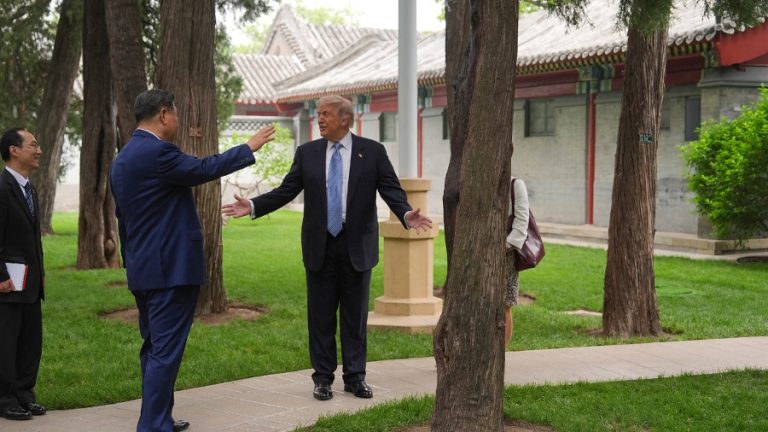
Fan said polls and public sentiment show strong support for the NT$1.25 trillion defense budget. However, KMT Chair Cheng Li-wen had recently said she did not oppose the NT$800 billion version, only for reports to later suggest a rollback to NT$380 billion. “It seems like decisions are being made based on changing moods, or even the mood of someone who has shaken hands with CCP leader Xi Jinping. This is very damaging to the country,” she said.
She warned that if the legislature ultimately passes only NT$380 billion, Taiwan would be unable to develop its drone industry, upgrade the “Taiwan Shield” air defense system, or advance US-Taiwan cooperation projects. Most seriously, it would send a negative signal internationally that Taiwan lacks the determination to defend itself.

Cutting drone industry could eliminate 90,000 jobs
According to CNA, DPP caucus deputy secretary-general Shen Pao-yang said that while the KMT caucus meeting on the 29th did not reach a clear conclusion, Cheng Li-wen and caucus whip Fu Kun-chi remain strongly in favor of returning to the NT$380 billion plan. This would not only reduce the budget to one-third but also remove key components such as the non-red supply chain, air defense integration, and the domestically developed drone industry—an industry involving over 90,000 jobs.
Taiwan’s drone industry is currently experiencing rapid growth and has been designated as one of the “Five Trusted Industries,” aiming to position Taiwan as the Asia-Pacific hub of a democratic drone supply chain. By 2030, Taiwan’s drone and defense-related industries are expected to generate significant value. Annual output is projected to reach NT$40 billion, and if defense special budget investments are included, the overall defense, aerospace, and drone industries could reach NT$400 billion in output value. This industrial upgrade is expected to create more than 90,000 jobs, driving supply chains in motors, engines, and machine tools.
According to an official announcement, Taiwan’s Executive Yuan has approved a coordinated program for unmanned vehicle industry development, including procurement of military-commercial drones for the armed forces, with cross-ministerial coordination and Ministry of National Defense involvement. The plan involves more than 100,000 drones to help domestic companies gain experience.
In response to global demand for de-Chinaization (non-red supply chains), Taiwan’s domestically developed drone systems have strong integration capabilities and are entering supply chains of international companies such as the US firm Skydio and France’s Parrot.
Currently, internal disputes within the KMT over the “NT$380 billion” versus “NT$800 billion+” proposals continue, and a fourth round of cross-party negotiations is scheduled for May 6.
By Li Jingyao