
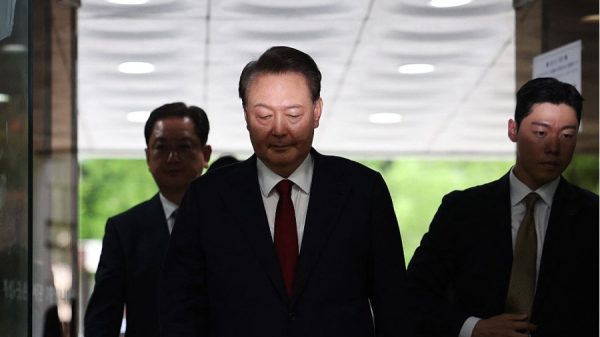
According to an April 29 report by American Broadcasting Company (ABC), the Seoul High Court issued a second-trial ruling sentencing former South Korean President Yoon Suk Yeol to seven years in prison. The charges included resisting arrest and bypassing lawful cabinet meeting procedures prior to his brief declaration of martial law in December 2024.
This new conviction adds to his previous life sentence for insurrection-related charges. The cases stem from allegations that Yoon pursued authoritarian-style political actions, triggering one of South Korea’s most severe democratic crises in decades.
Judge Yoon Sung-sik of the Seoul High Court stated that Yoon deliberately avoided convening the full legally required cabinet before declaring martial law. Instead, he selectively gathered only certain members for what the court described as a “mock meeting” and used falsified documents to conceal procedural violations.
The court also found that in the weeks following his impeachment, Yoon used security forces to obstruct law enforcement officers attempting to execute an arrest warrant, with the court likening these actions to the use of a “private militia.”
His defense attorney, Yoo Jeong-hwa, called the ruling “deeply disappointing” and announced plans to appeal to South Korea’s Supreme Court.
Success
You are now signed up for our newsletter
Success
Check your email to complete sign up
Political crisis extended into government transition as social turmoil continued
According to National Public Radio (NPR), although Yoon’s Dec. 3, 2024 martial law order was short-lived, it quickly triggered a nationwide political crisis that disrupted government functions, diplomacy, and financial markets.
The situation gradually stabilized only after liberal candidate Lee Jae-myung won the snap presidential election held in June 2025.
Before that, Yoon had already been impeached by the National Assembly in December 2024 and was formally removed from office by South Korea’s Constitutional Court in April 2025.
After his suspension, Yoon refused to comply with arrest warrants, leading to prolonged confrontations between law enforcement and presidential security personnel outside his residence. He has since undergone detention, release, and re-arrest, while still facing multiple ongoing criminal proceedings.
The same court recently increased the prison sentence of his wife, Kim Keon Hee, to four years on charges involving acceptance of luxury gifts and stock manipulation.
In a separate case, prosecutors are seeking a 30-year prison sentence for Yoon, accusing him of escalating tensions on the Korean Peninsula through drone operations involving North Korea in 2024 to help create political conditions favorable for martial law.
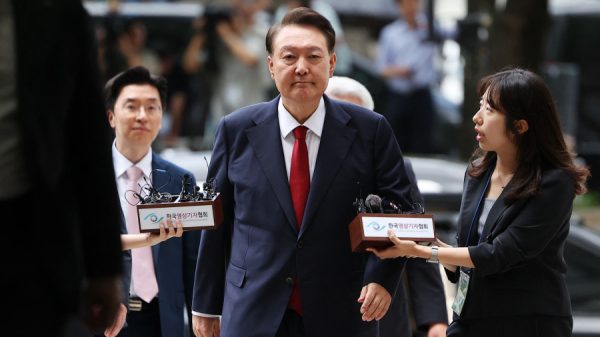
Ongoing controversy and deep divisions over the verdict
Beyond the legal rulings, South Korean public opinion remains sharply divided. Some conservatives and Yoon supporters argue that the verdict and related charges are politically motivated, excessively punitive, and may constitute selective prosecution against a former president.
However, legal experts and opposition groups maintain that the case is based on multiple independent criminal offenses and procedural violations, representing the normal functioning of the judicial system rather than political interference.
The controversy surrounding the case has expanded far beyond the courtroom, deepening existing divisions within South Korea’s political structure and society.