According to an April 24 press release, the Treasury Department’s Office of Foreign Assets Control sanctioned Hengli Petrochemical (Dalian) Refinery, a 400,000-barrel-per-day facility in Dalian on China’s northeast coast. The Treasury described Hengli as China’s second-largest “teapot” refinery, the term used in the industry for smaller, independent Chinese refiners that operate outside the state oil giants and that have become the primary buyers of sanctioned Iranian crude.
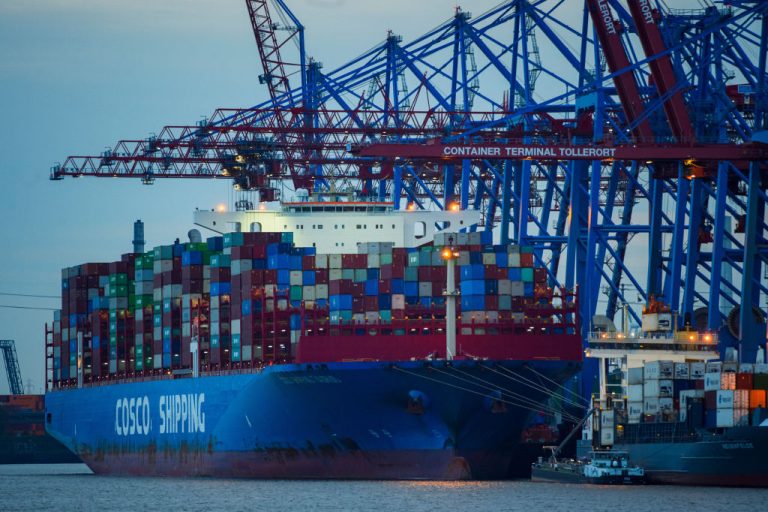
Alongside Hengli, Treasury sanctioned about 40 shipping companies and tankers operating as part of what U.S. officials call Iran’s “shadow fleet:” a network of aging vessels, shell companies, and intermediaries that disguise the origin of Iranian oil so it can be sold into global markets, mostly in Asia.
The sanctions cut all designated parties off from the U.S. financial system. Any individual, bank, or company that continues to do business with them risks being hit by secondary sanctions, the U.S. mechanism for punishing foreign firms that breach American restrictions even when no U.S. person or entity is directly involved.
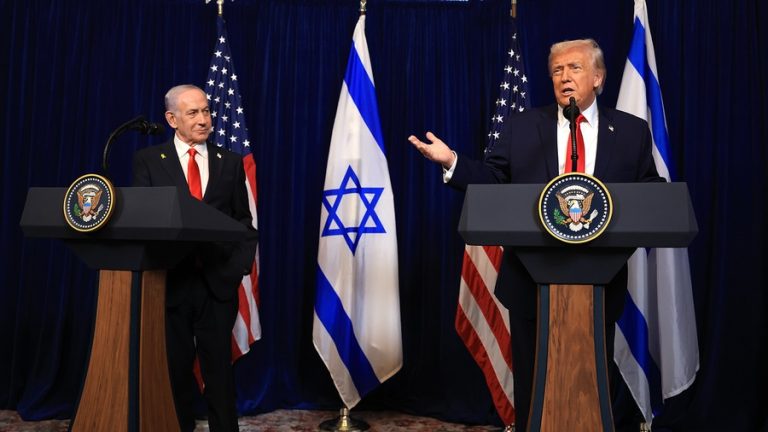
According to the Associated Press, the White House said the move delivers on Trump’s earlier warning that he would impose secondary sanctions on entities and countries doing commercial business with Iran. The action is part of a broader strategy to shut off Iran’s oil exports.
CNN reported that, this month, the U.S. military also moved to enforce a maritime cordon at the Strait of Hormuz, the chokepoint at the entrance to the Persian Gulf through which roughly a fifth of the world’s seaborne oil passes, after a confrontation with an Iranian-flagged tanker on April 20.
Success
You are now signed up for our newsletter
Success
Check your email to complete sign up
Hengli Generated Hundreds of Millions of Dollars in Revenue for Iran’s Military Since 2023
According to the U.S. Treasury Department’s Office of Foreign Assets Control (OFAC), since 2023 Hengli has been receiving Iranian crude through sanctioned shadow-fleet shipments, generating hundreds of millions of dollars in revenue for Iran’s armed forces. The Treasury identified the seller as Sepehr Energy Jahan Nama Pars Company, the oil sales arm of Iran’s Armed Forces General Staff and a known front used by Iran’s military to move sanctioned crude through international intermediaries.
In February 2025, the U.S. advocacy group United Against Nuclear Iran also identified Hengli as one of dozens of Chinese companies buying Iranian oil.
According to the Treasury, China is the largest buyer of Iranian oil in the world. Before the U.S. and Israeli campaign against Iran began in late February 2026, China was importing somewhere between 80 and 90 percent of Iran’s exported crude, the Treasury says. Most of that crude moves through the shadow fleet, with shipments often relabeled as Malaysian or other origin to enter the Chinese market. The buyers are typically smaller Chinese teapot refineries.
Iran has said publicly that one of its conditions for ending the war is that Washington lift its sanctions.
According to a Treasury press release, Treasury Secretary Scott Bessent said: “The Iranian regime must be held accountable for its extortion of global energy markets and indiscriminate targeting of civilians with missiles and drones.”
Bessent said that “under President Trump’s leadership, as part of Economic Fury, Treasury will continue to follow the money and target the Iranian regime’s recklessness and those who enable it.”
According to Fox Business, earlier this month, the Treasury Department warned financial institutions in China, Hong Kong, the United Arab Emirates, and Oman that they would face secondary sanctions if they maintained business ties to Iran. U.S. officials accused the financial systems in those jurisdictions of providing channels for illicit Iranian money flows.
Reuters reported that at an April 15 White House briefing, Bessent told reporters that the United States had made clear to other countries that anyone involved in buying Iranian oil or providing banking services to Iranian funds could become a sanctions target. He called secondary sanctions “very stern” measures. Bessent also disclosed that the Treasury had written to two Chinese banks warning them of secondary sanctions if Treasury could prove that Iranian money was flowing through their accounts.
The Middle East war has disrupted oil and gas shipments and pushed international energy prices higher.
To take some of the pressure off prices, the Treasury Department has recently issued temporary sanctions waivers on Russian oil and a one-time exemption for Iranian crude already loaded on tankers at sea. That waiver lapsed last week.
In the past, Beijing has repeatedly objected to U.S. sanctions, but because major Chinese companies and banks remain heavily dependent on dollar-denominated settlement in the global financial system, they typically comply with U.S. designations. The Chinese embassy in Washington responded to Friday’s announcement by accusing the United States of “politicizing trade” and “abusing sanctions” against Chinese firms.