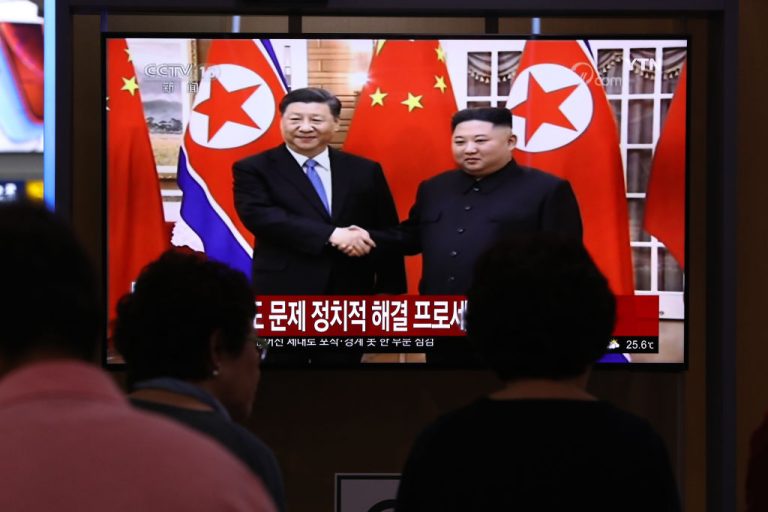
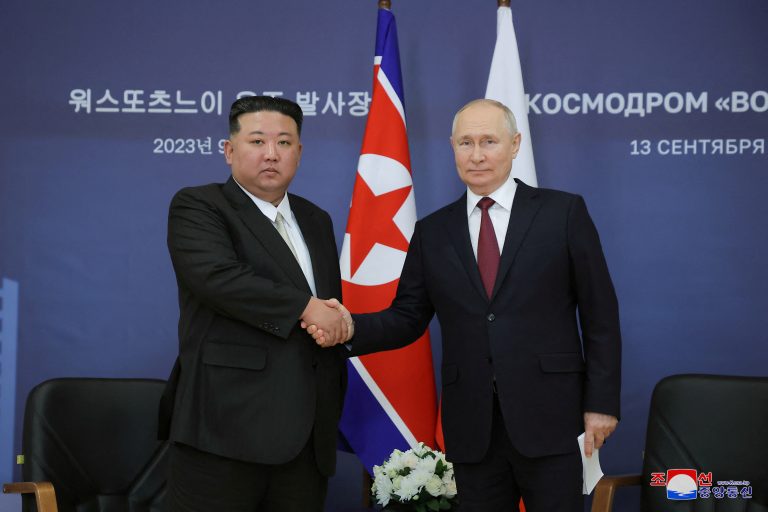
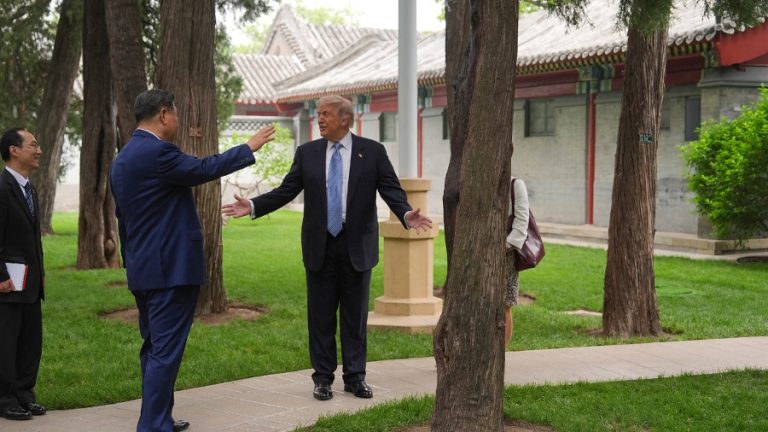
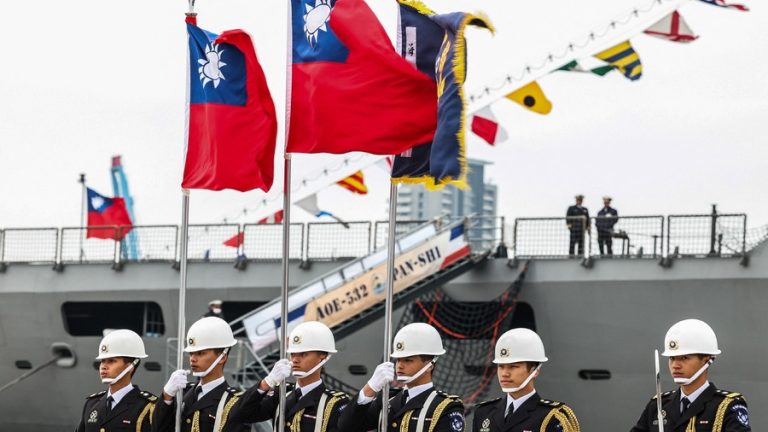
President Donald Trump said last week that his upcoming visit to Beijing for a high-profile summit with Chinese leader Xi Jinping remains on schedule, even as both sides escalate messaging on their respective geopolitical priorities — Iran and Taiwan.
Ahead of the visit, which has been delayed due to the war in the Middle East, the United States has signaled it wants China’s cooperation on the Iran conflict, while Beijing is pressing Washington to adjust its stance on Taiwan.
Trump’s visit, now set for May 14–May 15, was originally planned for March but postponed due to the Iran war and escalating Middle East tensions. Speaking to reporters May 1, Trump dismissed concerns about the trip.
“It is going to be amazing. The visit with China and Chairman Xi – that’s going to be great,” he said. “We have the trip with China coming up. And I think it will be an amazing event.”
Xi is general secretary of the Chinese Communist Party (CCP), as well as president — the Chinese term literally translates to “national chairman” — of the People’s Republic of China.
Success
You are now signed up for our newsletter
Success
Check your email to complete sign up
Originally expected to focus on trade and economic cooperation, the summit has taken on a heavier geopolitical dimension amid the Iran war and global energy security concerns.
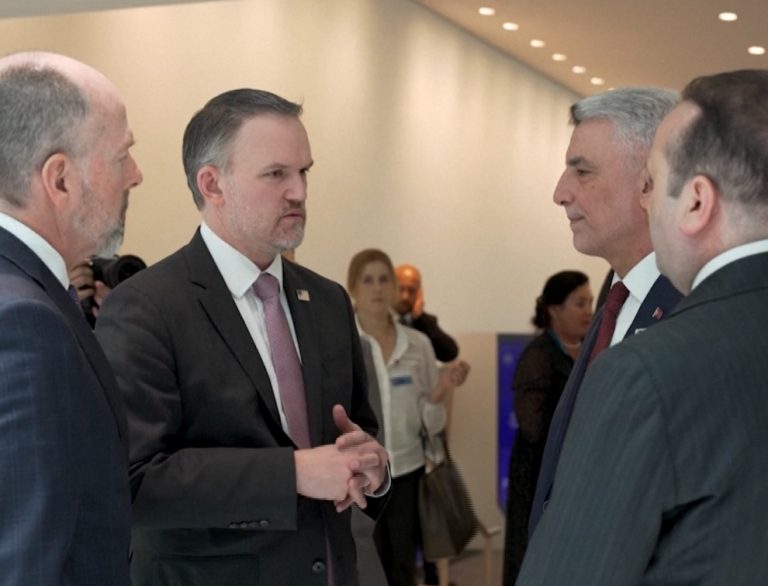
Shen Ming-Shih, director of national security research at Taipei’s Institute for National Defense and Security Research, said the U.S. is entering the talks with clear priorities tied to the Middle East crisis.
“If Iran is unwilling to back down, the US will continue to exert pressure, and the US will also ask China to exert pressure. However, while China outwardly agrees, it actually hopes that the US will be bogged down in the Middle East issue,” he said.
US pushes China on Iran and Strait of Hormuz
Trump has repeatedly suggested that Beijing could play a role in helping resolve the Iran conflict and stabilize global oil markets.
On April 14, he said that “Xi would like to see the Iran war ended.”
The Trump administration has also sought international support — including from China — to keep shipping lanes open in the Strait of Hormuz, a vital artery for global energy supply and oil shipments.
Dilip Sinha, a former Indian diplomat and former head of India’s U.N. affairs, said Trump is eager to resolve the conflict even if it impacts U.S. influence in the Gulf.
“The Gulf remains vital for China,” Sinha said. “It may accept Trump’s call for restraining Iran because peace is also in its interest. Besides, once peace descends and sanctions are lifted on Iran… Iran will emerge as the big power in the region and China will be happy to see US influence recede.”
China imports roughly one-third of its oil and gas through the Strait of Hormuz, making the disruption a key concern for Beijing’s energy security and global supply chains.
Since the start of the Iran war, China has criticized U.S.-Israel military actions while positioning itself as a mediator, offering limited direct support to Tehran.
Shen said Trump is likely to press China further during the summit.
“He will also demand that China stop exporting military products to Iran, increasing pressure on Iran,” he said.
Sinha added that Trump may also highlight post-war economic opportunities to attract Chinese cooperation, including reconstruction efforts and expanded business ties.
China presses US on Taiwan
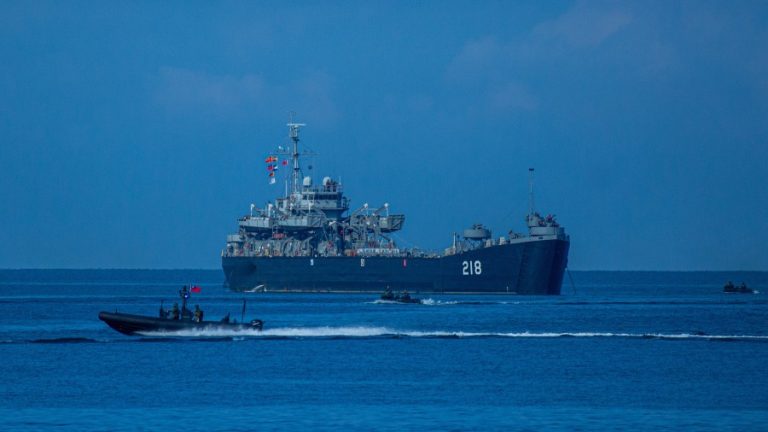
While Washington focuses on Iran, Beijing has intensified its messaging on Taiwan — a core issue in U.S.-China relations.
During an April 30 call with Secretary of State Marco Rubio, Chinese Foreign Minister Wang Yi described Taiwan as the “biggest point of risk” in bilateral ties.
“The Taiwan issue concerns China’s core interests,” Wang told Rubio, adding that the U.S. should “keep its promises and make the right choices,” according to Xinhua.
China’s Foreign Ministry has also called Taiwan the “core of core interests” and a central foundation of China-U.S. relations.
“’Taiwan independence’ and peace in the Taiwan Strait are as incompatible as fire and water,” the ministry said, as reported by the Taipei Times.
Analysts say Beijing may seek concessions on Taiwan in exchange for cooperation on Iran and broader geopolitical issues.
Sinha said Taiwan remains a top strategic priority for the PRC.
“Xi may not assert China’s right to invade Taiwan… but it will certainly want the US to reduce its commitment to defending Taiwan, in order to pressure Taiwan to seek a compromise,” he said.
While Taipei Times reported that the officials in Taiwan will remain on high alert, watching the unfoldings at the summit, Shen Ming-shih said that he doesn’t expect the US to give any concessions to Beijing on Taiwan during the meeting.
“China may pressure the US to discuss the Taiwan issue, but because of Taiwan’s interests and values, the US will not change its Taiwan policy or express opposition to Taiwan independence,” Shen said.
He added that China’s perceived support for Iran could also become a point of contention during the talks, with Washington expected to raise the issue directly.