Canada’s intelligence agency has issued a strong warning about the country’s national security environment, describing it as the most severe since the Cold War while identifying foreign interference, particularly from Beijing, as a central threat.
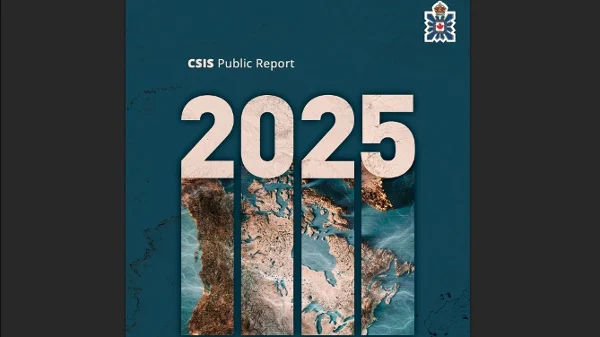
In its 2025 annual public report, released in March 2026, the Canadian Security Intelligence Service (CSIS) concluded that Canada faces a complex and evolving set of risks, with China described as the “most active, persistent, and sophisticated” actor engaging in foreign interference.
The report outlines what officials call a shift toward “whole-of-government” operations, in which multiple Chinese state entities coordinate efforts across political, economic, and technological domains.
RELATED: Canadian Parliament Hearing Spotlights Beijing’s Transnational Repression Tactics
Multi-dimensional threats
CSIS characterizes the current environment as one of “full-spectrum infiltration,” where traditional distinctions between espionage and influence operations have blurred.
Success
You are now signed up for our newsletter
Success
Check your email to complete sign up
According to the report, foreign interference now touches nearly every layer of Canadian society, from federal elections to local governance, from advanced research institutions to community networks. Five primary threat categories are highlighted, including:
- Foreign interference by states including China, Russia, India, and Iran
- Economic security risks targeting critical sectors such as artificial intelligence, biotechnology, and critical minerals
- Transnational repression directed at diaspora communities
- Ideologically driven violent extremism
- Cyber threats against critical infrastructure
The agency also points to legislative changes in 2025, including expanded authorities under the Foreign Interference Transparency framework, which allow for greater information sharing between government and private-sector entities.
A coordinated approach
Within the report, China’s activities receive the highest level of concern. CSIS describes Beijing’s efforts as a coordinated campaign involving multiple state organs, including the United Front Work Department, the Ministry of State Security, and public security agencies.
Rather than isolated incidents, the report suggests these efforts reflect a systematic approach aimed at shaping political outcomes, influencing public discourse, and advancing strategic interests abroad.
CSIS warns that foreign interference has become increasingly localized, with tactics designed to influence political processes at multiple levels. The report cites cases in which financial support was allegedly channeled through indirect networks to candidates perceived as aligned with Beijing’s interests. These efforts were not limited to any one demographic group, underscoring the breadth of the strategy.
It also highlights the use of digital platforms to shape narratives. Following concerns raised during previous elections, the report notes the continued use of automated accounts and targeted messaging on platforms such as WeChat and TikTok. These campaigns have included efforts to discredit politicians advocating tougher policies toward China by portraying them as discriminatory or hostile.
Transnational repression
One of the report’s most serious concerns is the phenomenon of transnational repression, meaning actions taken by foreign governments to monitor, intimidate, or silence individuals within Canada. CSIS describes such activities as a direct challenge to Canadian sovereignty.
In one case, a Muslim Uyghur student in Toronto who participated in a human rights demonstration reportedly saw family members in Xinjiang detained shortly afterward and pressured to communicate with the student. Authorities allegedly used the situation to coerce cooperation.
RELATED: UN Experts Sound Alarm on Forced Labor Targeting Uyghurs, Tibetans, and Other Minorities
The report also notes that informal or covert “policing” activities linked to foreign actors have adapted in response to enforcement efforts, moving into less visible channels while continuing to operate within diaspora communities.
Technology and research risks
The report highlights a shift in how sensitive technologies are accessed, with greater reliance on partnerships and collaborations that appear legitimate on the surface.
Programs framed as investment or innovation initiatives have, in some cases, sought to obtain proprietary technologies from Canadian firms. The report describes scenarios in which companies shared intellectual property during partnership negotiations, only to see similar technologies emerge elsewhere without the promised investment materializing.
In academic settings, certain collaborations have raised concerns due to links with institutions connected to China’s defense sector, even when projects are presented as civilian research.
AI and ‘cognitive warfare’
A notable trend identified in the 2025 report is the increasing use of artificial intelligence in influence operations. CSIS warns that generative AI has enabled more sophisticated disinformation campaigns, including the creation of deepfake videos targeting public figures in an effort to undermine credibility.
The agency also notes the use of professional networking platforms, where AI-generated profiles have been used to approach individuals with government or security experience, offering consulting opportunities that may serve as recruitment channels.
Building resilience
In response, CSIS emphasizes the need for a comprehensive defense strategy that extends beyond intelligence agencies.
The report calls for greater public awareness, expanded security screening in critical sectors, and closer coordination with international partners, including the Five Eyes alliance and the Group of Seven (G7). “Our defense must not rely solely on intelligence monitoring,” the report concludes. “It must also come from an informed and vigilant society.”
The CSIS report underscores that national security threats are no longer confined to traditional geopolitical arenas but are increasingly embedded in everyday life. As Canada confronts what officials describe as an evolving and persistent challenge, the findings highlight the importance of safeguarding democratic institutions while adapting to a rapidly changing global landscape.
Editorial note: This article is based on publicly available reporting and the CSIS 2025 Annual Report.