Trump used his Truth Social account to lay out the plan on Sunday, May 3. He said governments around the world had asked Washington for help retrieving their ships from the closed strait, describing the affected countries as bystanders with no role in the fighting.
“Countries from all over the World, almost all of which are not involved in the Middle Eastern dispute going on so visibly, and violently, for all to see, have asked the United States if we could help free up their Ships, which are locked up in the Strait of Hormuz,” Trump wrote, calling them “merely neutral and innocent bystanders.”
He said his administration had agreed to guide the vessels out of the closed waterway “for the good of Iran, the Middle East, and the United States,” and had instructed his representatives to inform the affected governments that Washington would use its best efforts to get their ships and crews out safely. Several of those governments, he added, have indicated they will not send vessels back into the strait until safe passage is restored.
Trump said the operation will begin Monday morning Middle East time and described it as a humanitarian step. The ship movement, he wrote, is meant to “free up people, companies, and Countries that have done absolutely nothing wrong — They are victims of circumstance.” Many of the stranded ships, he said, are running low on food and on the supplies needed to keep large crews healthy.
He also signaled that talks with Tehran were continuing in parallel. He said his representatives were having “very positive discussions with the Country of Iran” that could yield good outcomes for everyone involved. After months of fighting, he said, the operation should be read as a sign of good faith from all sides.
Success
You are now signed up for our newsletter
Success
Check your email to complete sign up
Trump closed with a warning. Any interference with the evacuation, he said, “will, unfortunately, have to be dealt with forcefully.”
Why the strait is closed
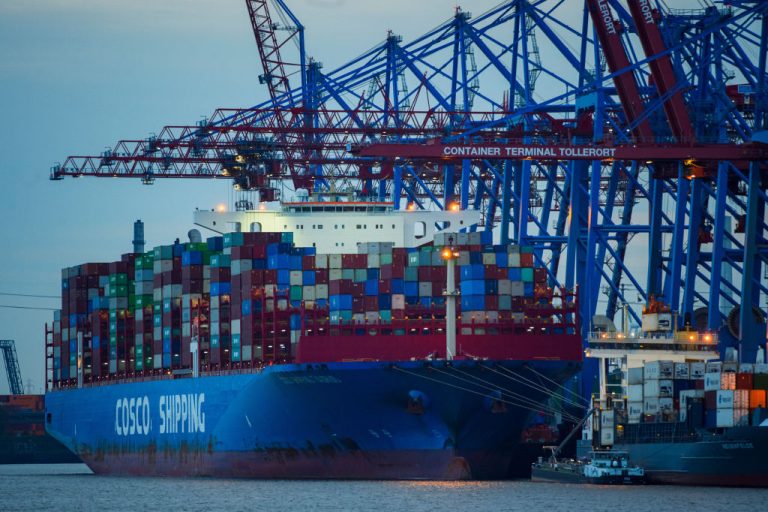
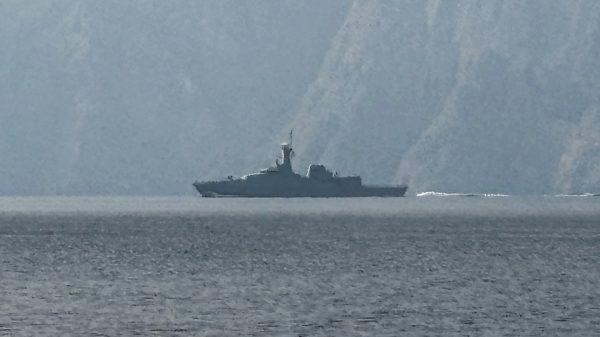
The Strait of Hormuz has been blocked since the U.S.-Iran conflict erupted, leaving large numbers of cargo vessels stuck inside the Persian Gulf and battering global supply chains. The strait handles about 20 percent of the world’s crude oil shipments, and the closure has driven international oil prices higher and pushed up gasoline prices in the United States.
According to CNBC, Project Freedom is not designed to reopen the channel for normal traffic. Its aim is narrower: to give already-stranded ships a one-way escorted exit. Iran has prevented vessels from passing in both directions by firing on ships that attempted transit and by mining the shipping lanes.
The U.S. and Iran have now held a ceasefire for more than two weeks, and the war has entered its second month. Negotiators in Washington and Tehran are still talking, but the discussions have produced no substantive breakthrough. Trump has said publicly that he is unsatisfied with Iran’s most recent proposal.
On Friday, May 1 Trump notified Congress that hostilities against Iran had ended. The notification arrived against a deadline set by the 1973 War Powers Resolution, which requires a president either to seek congressional authorization for the use of force or to formally declare war within a fixed window after troops are committed.