According to reports from the Associated Press and Court News Service, 64-year-old Chinese American Lu Jianwang (also known as Harry Lu), a former president of the New York Changle Association and a prominent figure in the local Fujianese community, was found guilty by a federal jury in New York on May 13 after four days of trial and one day of deliberation.
Lu was convicted on two charges: “acting as an illegal agent of a foreign government” and “obstruction of justice.” However, he was acquitted on a separate charge of “conspiracy to act as a foreign agent.” Under U.S. federal law, Lu could face up to 30 years in prison. The charge of illegally acting as a foreign government agent carries a maximum sentence of 10 years, while obstruction of justice carries up to 20 years. Final sentencing will be determined by the judge.
On May 6, 2026, Lu formally stood trial in Brooklyn federal court (U.S. District Court for the Eastern District of New York), facing charges of conspiracy to illegally act as a foreign agent, illegally acting as an agent of China, and obstruction of justice. His co-defendant, Chen Jinping, pleaded guilty in December 2024 and is currently free on bail awaiting sentencing after Lu’s trial concludes. The case is being presided over by Judge Nina Morrison, and the jury has been hearing testimony and reviewing evidence from both sides.
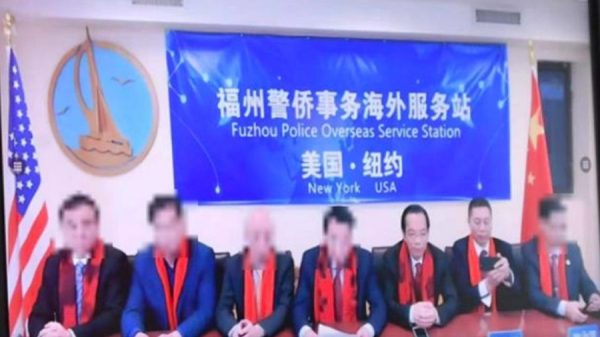
The case originated from an FBI raid in October 2022 on the Changle Association office at 107 East Broadway in Manhattan’s Chinatown. Prosecutors alleged the office housed a “Fuzhou Overseas Police Service Station,” commonly referred to as an “overseas police station.” According to prosecutors, Lu traveled to Fujian Province in early 2022 to attend the launch ceremony of an overseas police service station at Wuyi Plaza in Fuzhou.
After returning to the United States, he and Chen Jinping allegedly established the station inside the Changle Association office and displayed related banners. Prosecutors argued the station functioned as an overseas extension of the Fuzhou Public Security Bureau and failed to register with the U.S. Department of Justice under the Foreign Agents Registration Act (FARA).
Success
You are now signed up for our newsletter
Success
Check your email to complete sign up
Federal prosecutors stated in opening arguments that although Lu had long been a naturalized U.S. citizen, he was “living in New York , but he was working for the Chinese government.” Evidence presented by prosecutors showed Lu’s cellphone contained contact information for 22 Chinese officials, including 15 public security officers. Among them were Wang Xizhang, deputy mayor of Fuzhou responsible for overseas “110” operations; Liu Rongyan, director of the Fuzhou police “Overseas 110 Police-Civilian Service Station;” deputy director Chen Lei; public security official Huang Jiesheng; and Shang Wei, director of the Beijing Public Security Bureau’s “610 Office.” Prosecutors said Lu maintained close ties with these officials, had received plaques of recognition from China’s Ministry of Public Security, and appeared in photographs with them.
Recovered WeChat records
During the trial, prosecutors introduced recovered WeChat records restored by FBI technicians as key evidence. The records allegedly showed the defendants deleting chats with public security contacts. One important witness was Chinese dissident Xu Jie, who now lives in Los Angeles. Xu testified that in March 2022, Liu Rongyan of the Fuzhou Public Security Bureau contacted Lu seeking assistance in locating Xu’s address and movements in Los Angeles, and Lu subsequently forwarded the request to members of a Fujian hometown association. Xu, a participant in the 1989 Tiananmen Square protests and a longtime democracy activist, testified that his Los Angeles office had been vandalized multiple times and that he and his family had been harassed.
Prosecutors also presented other examples in court. In 2018, public security official Huang Jiesheng allegedly sent Lu photos of Falun Gong practitioners and asked him to identify whether they practiced in the United States. In 2021, Huang allegedly sent Lu a “supplementary criminal report” containing sensitive personal information. Prosecutors argued this evidence demonstrated that Lu assisted the Chinese Communist Party in monitoring dissidents in the United States and gathering intelligence, rather than merely providing community services.
Prosecutors emphasized that although the station publicly offered services such as remote Chinese driver’s license renewals during the pandemic, it was actually involved in transnational surveillance and harassment operations.
According to the Courthouse News Service, defense attorney John Carman argued that the site was simply a shared community space operated by the Changle Association, used primarily for social gatherings among Fujianese immigrants, including table tennis, mahjong, and assistance with driver’s license renewals during the pandemic. Carman stressed that Lu Jianwang “is not a spy and not a member of the Chinese Communist Party,” and said he was being targeted because of his broad social connections, adding that “his only possible crime may have been failing to fill out paperwork.”
Seated beside Lu during the proceedings was former New York Police Department officer Baimadajie Angwang, who had once faced similar charges that were later dismissed and who now serves as a defense investigator. Both men wore American flag pins. Some older evidence proposed by prosecutors, such as anti–Falun Gong demonstrations during Xi Jinping’s 2015 U.S. visit, was excluded by the judge to avoid prejudicing the jury.
The case has triggered sharp divisions within the Chinese American community in the United States. During the trial, dozens of Fujianese community members gathered outside the courthouse to support Lu and call for a fair trial, with some claiming the case was politically motivated or racially discriminatory.
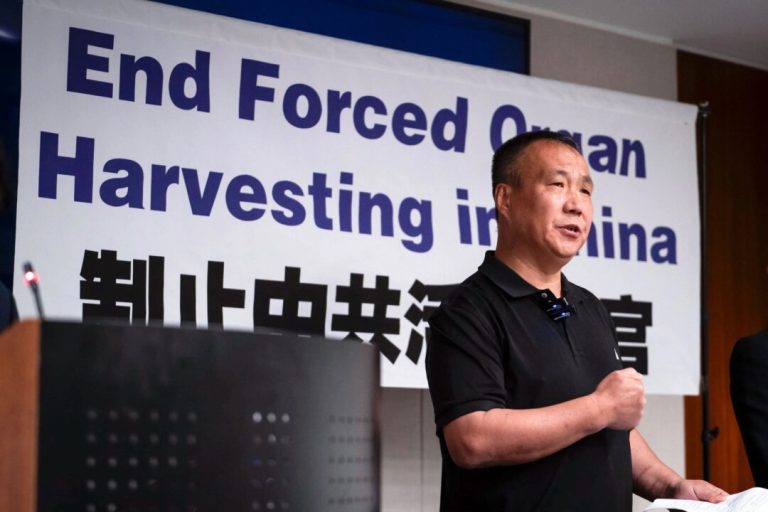
Meanwhile, democracy advocates and dissident groups supported the prosecution, viewing it as a major case against the Chinese Communist Party’s alleged “transnational repression.” Chinese-language media outside mainland China largely focused on the “secret police station” and “transnational repression” aspects, while some community organizations emphasized the office’s community-service role. Chinese authorities have not issued an official public response, though discussion of the case has spread widely among overseas Chinese communities.
Experts say the Lu Jianwang case is significant because it is the first criminal trial in the United States involving alleged Chinese overseas police stations. They believe it could establish a legal precedent for similar cases worldwide while also testing how the United States balances immigrant community activities with national security concerns.