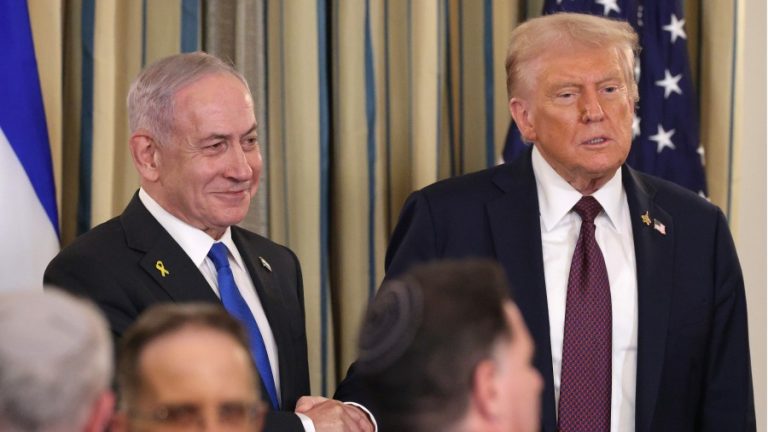
In his first major U.S. broadcast interview since the start of the U.S.-Israeli war on Iran, Israeli Prime Minister Benjamin Netanyahu said the joint military campaign had stopped Iran roughly one to two months short of acquiring a nuclear weapon. He described the Iranian regime as weaker than at any point since the 1979 Islamic Revolution and said the strikes have opened visible cracks inside the leadership. The interview, conducted by CBS News’ Major Garrett, aired on 60 Minutes on Sunday, May 10, 2026.
“If we hadn’t done the two military operations that we did, they’d have a bomb within – now or within a month or two,” Netanyahu told Garrett. He said the most significant operational result of the campaign was the killing of twenty senior Iranian nuclear scientists who had been working on warheads intended for use against Israel, the United States, and other targets.
Netanyahu said the campaign struck multiple petrochemical plants, steel mills, and defense-industrial facilities across Iran, all of which had fed the production of rockets, ballistic missiles, and other weapons systems. The Iranian regime, he said, has been hit hard enough that internal debate has opened over how to proceed. One faction in Tehran wants to keep fighting. Another warns that continued resistance will collapse the economy and turn the Iranian population against the regime. “That’s their real fear,” Netanyahu said. “The people will rise.”
Trump’s personal commitment on Iran predates his first term
Netanyahu recalled that President Donald Trump’s commitment to stopping Iran from acquiring nuclear weapons predates his first term in office. At their first meeting at Trump Tower in New York before the 2016 presidential election, Netanyahu said that Trump opened the conversation by saying the United States could not allow Iran to acquire nuclear weapons and that he would withdraw from the Iran nuclear deal once in office. Trump’s first-term withdrawal from the Joint Comprehensive Plan of Action followed in 2018, and the maximum-pressure sanctions campaign that followed cut deep into Iran’s oil revenues.
Eight years later, at Mar-a-Lago, Trump repeated the same point before Netanyahu had taken his seat. “You know, Bibi, we cannot let Iran have nuclear weapons. I’m not gonna let it happen,” Trump said, according to Netanyahu’s account. “So he’s infused with this mission,” Netanyahu added.
Success
You are now signed up for our newsletter
Success
Check your email to complete sign up
Netanyahu acknowledged that the first-term sanctions regime, while severe, did not ultimately stop Iran’s nuclear program. After Trump left office in 2021, Iran resumed uranium enrichment, moved facilities underground beneath heavy mountain rock that even U.S. B-2 bombers could not reliably reach, and pushed its weapons-grade development forward. By the time the joint U.S.-Israeli operations began on Feb. 28, 2026, Iran’s enrichment levels were within striking distance of a deliverable nuclear weapon.
Why an ayatollah regime with nuclear weapons is different
Netanyahu argued that the most important point for Americans, Europeans, and Israelis to understand is that the Iranian regime publicly declares its intention to destroy both the United States and Israel.
“They call us the Little Satan. They call you the Big Satan. And their doctrine is to wipe the Big Satan off the face of the earth. You cannot have such a regime with nuclear weapons. It’s just not the same thing. It’s not the same as the Netherlands having nuclear weapons. It’s completely different from an ayatollah regime that openly calls for your destruction by having nuclear weapons.”
He noted that Iran has spent decades developing plans not only for nuclear warheads but for the delivery systems capable of reaching the continental United States. American Marines, embassies, officials, and at least one U.S. president have been targets of Iranian operations. The combination of openly declared genocidal intent, decades of operational hostility, and a near-completed nuclear weapons program, in Netanyahu’s framing, is what made the 2026 military action necessary.
‘It’s not over:’ uranium, enrichment sites, and proxies still active
Netanyahu refused to declare the campaign complete. Iran’s stockpile of highly enriched uranium remains inside the country and must be physically removed, he said. Iranian enrichment facilities must still be dismantled. The Iranian-supported proxy network, including Hezbollah in Lebanon, Hamas in Gaza, and the Houthis in Yemen, remains active. Iran continues to seek to rebuild its ballistic missile production capacity.
Asked by Garrett how Iran’s enriched uranium would be removed from the country, Netanyahu replied directly: “You go in, and you take it out.” He declined to specify the military means but said Trump had told him privately that the United States is willing to act. If a negotiated agreement can achieve the removal of the uranium, the dismantlement of enrichment sites, and constraints on Iran’s proxy network and missile program, Netanyahu said, both Israel and the United States would accept it. If not, he said, both governments are prepared to act militarily again.
“It accomplished a great deal,” Netanyahu said of the campaign. “But it’s not over.”
By Tian Qin, Vision Times