The director-general of the United Nations Food and Agriculture Organization warned on May 7 that disruptions to fertilizer shipments through the Strait of Hormuz will reduce global crop yields and tighten food supplies through the second half of 2026 and into 2027.
At a meeting of Mediterranean agriculture ministers, Qu Dongyu, who served as China’s vice minister of agriculture before taking the FAO role in 2019, said that the crisis sits “at the core of the global agrifood system.” His warning came as the strait entered its tenth week of effective closure, with traffic running at roughly five percent of its pre-war average.
“Agriculture operates within a crop calendar that cannot be postponed,” Qu said. “Fertilizers must be applied at specific moments in the crop cycle. If they do not arrive on time, yields are reduced, regardless of what happens later.” He called for diversification of fertilizer sources, alternative trade routes, and protection of humanitarian supply chains.
Nitrogen trade chokepoint
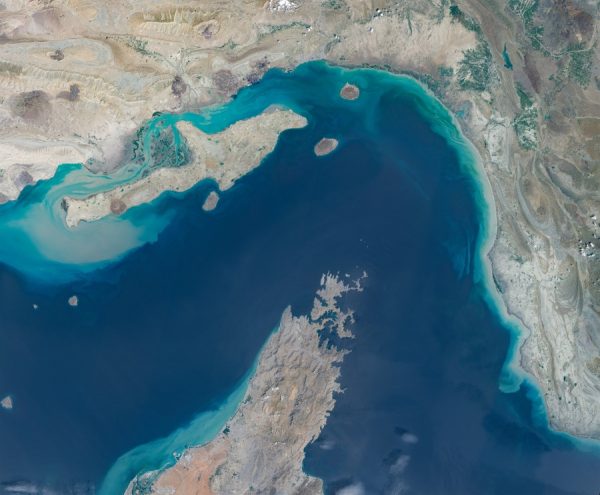
The Strait of Hormuz closed on March 2, days after the United States and Israel launched strikes against Iran on Feb. 28. According to Reuters, more than 30 percent of global nitrogen fertilizer exports move through the strait. Iran itself ranks among the top ten global nitrogen producers, alongside Saudi Arabia and Qatar, with all three drawing on cheap Gulf natural gas as feedstock. The closure removed that supply.
Gulf nitrogen production depends on regionally sourced natural gas, and the plants cannot relocate; the alternative producers in the Americas and Europe operate at higher feedstock costs and cannot expand output on a season’s notice.
Success
You are now signed up for our newsletter
Success
Check your email to complete sign up
The British House of Commons Library confirmed in a May 11 briefing that almost no shipping has used the strait since the closure, and that the U.S. has imposed a counter-blockade on ships seeking to use Iranian ports. Roughly 1,550 commercial vessels and 22,500 mariners remain stranded in and around the strait, according to Joint Chiefs Chairman General Dan Caine. The U.S. Navy has said it expects mine-clearing operations to take six months once active hostilities pause.
Anhydrous ammonia, the workhorse nitrogen input for American corn, rose from roughly $0.48 per pound of nitrogen in the fall of 2025 to $0.61 per pound by spring 2026, according to a University of Illinois farmdoc analysis published in March. Gulf diammonium phosphate prices climbed from about $583 per ton in January 2025 to nearly $800 by August, a 36 percent increase, according to the American Farm Bureau Federation. Rabobank’s head of North American grains and oilseeds, Stephen Nicholson, told Reuters in April that both nitrogen and phosphate fertilizers had moved into what the bank calls “unaffordable” territory.
American fertilizer stocks feel the strain
A Farm Bureau survey of more than 5,700 producers, conducted April 3 through April 11, found that 78 percent of Southern farmers and 48 percent of Midwestern farmers were unable to afford all the fertilizer their crops required this season. Producers in the Northeast and West reported 69 and 66 percent affordability gaps, respectively.
Reduced application rates lower yields by varying amounts depending on crop, soil, and weather, with corn the most sensitive of the major American crops to nitrogen shortfall. Agronomists at the University of Illinois have modeled per-acre revenue losses for the 2026 crop year under multiple input-cost scenarios, with the higher scenarios producing breakeven economics at or below current market prices for corn.
Reuters reported on April 17 that fertilizer buyers were redirecting imported urea nitrogen out of the United States, buying barges at the Port of New Orleans and reloading them for export overseas because foreign prices had risen above domestic ones.
“We saw a lot of physical barges that were being traded. They were linked to exports,” Josh Linville, vice president for fertilizer at StoneX, told the news agency. Fertilizer manufacturers control production and direct sales, but distributors and retailers control much of the downstream supply once product reaches American ports, Reuters reported. That layer of the market is where the export arbitrage is happening, and where the Justice Department’s antitrust review may focus.
Four firms control 70 percent of the U.S. nitrogen fertilizer market and two firms control 100 percent of the potash market, Deputy Agriculture Secretary Stephen Vaden noted at a May 5 USDA event, according to a DTN account of his remarks. The Justice Department has opened an antitrust investigation. Whether that concentration explains the price level or merely amplifies it, the supply cannot ramp on short notice as new ammonia plants take years to build.
Farmers switch gears
USDA’s Prospective Plantings report, released March 31, showed farmers intending to plant 95.3 million acres of corn in 2026, a three percent decline from the previous year. Soybean acreage is expected to rise four percent to 84.7 million acres. Soybeans require far less nitrogen than corn, and the shift tracks directly with the cost of nitrogen inputs. The Farm Bureau attributed the reallocation to “ongoing volatility in fertilizer markets” and noted that the closure of the Strait of Hormuz preceded the survey window.
The United States imports 95 percent of its potash, nearly 80 percent of it from Canada, according to a farmdoc analysis by University of Illinois researchers. Russia supplied 12 percent of U.S. potash imports and Israel three percent over the 2021-2024 period. Canadian potash continues to flow under the USMCA carve-out, but the broader U.S.-Canada trade relationship has been strained by tariff disputes. No domestic source covers the gap if Canadian supply is interrupted and American potash mines produce only a small fraction of U.S. consumption.
Russia accounted for 27.4 percent of U.S. urea imports in the January-April 2025 window, according to USDA data cited by Seatrade Maritime. The Trump administration’s April 2025 tariff decrees exempted Russian fertilizer while imposing duties of 10 to 15 percent on Saudi, Qatari, Israeli, and Trinidadian supply. Russian fertilizer remains duty-free as of writing. Imports from Russia rose roughly 30 percent year-over-year in 2025 and were projected to approach $5 billion. With the Middle Eastern alternative now closed, that share is expected to grow.

Impact not apparent until harvest
The agricultural damage from the spring 2026 fertilizer shock will not become fully visible until harvest. Yield reductions from underapplied nitrogen and phosphate will compound through the growing season. Qu’s FAO warning identified import-dependent countries in Africa, Asia, and parts of the Middle East as most exposed, particularly those already facing food insecurity. The United States will absorb the price effects domestically, but vulnerable food-importing nations will absorb the volume effects.
Beijing imposed urea export quotas in late 2023 that still remain in effect, restricting one of the few alternative supplies that could in principle absorb part of the Middle Eastern shortfall. China is the world’s largest fertilizer consumer and a top phosphate exporter, and its restrictions tighten the global market further.
Qu, who served as China’s vice minister of agriculture for four years before taking the UN role, was re-elected in 2023 to a second term as FAO director-general with 168 of 182 member-state votes after running unopposed. He has previously declined to condemn Russia’s invasion of Ukraine as a breach of the U.N. Charter despite pressure from Western states.
The next signal will be the WASDE crop production estimates due later this month, and the USDA acreage report at the end of June. By harvest, the question will be whether American farmers’ reduced applications produced the yield shortfalls economists are already modeling, and whether the FAO’s projection of tightening global food supplies into 2027 turns out to have understated the timeline. Qu’s second term as director-general expires on July 31, 2027, the same year in which his agency now projects food supply pressure to peak.