According to reports on May 18 by NPR and the Associated Press, a drone attack near the Barakah nuclear power plant—the United Arab Emirates’ only nuclear facility—triggered a fire. The UAE government classified the incident as an “unprovoked terrorist attack.” Although no group has claimed responsibility, the incident has renewed concerns that the Middle East could be sliding back toward full-scale conflict.
The UAE said the attack caused no casualties and no nuclear leakage or radiation release. However, amid recent hardline signals from both the United States and Iran, and a fragile ceasefire between Israel and Iran, the strike on a critical energy facility is being viewed as a serious warning sign of escalating regional tensions.
Drone attack on Barakah plant; UAE calls it a ‘dangerous escalation’
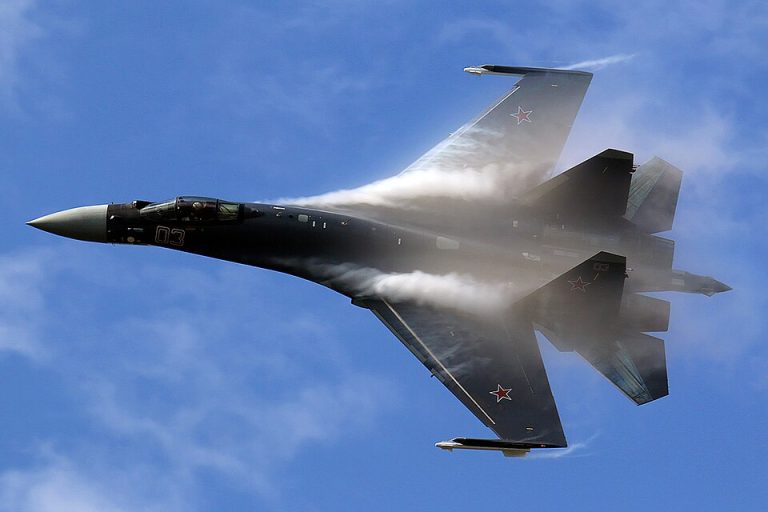
According to the UAE Ministry of Defense, three drones entered Emirati airspace from the western border near Saudi Arabia. Some were intercepted, while others caused fires in areas surrounding the Barakah nuclear plant. Authorities are investigating the origin of the drones.
Anwar Gargash, the UAE President’s diplomatic adviser, said on social media that whether the attack was carried out by a “principal actor” or its proxies, it represents a “dangerous escalation.”
Saudi Arabia also issued a statement condemning the attack and said its air defense systems intercepted multiple drones entering its airspace from Iraq.
Success
You are now signed up for our newsletter
Success
Check your email to complete sign up
The report noted that during the current regional conflict, Iran and Iranian-backed Shiite militias in Iraq have repeatedly launched drone and missile attacks on Gulf countries. The UAE has previously accused Iran of striking targets on its territory.
Fragile Middle East ceasefire; US and Iran exchange threats
As tensions rise around the Strait of Hormuz—one of the world’s most critical energy shipping routes—Iran and the United States have recently exchanged increasingly hardline statements. Iran is said to exert control over the waters, while the U.S. Navy maintains a high-pressure military presence in the region.
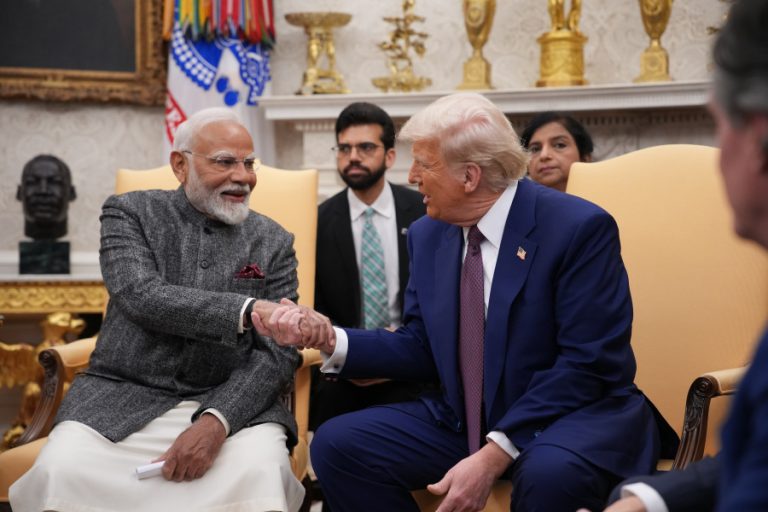
U.S. President Donald Trump, after a call with Israeli Prime Minister Benjamin Netanyahu, warned Iran on social media: “For Iran, the Clock is Ticking, and they better get moving, FAST, or there won’t be anything left of them. TIME IS OF THE ESSENCE!”
The report says that on Feb. 28, a U.S.–Israel joint strike against Iran triggered the current war. Although Trump has previously set deadlines for Tehran and later backed away, his latest remarks are being interpreted as a signal that Washington is reconsidering military action.
Iran has also issued a firm response. Mohsen Rezaei, a military adviser to Iran’s Supreme Leader, said on state television: “Our armed forces already have their finger on the trigger, but diplomatic channels remain open.”
Meanwhile, clashes between Israel and Hezbollah in Lebanon—an Iranian ally—have intensified, even as a nominal ceasefire remains in place.
UAE nuclear program differs sharply from Iran’s
The Barakah nuclear plant cost about $20 billion, was built with South Korean assistance, and began operations in 2020. It is the only operational nuclear power plant in the Arab world and supplies about one-quarter of the UAE’s electricity.
According to Al Jazeera, the UAE nuclear regulator said the fire did not affect nuclear safety and that “all reactors are operating normally.” The International Atomic Energy Agency (IAEA) stated that the attack caused a fire at a power generation facility, and one reactor temporarily switched to emergency diesel generators.
The report noted this is the first time the Barakah plant has been directly targeted during wartime. In 2017, Yemen’s Houthi movement claimed to have attacked the facility during construction, though Abu Dhabi denied the claim.
Unlike Iran, the UAE’s nuclear program is based on a “123 Agreement” with the United States, under which it renounces domestic uranium enrichment and spent fuel reprocessing to ease proliferation concerns, relying entirely on imported fuel.
By contrast, Iran maintains that its nuclear program is purely peaceful, but its uranium enrichment levels are close to weapons-grade. Western countries widely suspect Iran’s program had a military dimension before 2003, and Tehran has in recent years restricted inspections by UN nuclear monitors.
Nuclear facilities increasingly becoming wartime targets
In recent years, nuclear facilities have increasingly become targets in regional conflicts. Following the outbreak of the Russia–Ukraine war, several Ukrainian nuclear sites have remained under the shadow of combat.
During earlier conflicts involving Iran, Tehran has repeatedly claimed that its Bushehr nuclear plant was attacked, though no Russian-operated reactors were damaged and no radioactive leaks occurred.
Additionally, Israel is widely believed to be the only nuclear-armed state in the Middle East, although it neither confirms nor denies this. Iran has previously struck areas near Israel’s Dimona nuclear facility during wartime.
The New York Times reports that Israel is currently coordinating with the United States to assess the possibility of resuming military strikes against Iran. Two sources familiar with the matter say the Israeli military has made covert preparations.
At an Israeli cabinet meeting on the 18th, Netanyahu said: “There are many possibilities regarding Iran, and we are prepared for every scenario.”