The Chinese Communist Party (CCP) has recently intensified efforts to crack down on illegal cross-border transactions in an attempt to curb capital outflows. Foreign media reports indicate that banks in Hong Kong have begun strengthening scrutiny of mainland Chinese customers opening savings and investment accounts, requiring investors to confirm that their funds do not originate from mainland China.
Hong Kong banks tighten account openings for mainland Chinese
Bloomberg, citing informed sources, reports that Hong Kong banks have tightened applications for savings accounts by mainland Chinese individuals. In addition, Hong Kong regulators have introduced new requirements stating that customers wishing to open investment accounts must confirm their funds are not sourced from mainland China.
Due to mainland China’s foreign exchange rules, which limit residents to transferring only $50,000 overseas per year, Hong Kong has long served as a channel for circumventing strict capital controls. Large volumes of mainland Chinese funds have flowed into Hong Kong, becoming an important source of business for local banks.
Recently, as Beijing has stepped up controls on capital outflows, Hong Kong’s scrutiny has also increased. Last Friday, China’s securities regulator (CSRC) penalized three online brokerages for operating without proper licenses and illegally conducting business domestically, imposing total fines exceeding $330 million USD, the Xinhua News Agency reported. This marks a significant escalation compared to measures taken at the end of 2022, which required brokerages to rectify practices and stop acquiring new domestic clients.
Hong Kong regulators have simultaneously strengthened oversight. The Securities and Futures Commission (SFC) previously found issues such as document forgery and weak cross-border compliance controls, and has required Hong Kong brokerages to audit their client onboarding procedures. The Hong Kong Monetary Authority (HKMA) has also issued letters to banks, instructing them to adopt measures similar to those of the SFC regarding mainland investors.
Success
You are now signed up for our newsletter
Success
Check your email to complete sign up
The Hong Kong Association of Banks responded that banks will comply with the latest regulatory guidance to ensure onboarding processes remain compliant and efficient, and said the overall impact on account opening procedures is not significant.
Some Chinese banks suspend account openings for mainland clients
Bloomberg also cited sources saying that some Chinese banks operating in Hong Kong have suspended opening investment accounts for mainland residents and have raised the threshold and due diligence requirements for savings accounts.
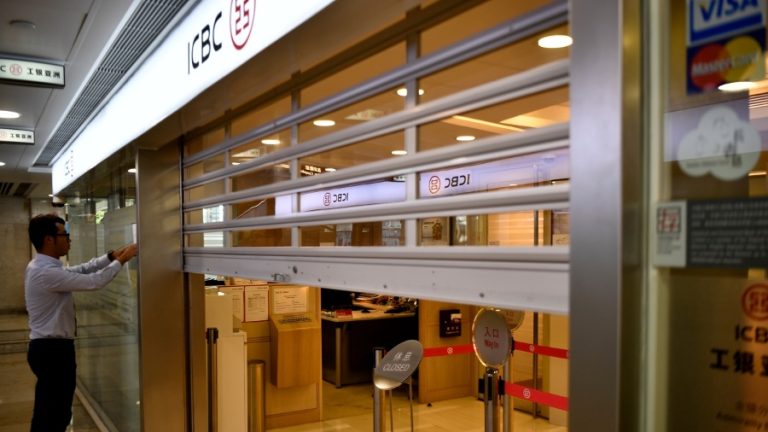
According to reports by Sing Tao Headline, staff at Industrial and Commercial Bank of China (Asia) and Bank of Communications (Hong Kong) stated that opening investment and wealth management accounts for mainland residents has been suspended until further notice. Staff at China Construction Bank (Asia) said mainland clients may still attempt to apply in person at Hong Kong branches, but approval is not guaranteed.
Bank of China (Hong Kong) staff said that mainland residents without Hong Kong residency status—often referred to as “Hong Kong drifters”—can open accounts immediately if they hold a Hong Kong identity card. Ordinary mainland residents may apply in person at Hong Kong branches but must provide full documentation, including mainland ID cards, travel permits to Hong Kong and Macau, entry slips, insurance payment receipts, or recent three months of brokerage statements and salary account records.
For non-Chinese banks, HSBC staff said that anyone holding a Hong Kong identity card—without needing permanent residency—can open a bank account in Hong Kong and also open a securities account online. Mainland Chinese residents who are physically in Hong Kong can also apply for accounts via QR code scanning.
Capital outflows estimated to reach $1 trillion
This regulatory tightening aims to prevent further escalation of capital flight from mainland China. According to Bloomberg estimates, capital outflows bypassing controls (including both legal and underground channels) in 2025 could reach nearly $1 trillion, the highest level since 2006. Amid a sluggish real estate market and slowing economic growth, the pressure for domestic capital to seek overseas assets has intensified significantly.
Reports indicate that China’s securities regulator, together with the Ministry of Industry and Information Technology, the Ministry of Public Security, and the People’s Bank of China, among eight government agencies, has issued heavy fines against cross-border internet brokerages such as Futu Securities, Tiger Brokers, and Longbridge Securities.
Futu is reportedly facing a fine of approximately 1.85 billion yuan, while Tiger Brokers faces a fine of 310 million yuan plus confiscation of 100 million yuan in illegal gains. In addition, the CEOs of both companies, Li Hua and Wu Tianhua, have each been fined over one million yuan personally. This regulatory crackdown marks the end of the “grey zone” for cross-border stock trading.
Platforms like Futu and Tiger Brokers have effectively served as “underground gateways” for massive capital flows, and penalizing these brokerages is essentially aimed at sealing these leaks.