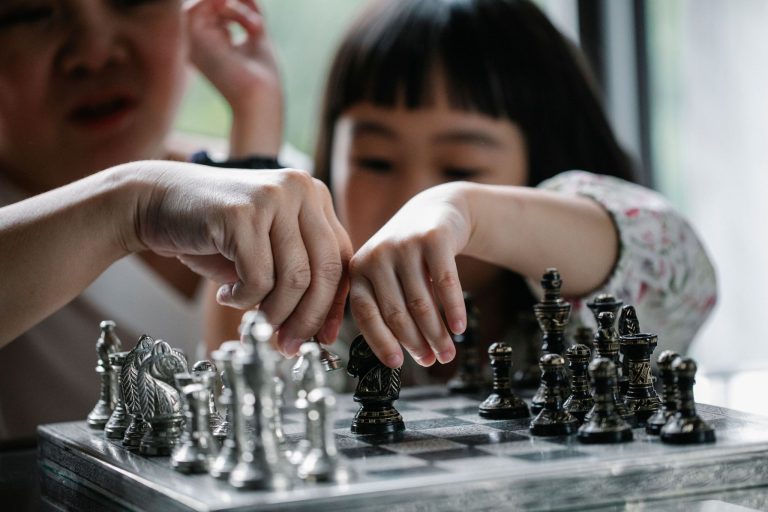
While smartphones may give us easy-access to endless entertainment, these effortless exchanges take a toll on our physical, social, and mental well-being. Constantly staring and swiping at a small screen not only wastes time — it desensitizes us, blurring the meaningful connections we should be making with the world and the people in it.
We are becoming more attached to our phones than our actual contacts, and young people can hardly imagine what life was like without a smartphone. Many people wish to break away from digital devices, but find it difficult.
Distancing yourself from the screen doesn’t need to be a punishment. It can be fun, relaxing, and enriching. Take board games for example.
Board games have entertained us for thousands of years, dating back to nearly 3,000 BC, and they remain one of the best leisure activities for exercising the brain while connecting with others. In fact, board games offer many benefits where smartphones fail us.

Benefits of board games
Motor skills and coordination
Success
You are now signed up for our newsletter
Success
Check your email to complete sign up
Unlike mobile apps, board games are completely tactile. Digital adaptations of board games might copy the rules, but they miss the physical sensation.
Handling real pieces and rolling dice actively sharpens your hand-eye coordination. Moving the small pieces in your fingertips can improve your motor skills for better hand movement and agile fingers. Keeping your eye on the board as you figure out your placement also enriches visual perception.
Exercising the mind
Many board games stress strategy over luck. Players have to think through the consequences of each move on the board, while anticipating the moves of their opponents. This type of game enhances problem-solving and critical thinking, improving cognitive function and decision-making.
A confidence booster
While real-life challenges can lead to stress and anxiety, board games allow you to take risks without any lasting impact. There is no pressure to be perfect, because, after all, it is just a game. Interacting with others without worrying about the results is a great way to boost confidence.
Combining the fact that playing board games triggers the release of endorphins with the lesson that “you win some, you lose some,” goes a long way in teaching us to take life as it comes, accepting the good with the bad.
Social connections
Whether you’re at home with your family or out with friends, board games pull us back into the physical world. There is an undeniable joy in face-to-face engagement — a raw human connection that voiceless texts and faceless voice chats simply cannot copy.
Hearing the shared laughter and seeing genuine smiles on everyone’s faces creates the exact kind of bonding that has kept us going for generations. It is a timeless connection, and one we should protect — even in a hyper-technological world.
READ MORE:
- Five Morning Signs Your Body Is in Good Shape
- The Hidden Mechanism Behind Gratitude That Most People Never Use
- 6 Health Habits Older Adults Should Break as Soon as Possible
What to play?
Different board games offer different experiences and results. Here are some winners, if you want to give it a whirl:
Chess
This ancient board game is still one of the most popular in the world. It brings all sorts of people together for a battle of the wits. While players try to take the opposing kingdom’s pieces without getting trapped, one must think many moves ahead. It not only exercises the brain with problem-solving and creative thinking; it improves focus, and teaches the lesson that actions have consequences.
According to research by Dr. Badrie Mohamma Nour ElDaou, playing chess results in better concentration and improved language skills for students with Attention Deficit Hyperactivity Disorder (ADHD).
Mastermind
If you like Wordle, you will love Mastermind. In this classic code-breaking game, two players compete to figure out the other’s pattern. Memory, reasoning, focus, and decision making are all challenged, as you compete to solve the puzzle first.
Chinese Checkers
You’re probably familiar with checkers, a simple, yet engaging game with two players skipping pieces around. But did you know there is a version for more than two players?
Chinese checkers offers a more varied experience, as up to six players clash in a free-for-all. When you think you have one player’s piece, another player will ambush you, forcing you to think ahead and strategize.
This game can be useful for getting young people off their phones at a party.
Scrabble
Scrabble makes spelling fun. In this classic word game, up to four players are challenged to use their lettered tiles to make words on a shared board. The point system encourages the use of long and unusual words, testing your vocabulary and creativity. Spell-check depends on the other players and a dictionary, so everyone learns.
Monopoly
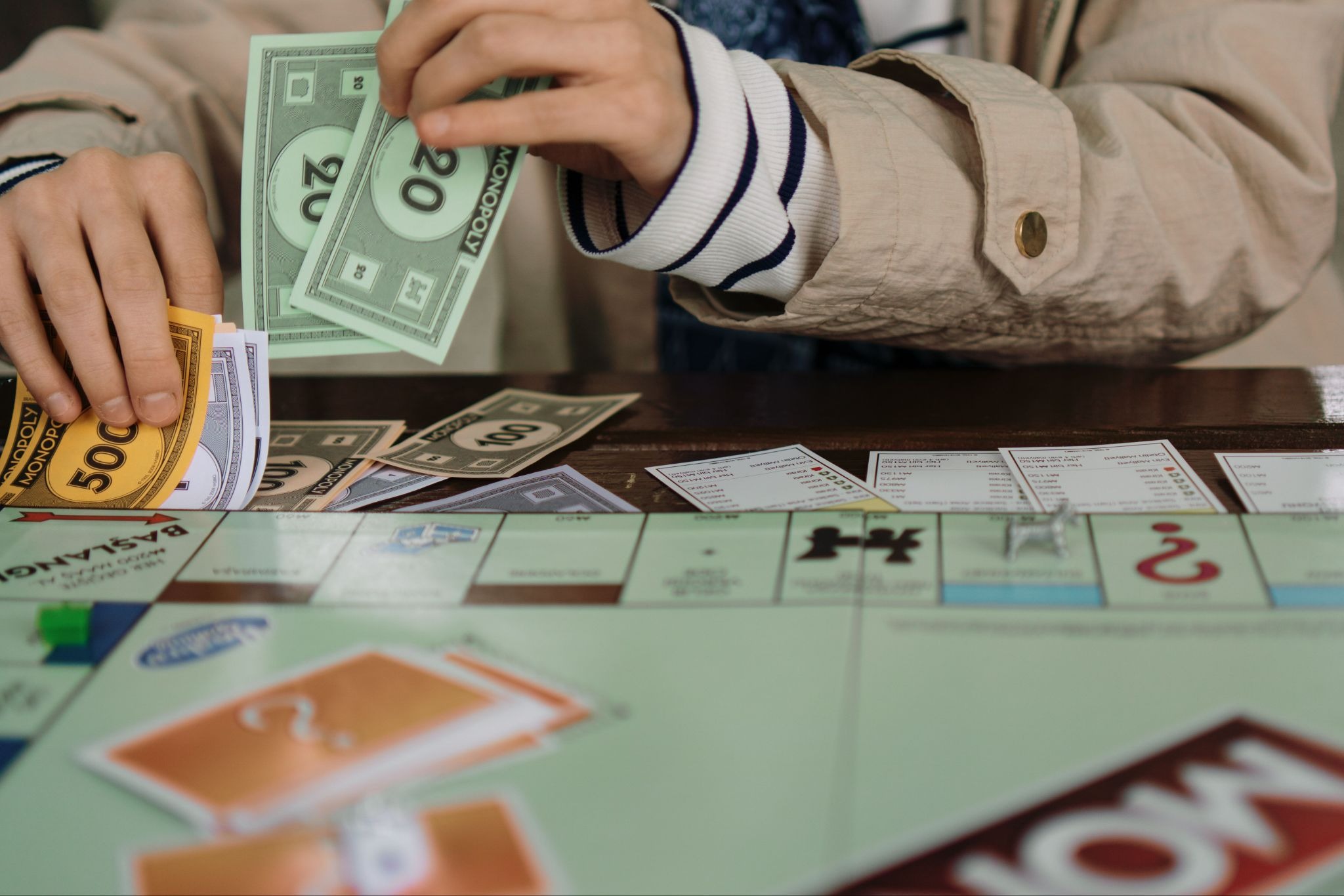
Want a crash course in money management? Monopoly is an excellent tool for teaching the fundamentals of spending and saving.
While the core game revolves around real estate and market manipulation, it ultimately tests a player’s financial street smarts and negotiation skills. It acts as a fascinating social experiment that amps up the competition — ideally, without leaving any lasting hostilities by the end.
Snakes and Ladders
In the topsy-turvy world of Snakes and Ladders, a simple roll of the dice determines whether you shoot up a ladder or slide all the way back down. While straightforward, this unpredictable race is more than enough to keep young children happily engaged.
To add to the tension, standard rules often dictate that overshooting the final square forces you to step backward from the finish line — keeping everyone on the edge of their seats until the very last roll.
Besides these classics, there are hundreds of other board games to enjoy. With so many options — offering active, social, and educational entertainment — is there really any reason to be staring at a screen?