On June 25, the U.S. Supreme Court handed President Donald Trump a victory by backing the federal government’s authority to turn away asylum seekers when officials deem U.S.-Mexico border crossings too overburdened to handle additional claims.
The court, in a 6-3 ruling powered by its conservative justices, overturned a lower court’s finding that the policy violated federal laws. The Republican president’s administration has said it may seek to revive the policy, known as “metering” after it was dropped by Trump’s Democratic predecessor, Joe Biden.
Metering is a border management policy that allows U.S. immigration officials to temporarily limit the number of asylum seekers processed each day at ports of entry when facilities are overburdened, effectively turning away additional claimants until capacity is available.
The ruling was one of two immigration-related decisions issued by the court on Thursday that backed Trump. The other allowed the administration to immediately terminate Temporary Protected Status (TPS) for nationals of Haiti and Syria, a move affecting hundreds of thousands of people.
Success
You are now signed up for our newsletter
Success
Check your email to complete sign up
The metering policy
Under U.S. law, a migrant who “arrives in the United States” may apply for asylum and must be inspected by a federal immigration official. The legal issue was whether asylum seekers stopped on the Mexican side of the border have arrived in the United States.
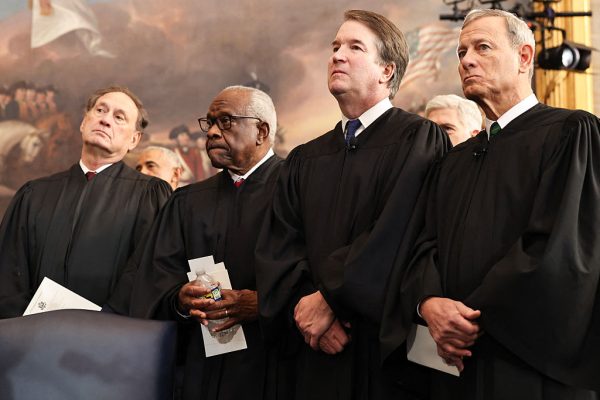
Justice Samuel Alito, who authored Thursday’s opinion, wrote that the answer is “no.”
“In ordinary speech, no one would say that a person ‘arrives in’ a place — for example, a house, a city or a country — before the person enters that place.”
Alito read a summary of his opinion from the bench.
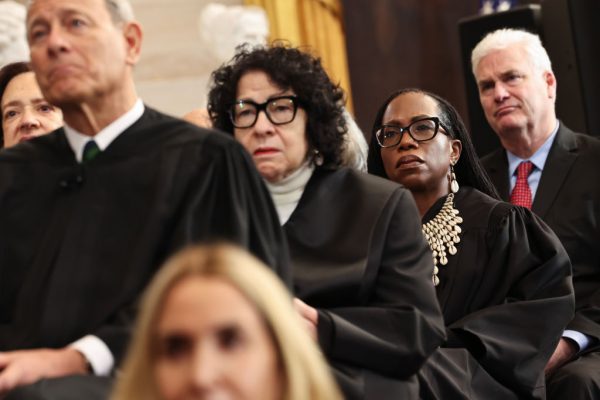
According to Reuters, Justice Sonia Sotomayor read a lengthy summary of her dissenting opinion from the bench, joined by Justices Elena Kagan and Ketanji Brown Jackson, signaling strong opposition.
Sotomayor wrote that the ruling authorizes U.S. immigration officers to refuse to consider asylum applications by “physically blocking [applicants] from stepping foot onto U.S. soil.”
“The consequences of today’s decision are predictable. More people will die. More people will attempt to cross the border illegally,” Sotomayor said.
According to The HIll, she also referenced historical parallels, such as the MS St. Louis carrying Jewish refugees fleeing the Nazis.
In an unusual move, Alito responded from the bench to Sotomayor, saying there was “much that I would have added” to his summary if he had known she would read such an extensive dissent. He added that the metering policy had been used by both the Obama and first Trump administrations as a way of dealing with border surges in an “orderly and humane” manner.
Jackson also wrote a separate dissent questioning whether the case should have been heard.
Background and reactions
U.S. immigration officials began turning away asylum seekers at the border in 2016 under Democratic former President Barack Obama amid a migrant surge. The policy was formalized in 2018 during Trump’s first term and rescinded by Biden in 2021.
The advocacy group Al Otro Lado launched the legal challenge in 2017. Lower courts, including the 9th Circuit, had ruled against the policy.
According to Reuters, James Percival, general counsel at the U.S. Department of Homeland Security, welcomed the ruling, calling metering “an important tool to continue securing our southern border.”
“We had to go all the way to SCOTUS to vindicate the principle that an alien is not ‘in the United States’ until he is, in fact, in the United States,” he said.
Plaintiffs’ lawyer Melissa Crow said the ruling “should sound the alarm for anyone who cares about human rights and the rule of law.”
Advocates argued the policy created humanitarian crises in Mexican border towns, PBS reported.
This decision aligns with the court’s recent pattern of supporting Trump administration immigration measures on an emergency basis and in full rulings.