The U.S. Department of Defense has informed Congress that it requires an additional $80 billion to cover expenses related to the Iran war, as well as other defense-related costs, according to U.S. media reports.
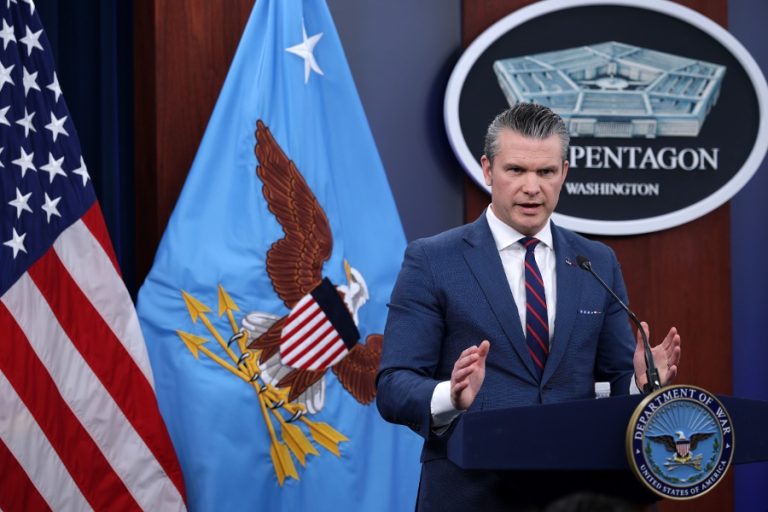
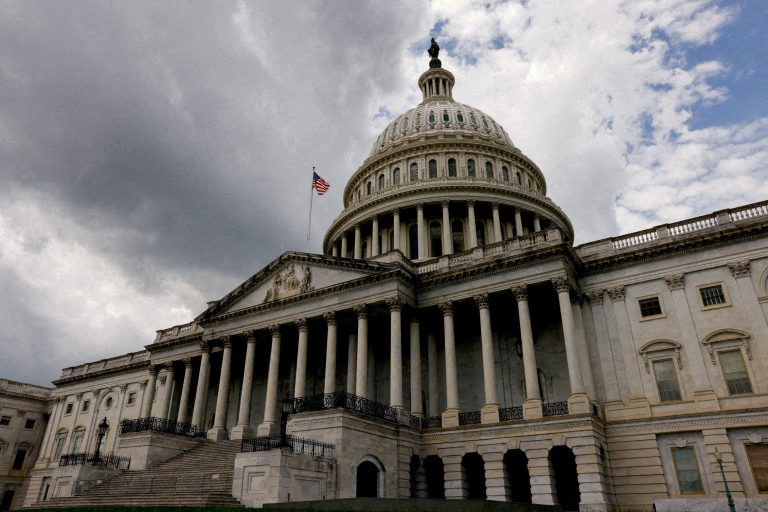
Defense Secretary Pete Hegseth has made several visits to Capitol Hill to discuss the request, including meetings on Monday evening (June 22), according to the Associated Press.
In a report published Thursday, June 18, The Wall Street Journal cited anonymous sources familiar with the matter who said Deputy Defense Secretary Stephen Feinberg has held telephone conversations with several lawmakers regarding the additional funding.
According to the Associated Press, Feinberg has also notified congressional committees that an $80 billion request has already been submitted to the Office of Management and Budget.
The first public estimate of the war’s cost came in April, when a Pentagon official told Reuters that the conflict had cost roughly $25 billion.
Success
You are now signed up for our newsletter
Success
Check your email to complete sign up
Earlier, just weeks after the war began, the Pentagon sought $200 billion from Congress to cover war-related expenditures. At the time, a senior Trump administration official told the Associated Press, on condition of anonymity, that the request had been sent to the White House.
Trump had then said that the White House was seeking money for a range of security needs beyond Iran.
“This is a very volatile world,” Trump said, adding that the emergency spending is a “very small price to pay” to ensure that the US military remains in optimum state.
Lawmakers raise concerns
Lawmakers from both parties have raised questions about the proposed spending, according to media reports.
Some have expressed skepticism about ongoing negotiations related to the conflict and uncertainty over future military commitments, while others have focused on America’s depleted weapons stockpiles and broader national security concerns.
“You’re spending families’ hard-earned tax dollars on a war that many strongly oppose,” Democratic Sen. Patty Murray said during a hearing with Hegseth last month, the Associated Press reported.
Sen. Brian Schatz of Hawaii, another member of the Democratic leadership, told the news agency that he expects the final cost to exceed the proposed $80 billion request.
While he said he has not formally counted how many Democrats would support an Iran-related funding bill, he added that he has yet to encounter colleagues eager to do so.
Republican Sen. Jim Banks of Indiana focused instead on the impact of the conflict on U.S. weapons inventories.
“To me it’s less about the war, it’s more about the stockpiles,” Banks said.
“I would sell it to my state as an investment in our defense industrial base, reshoring defense production to Indiana.”
RECENT COVERAGE
- EU Accuses China of Training Russian Soldiers Who Fought in Ukraine
- Argentina’s $10 Billion Paraná Waterway Bid Draws Scrutiny Over Chinese, US Influence
- US Targets Chinese Tech Giants, Adding BYD, Alibaba, Baidu to Pentagon List
Following the Pentagon’s earlier $200 billion request in March, Rep. Ken Calvert, the California Republican who chairs the House Appropriations defense subcommittee, told the Associated Press that he was already advocating for supplemental funding to replenish munitions stocks.
Meanwhile, the Trump administration has proposed what would be the largest annual defense budget in U.S. history — a fiscal year 2027 Pentagon budget of $1.5 trillion, more than 50 percent above the previous year’s level.
“That was going to happen, and now we have this conflict with some additional costs. So, that’s where we’re at,” Calvert told the Associated Press, adding that the spending was necessary for U.S. national security.
Democratic Rep. Betty McCollum of Minnesota, a member of the same defense appropriations subcommittee, called for greater transparency and criticized the administration for entering the conflict without sufficient consultation with Congress.
“This is not going to be a rubber stamp for the president of the United States,” McCollum said. “I’m not writing blank checks to the Department of Defense.”