
Whether it’s your physical well-being, the way you feel about yourself, or how others perceive you, posture makes a difference. An upright posture has long been regarded as an emblem of strength, health, discipline, morality, or even nobility among traditional cultures; and day-to-day activities used to support good posture in many ways.
While modernization offers many benefits, it comes with a cost. Time-saving developments foster a sedentary lifestyle, which increases the challenges to maintaining good posture. Poor posture can lead to headaches, back pain, and chronic discomfort, impacting your productivity, contentment, and even your life expectancy.
Fortunately, posture is something we can work on. With increased awareness and a little effort, you can gradually improve your posture and enjoy greater comfort and life satisfaction in the near future.
Posture in the past

Ancient cultures emphasized good posture for various reasons. Early Greek philosophers suggested that one’s posture reflected their inner qualities, with an upright stance signifying self-discipline, wisdom, and virtue. Hippocrates, known as the “Father of Medicine,” recognized a connection between the alignment of the spine and various aspects of physical health.
In Ancient Rome, good posture was also connected with physical grace. Both cultures cultivated good posture with physical activities — such as sports, military drills, and strength training.
Success
You are now signed up for our newsletter
Success
Check your email to complete sign up
Indigenous peoples and agrarian societies around the world traditionally exhibit good posture, which is often attributed to their active lifestyle.
In ancient China, good posture was stressed for the sake of both spiritual and physical well-being. Traditional Chinese medicine and martial arts both emphasize good posture for optimal function of the mind and body.

Military training has always emphasized posture for its impact on endurance, stability, injury resistance, and load-bearing capacity. Until relatively recently, posture education was also common in schools, the workplace, and among medical professionals — encouraging people to carry themselves efficiently in both mobile and static activities.
When mechanization replaced physical labor during the industrial revolution, however, good posture was sacrificed for the sake of production.
Sedentary lifestyle and poor posture
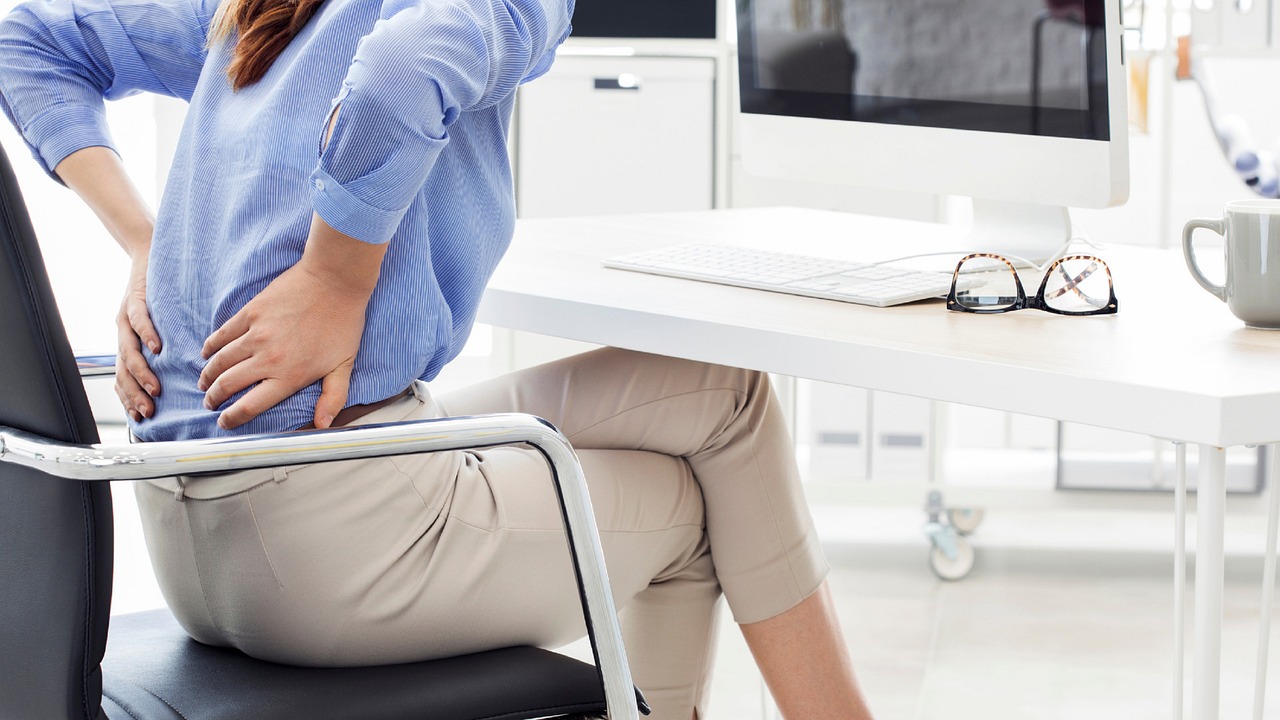
The shift from working in fields or at trades to working in factories and at desks meant that people didn’t use their bodies in the same way or with the same frequency as before. Even at home, our chores grew less and less physically demanding. We became sedentary.
A sedentary lifestyle complicates health issues, and poor posture is part of it. When we sit for extended periods, we tend to strain some muscles to the point of fatigue, while abandoning others to the point of weakness.
Specifically, sedentary behavior can weaken the core muscles that are necessary for holding the body upright, which can lead to discomfort, restricted mobility, or inefficient functioning. Prolonged periods of sitting puts pressure on the lower back and other joints, which can lead to back pain and misalignment. In addition, muscles weakened by poor posture reinforce the behavior, causing greater problems over time.
Mobile phones introduced another set of postural problems. We now spend so much time peering at our digital devices that text neck, rounded shoulders, forward head posture (FHP) and kyphosis (hunched back) have become prevalent, especially among students.
Aside from the common lower back pain, neck pain and headaches common among slouchers, poor posture has been linked with fatigue, depression, constricted lung capacity, migraines, and high blood pressure. Because poor posture impacts blood circulation it has also been linked to blurred vision and hearing loss. The Journal of American Geriatric Society published a study in 2004 that showed a significant relationship between bad posture and premature death.
Practical ways to improve your posture
Awareness
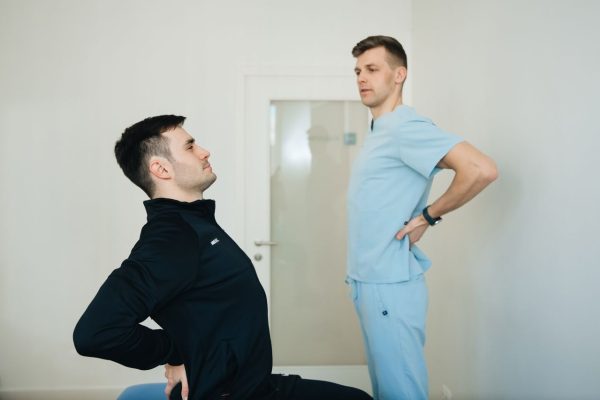
Learn to recognize good posture and to notice when you aren’t using it.
Aim for the even distribution of your weight over neutrally-positioned hips, with the shoulders back and down, and the head resting directly above them. Have someone look at your standing profile to check that your ear, shoulder, hip, and ankle are aligned, with the knees slightly bent; and make the necessary corrections.
For good seated posture, keep the back upright and your head facing straight ahead, rather than looking down. The knees should be bent 90 degrees with the feet flat on the floor.
Periodic posture checks will help you identify when you struggle most with your posture. As soon as possible, adjust your environment to support good posture habits. Then, adjust your posture gradually by observing and correcting, rather than forcing yourself to adopt perfect posture all of a sudden.
Ergonomic intervention
The science of designing tools, devices, and environments for efficient employment by the user is called ergonomics, and it has been practiced since prehistoric times.
While ergonomics is not a new thing, it gained significance in the 19th and 20th centuries, as we struggled to adapt to our more sedentary work environments. Ergonomic chairs, lumbar supports, foot rests, standing desks and other devices were designed to reduce the stress of static labor.
The recent emergence of smartphone ergonomics responds to our latest concerns, with 73% of students exhibiting FHP.
According to OSHE, the use of ergonomics can significantly reduce strain and increase productivity. Make good use of the ergonomic tools and techniques available to improve your posture and minimize muscle imbalance.
Activity
If possible, introduce more activity into your daily routine. Adopt a physically challenging pastime like gardening, or integrate small, useful activities like hanging laundry, washing your coffee mug, and walking out for lunch to improve your posture naturally. Pay attention to moving your body gracefully and efficiently.
If you have to sit, take frequent breaks. Set a timer to stand up and stretch your back and neck for a couple minutes every half hour. You can also exercise while seated. For every hour of sitting, try to do at least one of these exercises:
- Chin tucks help improve strength and flexibility in the neck, to prevent and relieve neck pain. While sitting upright and facing straight ahead, pull the chin down while bringing the head back and stretching the spine up. Move only the head and neck while keeping the rest of the body still. Hold the tucked position for five seconds before releasing. Repeat 10 times.
- Single leg extension strengthens core muscles to stabilize a neutral pelvic position. Sit with your feet on the floor, hip-width apart. Straighten one leg to the horizontal position without locking the knee. Hold this position briefly and slowly lower your foot down. Repeat 10 times, then do the same with your other leg.
- Engage abdominal muscles to strengthen the core and support the spine and pelvis for proper alignment. Pull your stomach in as if bracing for a punch in the gut. Focus on tightening the deepest abdominal muscle while breathing naturally and hold this position for about 15 seconds at a time.
- Torso twists also activate core muscles, while enhancing flexibility and reducing muscle tension. Cross your arms, or hold them out in front of you (you will not be using them to assist the twist). Keeping an upright posture, twist the upper body to the right, hold for 15 – 30 seconds, return to the center, pause (so that you aren’t relying on momentum), then twist to the left. Repeat 10 times.
If you’re on your feet all day, try these exercises to improve your standing posture and reduce muscle tension:
- Bear hugs help relax tight shoulder muscles and relieve back and neck tension. Cross your arms over your chest and wrap your hands around your back. Grasp the shoulder blades and pull for a good stretch. Take a few deep breaths while holding a tight embrace for up to 30 seconds. Repeat with the other hand on top for an even stretch.
- Calf raises strengthen the calves to improve stability and balance and support proper alignment. Stand with your feet hip-width apart, and place your hands on a wall or chair for stability. Raise your heels up from the balls of your feet, as high as you can. Hold for a second or two, then slowly lower the heels. Repeat 10 times.
Remember, great posture is not achieved overnight. It is something you work at. Even with lots of ergonomic support, trying to sit and stand straight can be uncomfortable when you aren’t used to it. Don’t despair. Take posture breaks, relax your muscles, stretch, and keep trying.
Although poor posture is prevalent today, the benefits of standing straight are still significant. Invest a little energy into developing good habits and strengthening your postural muscles for balance, alignment, and greater well-being in the near future.