By Jin Yan, Vision Times
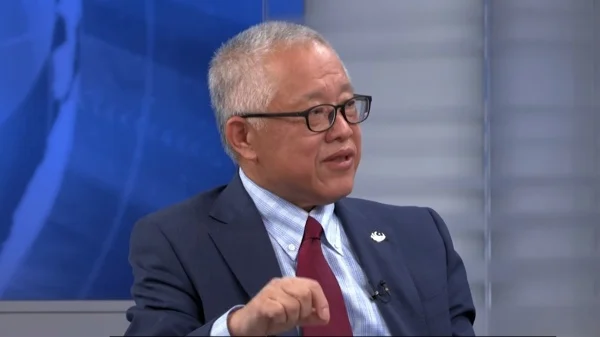
Pastor Ezra Jin Mingri, senior pastor and co-founder of China’s prominent Zion Church, has publicly described for the first time the secretive circumstances surrounding his release after 10 months in detention and his subsequent journey to the United States, where he was reunited with his family in Los Angeles on July 5.
In an interview with Voice of America (VOA), Jin said Chinese authorities never told him where he was being taken after removing him from a detention center in Guangxi. Until the final moments, he feared he might be transferred to a more isolated facility and cut off even further from the outside world. “I only knew I was free once I was on the plane,” he recounted.
Jin was first arrested in October 2025, during a nationwide crackdown on leaders of the popular church. Authorities accused him of “illegally using information networks” after the church continued conducting online worship services outside the Chinese Communist Party-approved network of “legal” religions.
Taken from detention with only a Bible
Jin recalled that at noon on July 3, staff at the Guangxi detention center unexpectedly told him to gather his belongings. “I thought it was a court hearing, or that something had happened,” he said. He owned little after months in custody. “The only thing I had was a Bible.”
Success
You are now signed up for our newsletter
Success
Check your email to complete sign up
RELATED: After Pastor Jin’s Release, US Lawmakers Urge Beijing to Free Remaining Detainees
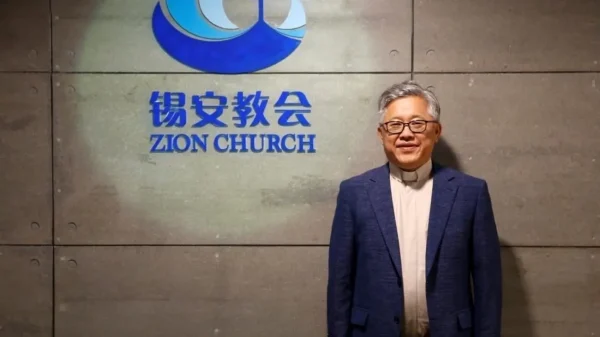
Obtaining a Bible inside a Chinese detention center had not been easy, Jin said. After repeatedly pressing authorities, he was eventually permitted to keep one. When ordered to leave, he hoped to give it to another detainee, but officials refused and told him he had to take it with him. What troubled him most was that the paperwork did not describe the process as a “release,” but as a “transfer.”
“I thought, are they sending me somewhere more secretive to sever my contact with the outside world?” he questioned. Police then escorted him to a high-speed rail station and accompanied him on a train heading toward Guangzhou. No one disclosed the destination. When the train passed Nanning without stopping, Jin began to suspect that something unusual was happening.
“Later, when we arrived in Guangzhou, because there is an international airport there, I began to have some suspicions,” he recounted.
Dubious charges
At Guangzhou airport, Jin was taken to a VIP room, where prosecutors handling his case announced their decision. According to Jin, an official told him: “The criminal facts have been established. Pursuant to the Criminal Procedure Law of the People’s Republic of China, we have decided not to prosecute you.”
The formulation immediately struck him as contradictory and odd. “I said, it is not that I did not understand what you said. I think your logic does not make sense.” If the alleged criminal conduct had been established, Jin argued, the case should ordinarily have proceeded to trial. If the evidence was insufficient, prosecutors could decline to prosecute, but those were not the same conclusion.
“Why do you say the criminal facts have been established, yet you are not prosecuting me?” he questioned. But prosecutors offered no further explanation, telling him only that they could say no more. Jin was then escorted toward the aircraft, still uncertain whether he was genuinely being released.
Kept in isolation
His passport, which authorities had confiscated, was not returned until he boarded the plane. Once seated, he discovered that an American consular official was beside him. “He said, ‘I am a consul from the U.S. Embassy. Welcome upon your release.’” Jin said he was “a little stunned” when he heard that.
“For people inside, all information from the outside is completely cut off,” he said, adding that the consular official then told him U.S. officials had been waiting for hours and that White House personnel were closely following the situation. “He said, ‘The Chinese government said today that it would release you, but we did not know whether it would actually happen. Only after you were seated on the plane could everyone finally breathe a sigh of relief.’”
Because Jin did not possess a valid U.S. visa, multiple American government agencies reportedly coordinated to provide documentation allowing him to board. The official told him, “We are especially excited because, for 20 years, we have made many efforts to help different people inside China, but we have experienced more setbacks than successes.”
‘No conditions and no warnings’
Jin said some Chinese dissidents released in the past were required to travel through a third country or wait for an extended period before entering the U.S. In his case, he said authorities imposed no conditions. “Some people asked whether there was a deal. What could I possibly trade? I am a pastor of a house church.” He said officials did not instruct him to avoid interviews or prohibit him from speaking publicly. “They did not even say that.”
Jin was first taken away by Chinese authorities in Beihai, Guangxi, on Oct. 10, 2025, and initially accused of “illegally using information networks.” He said the conditions in detention were difficult, but the greatest pressure came from authorities obstructing his access to legal counsel.
His first attorney, Beijing-based lawyer Zhang Kai, worked on the case for several months before his law firm was deregistered and he faced professional repercussions. Jin subsequently retained several other lawyers, who also encountered interference.
After the case entered the prosecutorial stage, his fourth attorney, Li Guisheng, was temporarily prevented from meeting him. On June 3, Jin began a hunger strike. He wrote a letter to his mother-in-law declaring three things: That he would not confess, that he would not take his own life, and that his family should resolve certain debts and commitments he had made to friends.
“I knew the letter most likely would not be delivered, but I had to make one final effort,” said Jin. Two days later, a senior prosecutor visited the detention center and asked why he was refusing food. Jin demanded that his right to meet with his chosen defense attorney be respected. After Li was permitted to resume visits, Jin ended the hunger strike.
8 church members remain detained
Jin said 18 people were arrested in connection with the case. Nine were released on bail pending investigation, while eight Zion Church co-workers remain in custody. He said helping them is now his highest priority. “It is not that they must be brought to the United States. I hope the unjust accusations and trials against them will end.”
Jin described them as ordinary believers targeted because of their involvement in church activities. He also rejected authorities’ portrayal of the house church as a “fraud organization.”
China’s house churches exist because of faith, he said, and many have long contributed to charity, moral education, and community service. “I hope the international community will pay greater attention to the circumstances facing China’s house churches.” Jin said the efforts of U.S. lawmakers, government officials, journalists, and international Christian organizations demonstrated that sustained outside pressure can produce tangible results.
Reflecting on his own freedom while colleagues remain detained, Jin said he cannot simply move forward with his life abroad. “I am the senior pastor, and much of the responsibility rests with me. Many of them are my students. They are still there while I have obtained freedom. I cannot accept that.”
His immediate objective, he said, remains unchanged, “The most important thing is to help those who have lost their freedom regain it.”