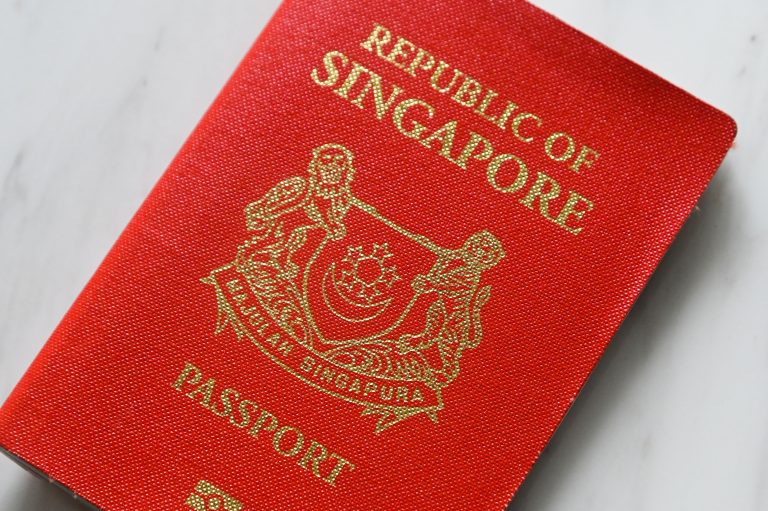
The Myanmar embassy in Singapore recently announced that last year 278 Myanmar nationals residing in Singapore renounced their citizenship to become Singaporeans.
Speaking to Radio Free Asia (RFA), someone said some are seeking citizenship due to issues renewing their passports at the embassy, while others wish to avoid taxes imposed by Myanmar’s military junta. There are also those who wish to avoid forced conscription by the junta, forcing its civilians to fight against rebels across the country.
“In the past, those who were living as permanent residents had the intention to return home and did not apply for Singapore citizenship,” an anonymous worker told RFA. “But now that there is a bad political situation [in Myanmar], they are not willing to return any more.”
A national who returned to Myanmar after gaining permanent residency in Singapore said that many feel that their home country “has many problems.”
“If our country was as safe as Singapore in terms of security, economy, and healthcare services, none of our citizens would want to live in another country,” another source said.
Success
You are now signed up for our newsletter
Success
Check your email to complete sign up
A national who left Japan after staying there for 13 years said that he had regretted his choice of going home permanently, which he did during the democratic rule of Aung San Suu Kyi before the military coup that brought the current junta to power.
“[At the time,] returnees came from Singapore, Bangkok, and Japan, believing they could finally build a better future at home,” he said. “But all their hopes were dashed after the military coup, and some who had renounced their foreign citizenship to return to Myanmar now deeply regret their decision.”
The Myanmar junta implemented the Conscription Law last February, making it mandatory for men aged 18 to 35 and women aged 18 to 27 to conduct military service for a minimum of two years. The law applies to those who have been summoned or are challenging the summons. Those avoiding the draft could face up to three years in prison.
This law had caused the mass migration of nationals to other parts of the world.
READ MORE:
- Vietnamese Author Doan Bao Chau Says Police Are Harassing His Family
- Abduction of Chinese Actor in Myanmar Spotlights Collusion Between Scam Compounds and CCP Figures
- Canadian Premier Warns of ‘National Unity Crisis’ if Canada Cuts Off Flow of Oil to the US
Migrant movement
More than 200,000 Myanmar nationals currently live in Singapore, the city state’s Ministry of Human Resources and Empowerment said. The former Myanmar citizens are said to be mostly educated professionals.
In its announcement, the embassy stated that individuals who renounced their citizenship must return their Myanmar ID cards and passports by Feb. 28. Earlier in January, they provided the guidelines for the renouncement process, which requires complete documentation.
The documentation includes the Myanmar passport, original national registration card (or a letter stating you do not have one), a copy of the household registration list (or a letter stating you are not listed), and a copy of the birth certificate, among others.
The embassy stated that applications unable to be returned will not receive a letter of endorsement.
To gain permanent residency status in Singapore, applicants must be aged 21 or older, have lived in the country for at least six months, and earn at least 3,000 Singaporean dollars ($2,200) a month. They must also fulfill certain requirements in education, health and work experience.
Along with applications to the Singapore Immigration Department, documents like proof of employment, educational qualifications and health inspections must also be provided.
Warnings from government
According to the independent news site Irrawaddy, the Singaporean government warned employment agencies on Feb. 6 to avoid hiring migrants from Myanmar due to armed conflicts and conscription.
The Ministry of Manpower also told them to seek people from other countries, claiming that companies may want workers from “a wider mix of approved countries for business.”
This followed a rule by the junta to forbid conscription-age citizens from leaving Myanmar without an exemption from the central conscription body.
“The ban on people under 35 has affected everyone looking to work in Singapore,” a manager of a foreign employment agency in Myanmar said. “The ban also affects our businesses working with international companies. It harms the country’s image.”
A migrant in Singapore said that employment agencies look at other nations due to Myanmar’s travel restrictions, making it harder for others to find work. Many Myanmar migrants mainly specialize in construction, housekeeping, elderly care, cleaning and restaurants.