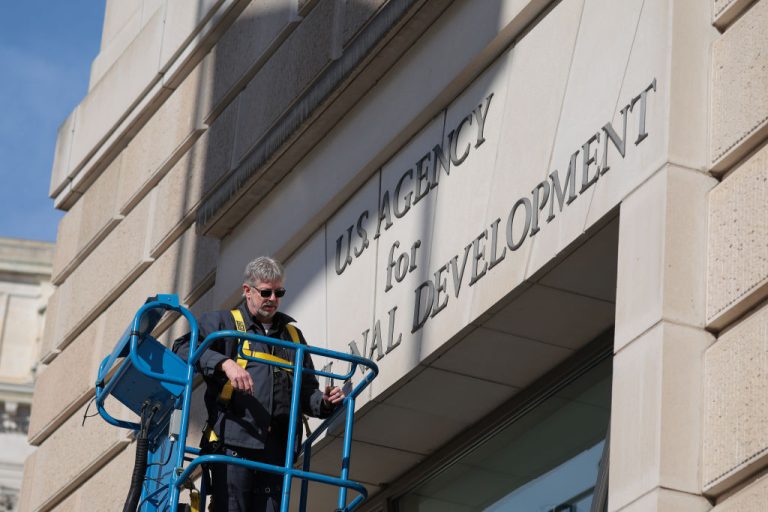
With President Donald Trump’s shutdown of the U.S. Agency for International Development (USAID), a collaborative plan to take on haze in Southeast Asia has been halted. This sudden development came as the peak season for haze came to the region.
The initiative — a joint effort between the Asian Disaster Preparedness Center (ADPC), the National Aeronautics and Space Administration (NASA), and the now-defunct USAID — aimed to use “satellite technology and geospatial data” to aid countries with regional environmental problems. These included agricultural burning, forest fires, and air pollution monitoring and forecasting.
Last month, Southeast Asian cities like Bangkok and Hanoi were engulfed in clouds of toxic air for a week.
“The suspension of the project during the regional haze season is unfortunate and presents challenges,” Aekkapol Aekakkararungroj, air pollution and geospatial imaging expert at the ADPC, told Radio Free Asia (RFA).
“The immediate consequence is that some of the planned activities, such as data integration and capacity-building efforts with local stakeholders, have been delayed,” he said. “This could potentially slow down the development and dissemination of tools that support timely decision-making and response strategies.”
Success
You are now signed up for our newsletter
Success
Check your email to complete sign up
Without USAID, Aekkapol expressed hope that other global donors could provide the funds needed to continue efforts to combat air pollution.
“I am optimistic that our efforts to secure alternative funding and partnerships will help us regain momentum by April,” he said.
Regardless, NASA would resume its cooperation.
READ MORE:
- Confusion Over Hong Kong-China Packages as US Postal Service Reverses Ban
- Trump Delays Tariffs on Canada and Mexico, Agrees to Joint Border Security Efforts
- Trump Announces $500 Billion ‘Stargate AI’ Infrastructure Investment
Children affected
Despite fewer deaths in Asia connected to air pollution, declining air quality remains a health and economic problem, especially in lower-income areas like Southeast Asia.
Data from the United Nations’ Children’s Fund (UNICEF) showed that air pollution is still the primary cause of child deaths in East Asian and Pacific countries. The UN’s child agency reported that toxic air is responsible for approximately 100 daily deaths of children under five in East Asia and the Pacific, according to data from the Institute for Health Metrics and Evaluation. More than half of these deaths are attributed to the use of harmful fuels for cooking and heating at home.
Land burning and fossil fuel sources are also to blame for releasing fine particles into the atmosphere, covering cities or the countryside.
Over two-thirds of children in the region reside in countries where levels of particulate matter in the air are more than five times higher than the limits set by the World Health Organization (WHO).
Nicholas Rees, environment and climate expert at UNICEF, stated that the progress made in the last twenty years in reducing child deaths from air pollution “represents truly what is possible if we can keep this trajectory going.”
He told RFA that sustaining progress relies on factors like political will, the effectiveness of efforts to reduce dependence on fossil fuels, and the capacity of health systems.
“Without that, I fear progress will not only be slower in the years ahead, but we may even reverse some of the gains we have made,” he said.
USAID shutdown
Trump’s pause of USAID could impact international efforts to assist those in need. Assets are frozen by the U.S. for 90 days, effective Jan. 28, to assess whether aid work aligns with the President’s foreign policy goals.
The Department of Government Efficiency (DOGE), led by Elon Musk, has uncovered a number of wasteful projects taken on by USAID, and has vowed to root out waste and fraudulent activities.
However, in addition to poor air quality, many Southeast Asian nations may struggle due to the freezing of funds.
In Myanmar, organizations say they depended on American funds to oppose the brutal military regime of the country’s junta. The Human Rights Myanmar group said the money was “vital for organizations challenging military rule and promoting democracy, which advance U.S. interests by upholding American values and countering China’s authoritarian influence.”
Cambodia also required funding to help in the removal of landmines left behind by the regime of the Khmer Rouge in the 1970’s. With the U.S. pausing its involvement in some international affairs, China has signaled an attempt to take over, claiming to provide funds to continue clearing mines across Cambodia.
Outside of Southeast Asia, USAID’s shutdown would also disrupt humanitarian aid and conservation efforts in South America, including providing support for fleeing Venezuelans, making conservation and livelihood improvements for Indigenous peoples in Brazil, and eradicating cocaine production in Peru.
In Africa, clinics that were funded by the American President’s Emergency Plan for AIDS Relief (PEPFAR) aid program were closed, preventing HIV patients from getting treated. Other African issues include loss of basic human resources, as well as the severance of services for healthcare and education that required USAID’s funds.
Sudan is currently suffering from cases of cholera, malaria and measles, with 600,000 people at risk of being infected, an anonymous official said. Entire aid efforts in Syria were halted when Doctors of the World Turkey, without USAID funding, were forced to lay off its staff and shut down hospitals across the country.
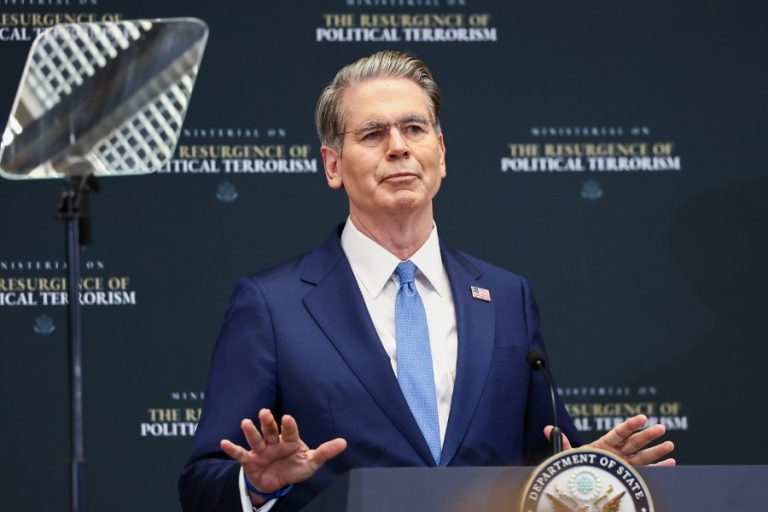
Trump has said that there were some initiatives USAID has taken on that have merit, adding that disbursement of relief aid would be better handled by his Secretary of State, Marco Rubio.
In recent public comments, in response to concerns about the impact of this aid freeze, Rubio emphasized that while he has “long supported foreign aid,” it “is not charity.”