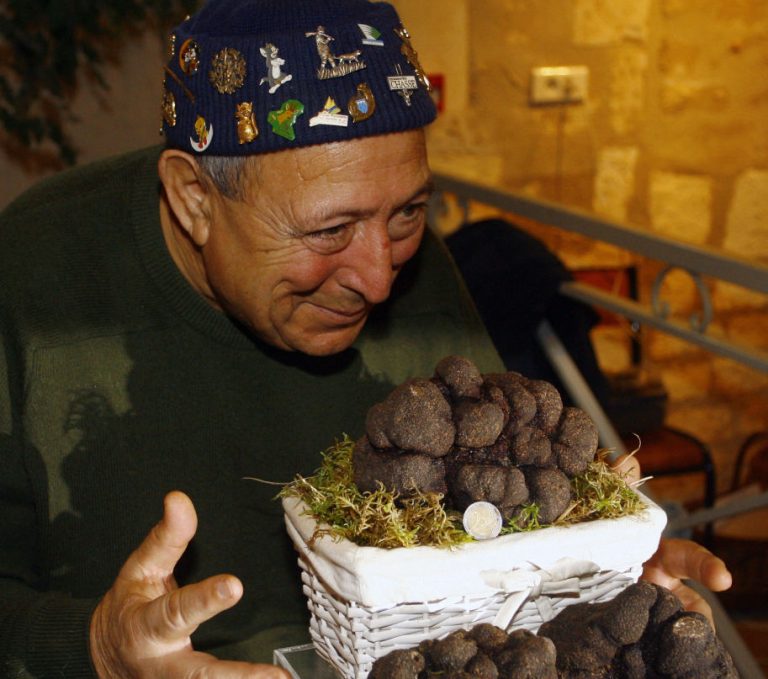
Neither root nor mushroom, truffles are a fungal delicacy that has been enjoyed for thousands of years for their distinct flavor and intoxicating aroma; yet we only began to understand these mysterious morsels in the early 19th century.
While ancient Egyptians indulged in truffles as an entrée, today they are typically taken in small doses, and only on special occasions — chiefly because they are not cheap. Fresh truffles can run anywhere from $400 to $9,000 per pound, depending on the species.
What are truffles?

Truffles are a type of ectomycorrhizal fungi (they have a symbiotic relationship with tree roots). Unlike most mushrooms, which appear on the surface of the soil or rotting wood, these fungi belong to the genus Tuber, and are the underground fruiting body of a mycelium that connects with certain species of trees. Fine threads (hyphae) channel nutrients to the root, and take chlorophyll to the mycelium to benefit both the plant and the fungus.
Truffles are the reproductive portion of the fungus, filled with small spore “bags.” As the truffle matures, it separates from the root and absorbs nutrients directly from the soil. Mature truffles are most fragrant, and this fragrance is what allows them to be located.
If the truffles are not collected, the spores are released in the ground to find new tree roots or seeds to attach to. A seed, such as an acorn, that has been inoculated with truffle spores will eventually grow into a tree that supports truffle growth.
Success
You are now signed up for our newsletter
Success
Check your email to complete sign up
Of the 200 species of truffles, only a few are prized for their culinary qualities, and these originate mainly from Europe.
A gift from the gods
Truffles have always been special. Since ancient times, they were reserved for royalty, who served them at special banquets. Ancient Greeks and Romans believed truffles were a gift from Zeus (Jupiter), who delivered them with his thunderbolt. Aphrodite, the Greek goddess of love and beauty is said to be particularly fond of truffles.
In Egyptian lore, truffles were sent by Set, the god of desert storms, who threw truffle-spore-bearing firebolts down to inoculate the earth. The fungi are revered as “sons of the gods” and possess almost magical qualities. They are associated with fertility, immortality, and sometimes even spiritual enlightenment.
A tumultuous history
Truffles’ magically seductive qualities brought the fungi’s integrity into question during the Middle Ages. Due to their intoxicating aroma, the church branded truffles as “witch’s fare” and a product of the devil, trying to stamp them out of Europe. Apparently this was a hard sell in France, however, where Papal records from the city of Avignon talk of truffle hunting in the late 1400s.
Truffles began to make a comeback among the nobility of France and Italy through the 1500s, paving the way for King Louis XIV to drive them out of obscurity in the 1600s. The longest-reigning king of France hosted extravagant parties where huge quantities of truffles were consumed. In fact, Louis loved truffles so much that he made an early attempt at cultivating them.
Although that endeavor failed, his infectious passion for truffles helped them grow in popularity throughout Europe. The following century saw them finally classified as a fungus, and Europe reached an all-time-high truffle production of 2,000 tons in the mid 1800s.
Truffles took another blow in the first half of the 20th century. Not only was much of the truffle’s natural habitat destroyed in the World Wars, countless farmers and foragers were lost, along with their precious knowledge. Truffle production continued to decline until the 1960s, when a revived interest brought some breakthroughs in truffle farming. Today, truffles are being successfully cultivated around the world.
How do you grow truffles?
While truffle farming can be a very lucrative business, truffles are a very picky and high-maintenance crop. They grow only with specific trees (mostly oak species) which must be inoculated before planting, and then a variety of complex conditions must be met for them to produce. With perfect conditions, you can expect your first harvest in six or seven years.
If you have ample land in an area with cool winters, damp springs, and hot summers with moderate rain, plus plenty of patience, you might try starting your own truffle orchard. While American farmers are making steady progress in this field, most European truffles continue to be wild-foraged.
The trying trade of truffle hunting
Truffle hunting is a demanding job that requires patience, knowledge, skill, and a well-trained pet. Truffle season is short, and is limited to a few months for any species. Because the product is so valuable, truffle hunting can also be dangerous, and foragers must be secretive about their business.
Professional truffle hunters often operate at night, when the scent is more potent and there are fewer distractions; it also minimizes the chance of being seen by a rival and potentially losing a future harvest.
Responsible truffle hunters practice ethical and sustainable harvesting techniques in order to preserve their livelihood for the future.
Hunting techniques
While early truffle hunters relied on pigs, who naturally root out truffles with their snouts, these animals are only too happy to gobble up what they find. On top of that, they are exceptionally large and hard to transport, and cause considerable disruption to the soil when digging.
Dogs are now considered the ideal truffle-hunting companions, as they have a keen sense of smell, and can be trained at a young age to find — but not eat — the truffles. Dogs sniff out mature truffles, but allow their master to do the careful digging.
Some amateurs might choose to forage with a rake, but this haphazard technique is very damaging to the delicate ecosystem where truffles thrive, and it turns up mostly immature truffles — which lack both aroma and value. This method is heavily frowned upon in the truffling community.

Another curious technique is harmless and low-investment — but it does require an extraordinarily keen eye. The trick is to watch for a species of insect that is attracted to the truffle scent (the truffle fly). One can tap the ground near a potential truffle tree and watch to see if any insects rise up after being disturbed. By noting where they settle down again, one can make a targeted stab at uncovering a mature truffle with something as simple as a screwdriver. They are usually only one to three inches deep.
How to enjoy truffles
If you’re going to splurge on a truffle for a special occasion, you’ll want to do it right. Truffles are best fresh, as they begin to lose flavor and aroma shortly after harvest. While Europeans are fortunate to have fresh truffles at their fingertips, most Americans will only find them online. A small amount goes a long way, so don’t go beyond your budget.
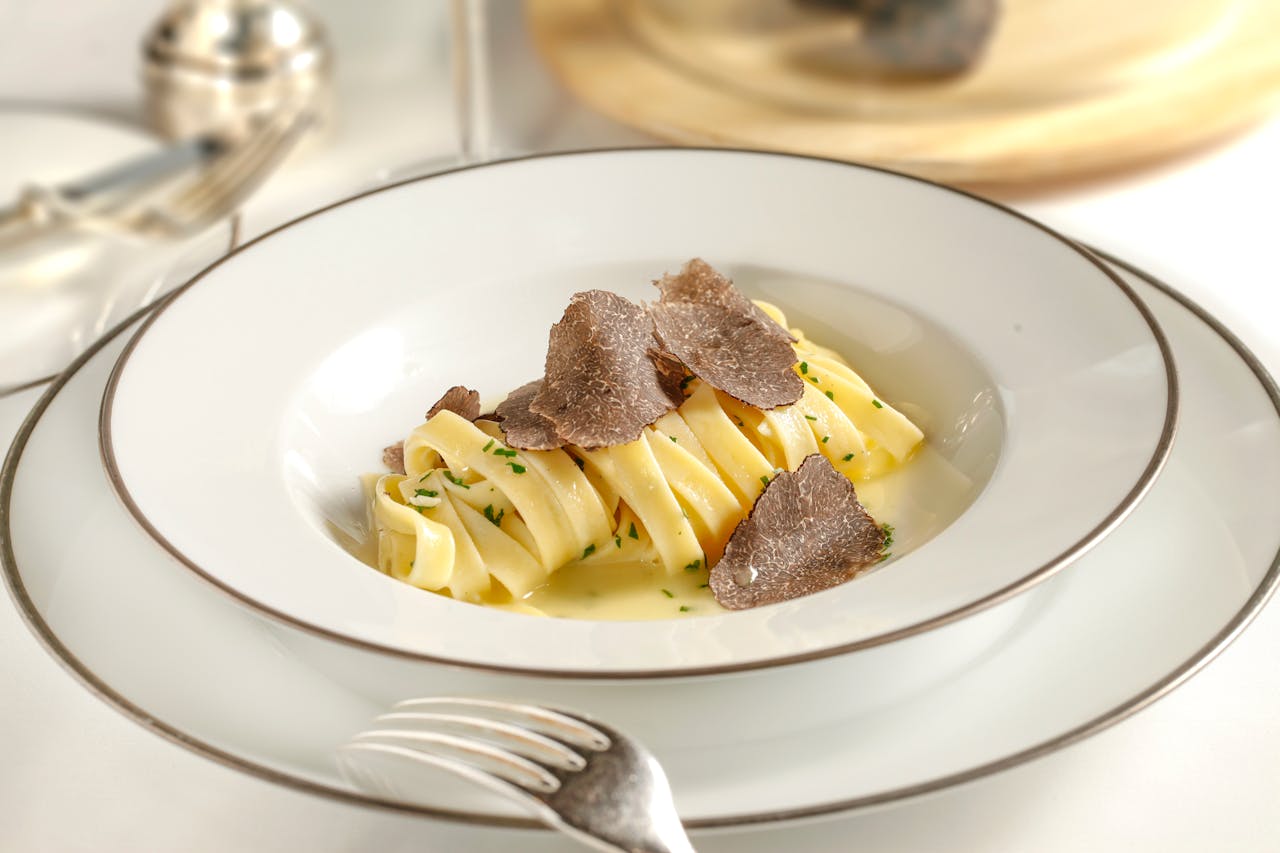
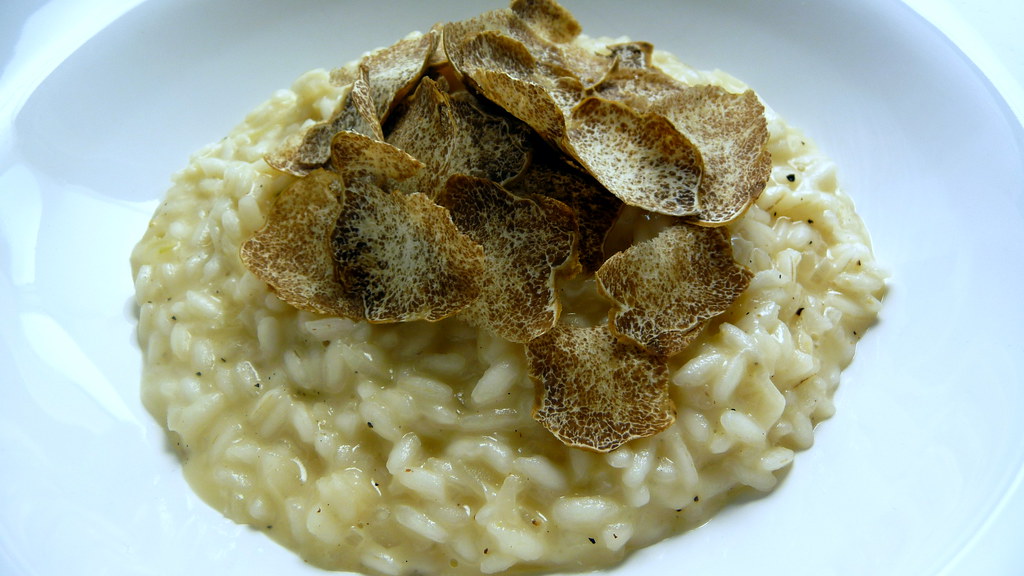
To fully appreciate their rich aroma and flavor, shave fresh truffles thinly over simple dishes like pasta, risotto or eggs. Olive oil, cheese, cream and butter all enhance the flavor of truffles; but avoid pairing them with tomato-based foods, as the flavors compete rather than complement one another.
Any leftover truffle can be preserved in butter or oil to be used within a couple weeks. For longer storage, truffles can be grated into salt for a flavorful dried seasoning.