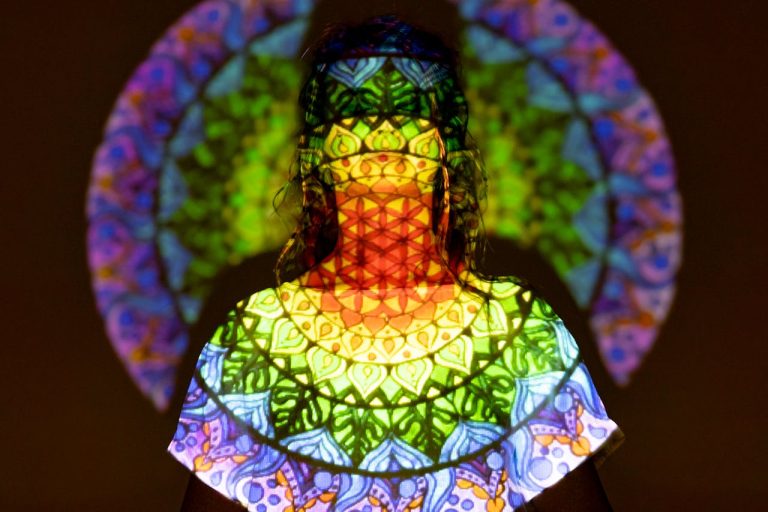
Have you ever thought of yourself as a being made of light? It may sound like something from a science fiction movie, but research shows it’s actually true. Every living thing — including the human body — creates its own light. This light is so faint that it is invisible to our eyes, but it exists; it is called biophotons.
Our body doesn’t just produce light, it also reacts to it. This means our cells can “talk” through light. They can also absorb it, just like plants absorb sunlight. This idea might sound strange at first, but it’s backed by research from all over the world. Let’s explore how this works and why it is important.
Cells emit light (biophotons)
The human body is made up of trillions of cells. Each one is like a tiny city, with lots of activity happening every second. In these little cities, energy is used, and a continuous sequence of chemical reactions helps keep us alive. One result of all this activity is the release of light — in the form of biophotons.
These biophotons are very weak. They are about 1,000 times dimmer than what our naked eye can perceive. But with special cameras in dark rooms, scientists have been able to capture this light. It’s real. It’s part of us; and it might tell us a lot about our health.
Biophotons are not emitted in random little flashes. Studies suggest that healthy cells give off regular, balanced light patterns, while sick or stressed cells emit more chaotic light. In this way, light can be an indicator of health.
About biophotons
Success
You are now signed up for our newsletter
Success
Check your email to complete sign up
Biophotons are ultra-weak light particles made by the cells of all living things, including humans, animals, and even plants. The word is derived from “bio” (life) and “photon” (a particle of light). These tiny bits of light are made in the course of normal cell activity, especially during energy exchanges.
What’s more interesting is that biophotons are not simply a useless by-product. Many scientists now believe they play a big role in communication between cells. That’s right. Your cells may use light to send messages to each other — in a way that is faster and more accurate than chemical signals.
Imagine your body working like a big orchestra. Every instrument (or cell) must stay in tune. The light, or biophotons, may act like the conductor, keeping everything in harmony.
Do we “eat” light?

We mostly think of food as energy, but light plays a bigger role than we may realize.
Plants use sunlight through photosynthesis to create their own food. When we eat plants (or animals that ate plants), we’re actually taking in stored energy from the sun. That energy is used by our body to do everything — from thinking and working, to growing and healing.
Some scientists even suggest that the light quality in our food affects our health. Fresh fruits and vegetables seem to contain more stored biophotons, which can be detected as a light glow emanating from the food. Processed foods, on the other hand, emit nothing and appear completely dead. This finding supports the idea that eating fresh, whole foods is better for our well-being.
In a way, we are eating light that is stored inside natural foods. Then we turn that energy into action, thought, work, and yes, more light.
Discovery and research
The idea of a light body isn’t brand new. It was conceived over a hundred years ago, but one of the first major discoveries came from a German scientist named Fritz-Albert Popp in the 1970s.
He and his team discovered that all living cells emit tiny amounts of light — called biophotons. They used very sensitive machines in complete darkness to measure this weak light. To their surprise, not only did cells emit light, but they did so in patterns. These patterns seemed to relate to health and disease.
Some of Popp’s interesting findings included:
- Healthy people have more regular, stable light emissions.
- Cancer cells give off chaotic and more intense light.
- Organic foods have more light than foods grown with chemicals.
- The energy obtained from food is light energy, which, according to Popp, coincides with Einstein’s theory of relativity E = mc² (Energy is equal to mass times the speed of light squared).
- Popp also suggested that biophotons could help cells communicate. He believed light could play a role in healing, DNA activity, and overall health. While not all scientists agreed with him at the time, his work inspired further research.
Later studies in Russia, Japan, and other countries contributed further scientific discoveries:
- DNA can emit and receive light.
- Light signals might be faster and more efficient than chemical ones.
- Stress, illness, or even emotions can change our light emissions.
How can biophotons help us?
Biophoton research is still new, but it opens up some exciting possibilities:
1. Health monitoring:
In the future, doctors may be able to look at our light emissions to understand our health. This could be a non-invasive, painless way to check the internal condition of the body.
2. Better food choices:
If light in food is important, then eating fresh, natural, and colorful foods may give us more “light energy.” This supports the wisdom of many traditional diets that focus on whole and unprocessed foods.
3. Healing with light:

Some researchers and doctors are exploring ways to use light for healing. Certain therapies now use low-level lasers or LED light to help wounds heal or reduce pain. This is just the beginning.
Take-away
- Even though it sounds mysterious or scientific, the message is that you are a light being. Your body creates light every second. It uses light to heal, to communicate, and to stay alive.
- Eat more fresh, colorful, plant-based foods. They hold more light energy.
- Spend time in natural light (like morning sunlight), which helps your body stay balanced.
- Reduce stress—calm minds lead to more stable, healthy light in your cells.
You are made of light. You create light. You eat light. And your body uses it in beautiful, intelligent ways.
Biophotons show us that life is not just physical, but also energetic. This hidden light inside us may hold the key to better health, faster healing, and a deeper understanding of ourselves.
We may not see it with our eyes, but our body’s light is real — and it’s amazing.