By Xiao Ran, Vision Times
In a bold move, the U.S. Central Intelligence Agency (CIA) has launched a Mandarin-language recruitment campaign targeting Chinese Communist Party (CCP) officials and their aides, urging them to “stand up for justice” and provide intelligence to the U.S. The campaign appeals to concerns over family safety, personal values, and historical responsibility.
Released in early May, the videos have ignited widespread discussion, especially within China’s tightly censored information environment. Former Chinese journalist Zhao Lanjian, speaking with Vision Times, provided an in-depth analysis of what he calls an ideological “psychological breakthrough war,” suggesting the campaign is a strategic effort to destabilize the CCP from within.
A new layer of psychological warfare
On May 1, the CIA released two three-minute videos titled “Why Choose to Cooperate: Become the Master of Your Destiny” and “Why Choose to Cooperate: Create a Better Future,” sharing them across YouTube, Facebook, and X (formerly known as Twitter). Delivered entirely in Mandarin Chinese and shot with Hollywood-style dramatization, the videos follow fictional CCP officials grappling with moral disillusionment and internal power struggles.
RELATED: ‘Chained Woman’ Horror Exposes China’s Human Trafficking Crisis: Dissident Zhao Lanjian
Success
You are now signed up for our newsletter
Success
Check your email to complete sign up
Scenarios include being forced to shield corrupt superiors or facing political oblivion in anti-corruption purges. The characters’ inner monologues are crafted to resonate emotionally and morally with viewers — especially those inside the system.
Zhao Lanjian explained, “The CIA’s immediate goal isn’t to prompt defections or betrayals but to plant a ‘virus’ that undermines the CCP’s loyalty mechanisms over time.” This “virus,” he said, takes the form of a single haunting idea: “The loyalty you uphold could one day become evidence of your downfall.” By introducing this seed of doubt, the videos tap into a deep fear shared by many CCP officials — that their fate could shift overnight, and loyalty offers no protection from disappearance or disgrace.
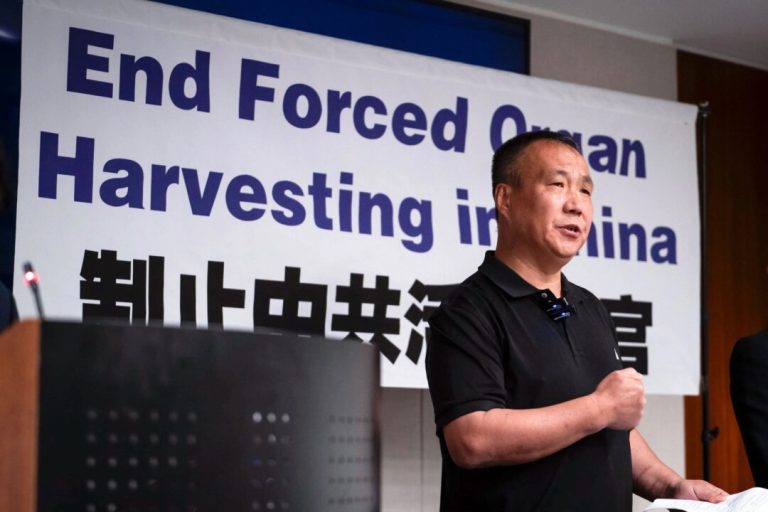
RELATED: Former Journalist Exposes Chilling Organ Harvesting Crimes at Wuhan Tongji Hospital
Zhao likened the approach to Cold War-era tactics used against the Soviet Union, noting that while such efforts rarely produce immediate results, they can shift paradigms in the long run.
“In today’s China, where the Great Firewall and aggressive censorship dominate, the symbolic impact of releasing Mandarin-language videos outweighs their short-term effectiveness,” Zhao said. “It’s like poking a small hole in a pressure cooker — on the surface nothing changes, but pressure is building from within.”
From Party insider to whistleblower
Zhao’s insights carry particular authority given his insider background. He previously worked as a journalist for a national ministry publication and held positions at top-tier Chinese media outlets. Over his career, he engaged directly with CCP officials from ministries of Foreign Affairs, Commerce, and Technology, as well as the military-industrial sector.
“I’ve sat face-to-face with vice-ministerial officials at high-level CCP banquets, hearing their candid concerns about power, family, safety, and interests,” Zhao recalled. “These experiences gave me an uncommon understanding of the CCP’s internal power struggles and structural insecurities.”
Since 2023, Zhao has drawn international attention for a series of bombshell revelations. He accurately predicted the disappearance of Defense Minister Li Shangfu before it was officially acknowledged, revealed the marginalization and suspected “death handling” of Foreign Minister Qin Gang, and in late 2024, reported the disappearance of Central Military Commission Vice Chairman He Weidong — 12 days before similar intelligence reached the U.S. Department of Defense.
“These weren’t lucky guesses but the result of years of experience and judgment honed through high-level contacts and sensitive systems,” he explained.
Zhao argued that the rapid political demises of Li, Qin, and He illustrate a deeper instability within the regime. “Li was a military commission vice chair, Qin a foreign minister, and He a rising military star. Their rapid removal signals to every official that they could be next,” he said.
According to Zhao, the CIA’s messaging is meticulously tailored to reach four specific groups within the CCP:
- Marginalized Senior Officials and Power Struggle Losers
These individuals were once influential but have since been sidelined. Knowing they’re vulnerable to purges, they may view asylum or cooperation as a path to security, exchanging sensitive information for protection. - Young Tech and Data Workers
Often multilingual and exposed to global perspectives, this group sees firsthand the gap between CCP propaganda and reality. Working on digital surveillance or censorship programs, they may feel morally conflicted and motivated by conscience rather than ideology. - Overseas Diplomats and Executives at State-Owned Enterprises
Stationed abroad for extended periods, these individuals witness the erosion of China’s international reputation and often fear being recalled during political reshuffles. With financial interests at stake, they may seek to defect to preserve their freedom and assets. - Internal Security and Disciplinary Enforcers
Though tasked with politically sensitive operations like secret detentions or purges, many in this group may suffer internal conflict. Zhao believes some are “not inherently cold-blooded” and could become whistleblowers if given a safe exit strategy.
Zhao emphasized that the CIA’s goal isn’t simply to collect information — it’s to plant the seed of a question: “Will I end up like Li Shangfu or Qin Gang?” That question, he said, can quietly corrode even the most hardened loyalty.
Striking at the core
Zhao believes the videos’ real value lies in their long-term ability to undermine the trust system within the CCP, which is built on fear, loyalty, and opportunism. He compared the strategy to ideological erosion that occurred in the years before the collapse of the Soviet Union. “No one predicted the Soviet Union’s collapse, but ideological erosion had already begun,” he said.
The video’s recurring line — “Your destiny is in your hands” — delivers a sharp counterpoint to the reality faced by CCP members, who often have little control over their fates. While these videos may not cause an immediate flood of defectors, Zhao argued they might cause countless internal doubts to fester. “Why should I sacrifice for a system that could betray me?” is the new internal refrain the CIA is hoping to spark.
Zhao also sees this move as a geopolitical message from the United States, signaling a more aggressive posture in the ongoing U.S.-China rivalry. “This is an informational military virus designed to foster suspicion, misjudgment, and division within the CCP,” he said. “Its effects are slow but profound.”
Lighting a candle in the dark
Zhao, now a vocal critic of the regime, ended his analysis with a personal appeal to CCP insiders. “China isn’t devoid of people with a sense of justice, but it lacks channels for their voices,” he said. “My journey and the truths I’ve shared are a reminder to those struggling within the CCP system: the regime you’re loyal to may not be loyal to you. History will clearly show who chose to light a candle in the darkness instead of pretending to sleep.”
While the CIA’s campaign is externally driven, Zhao insists it hits at a fundamental contradiction inside the CCP: the fragile balance between enforced loyalty and the looming threat of betrayal. “The outcome of this war doesn’t depend on how many the CIA recruits,” he concluded, “but on whether it can inspire more people to ask: Why should I keep sacrificing for an unworthy system?”
The seed has been planted. Its roots may grow slowly — but they will be difficult to contain, added Zhao.