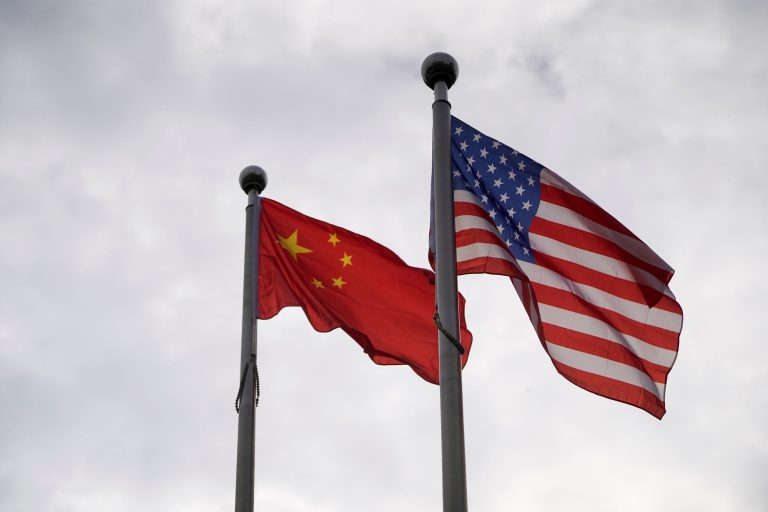
Following negotiations in Switzerland the United States and China have agreed to pause most tariffs for 90 days, marking a significant deescalation in the two country’s tit-for-tat tariff war that has roiled markets, impeded trade and put many business models into doubt.
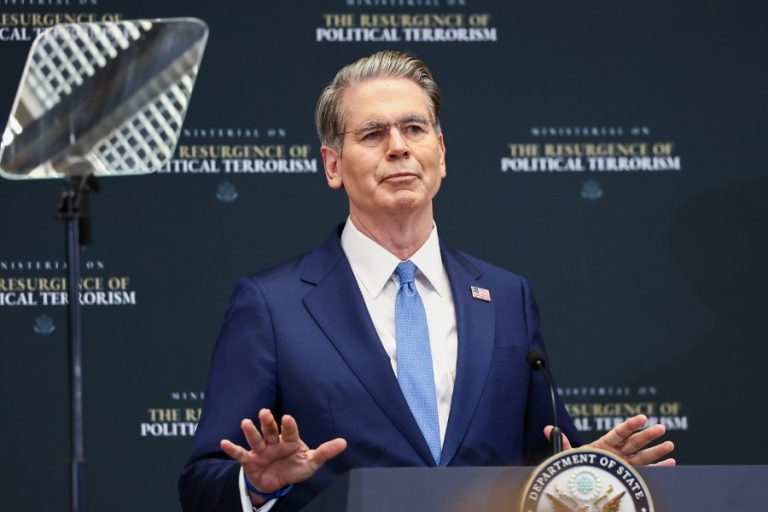
Treasury Secretary, Scott Bessant, who is credited with leading the weekend talks for the U.S. said both countries have pledged to slash tariffs.
American tariffs on most Chinese imports will be cut to 30 percent, down from 145 percent, and China’s tariffs will drop to 10 percent from a high of 125 percent, a joint statement on the matter reads.
“The consensus from both delegations this weekend is neither side wants a decoupling,” Bessent said on Monday. “And what had occurred with these very high tariffs … was the equivalent of an embargo, and neither side wants that. We do want trade.”
The 90 day pause is intended to allow for more thorough negotiations to take place.
Success
You are now signed up for our newsletter
Success
Check your email to complete sign up
On Monday, President Trump said that he would be meeting with his Chinese counterpart, Xi Jinping, “maybe at the end of the week.”
U.S. equity markets immediately reacted, with Wall Street set for a record day as the drastic reduction in tariffs surprised most.
Last week, hopes were high that the U.S. and China could come to a deal after the U.S. announced a trade deal with the UK.
Trump lauded the UK deal as a “breakthrough” that would boost export markets for agricultural products, including beef and ethanol.
READ MORE:
- Inside the CIA’s New Recruitment Campaign: Enlisting CCP Officials to Undermine Beijing
- Obsolete Tech Behind Tens of Thousands of Air Traffic Control Failures Each Year, Insiders Say
Not an ‘all clear’ for markets
Mohamed El-Erian, chief economic advisor for Allianz, told Markets Insider that the 90-day pause is not an “all clear” for markets but will allow for some economic activity between the two superpowers.
“It’s not a straight line. And you’re going to be really frustrated when you hear the opinion of economists like me,” El-Erian told CNBC on May 12.
“My own gut feeling is we will get some slowing in the economy. We will get some higher inflation. But most CEOs will remain in the wait-and-see,” he said, adding that despite the optimism there still remains significant uncertainty and national security implications concerning the deal.
Mike Wilson, Morgan Stanley’s chief investment officer, said he believed stocks had already hit a “trough” following Trump’s “Liberation Day” tariff announcement which fueled a massive sell-off.
Despite this, Wilson remains bullish, forecasting that the S&P 500 would hit 6,500 by the end of the year, a gain of around 12 percent.
Lower tariffs could signal to the Fed to cut interest rates, Wilson said, a move that would be another boon for stock markets.
“If tariffs aren’t going to be as onerous, they can now start looking at this dual mandate again, and saying, ‘Hey, the growth picture is maybe a little bit better, but if we’re going to err on the side of policy, probably to help the growth side than maybe the inflation side, if the tariffs aren’t going to be as bad,'” Wilson told CNBC.
READ:
All metrics need to be reworked
Ryan Sweet, chief U.S. economist for Oxford Economics told Reuters that the 90-day pause “Warrants changes to our near-term baseline for GDP growth, unemployment, and inflation,” and that the odds of a recession this year has dropped to around 35 percent compared to better-than-even odds previously.
However, he warned that “A future escalation remains possible, if not likely, as tariffs are used as a negotiating tactic. This will keep trade policy uncertainty uncomfortably high and create the potential for future, and significant, disruptions in supply chains.”
Patrick Kaser, a portfolio manager with Brandywine Global in Philadelphia said the tariff reduction “is a positive catalyst in the short term,” but that it doesn’t reveal much about markets over the next few weeks.
“There’s still uncertainty. It’s still hard for companies to make decisions on spending. The market is acting like the risk has gone away, but I don’t think that’s how a lot of businesses and companies are going to view the situation,” Kaser told reuters.
Kamil Dimmich, partner and portfolio manager with North of South Capital EM Fund, said China called the Trump administration’s bluff, and that the weekend discussions “strongly suggest that the U.S. wants to continue trading with China and wasn’t ever willing to contemplate significant disruption for longer than a few weeks.”
READ MORE:
- Markets Climb as Global Trade Talks Gain Urgency Under Trump Tariff Threat
- MSU Study Reveals Growing Trend of Adults Opting Out of Parenthood
- Nations, Markets Brace as Trump Announces ‘Liberation Day’ US Global Tariffs
Markets react
Following the news, American markets surged on Monday with the S&P 500 up nearly 3.3 percent, its highest since the beginning of March.
The Dow Jones Industrial Average gained 2.8 percent, or more than 1,100 points and the tech heavy Nasdaq Composite soared by 4.3 percent.
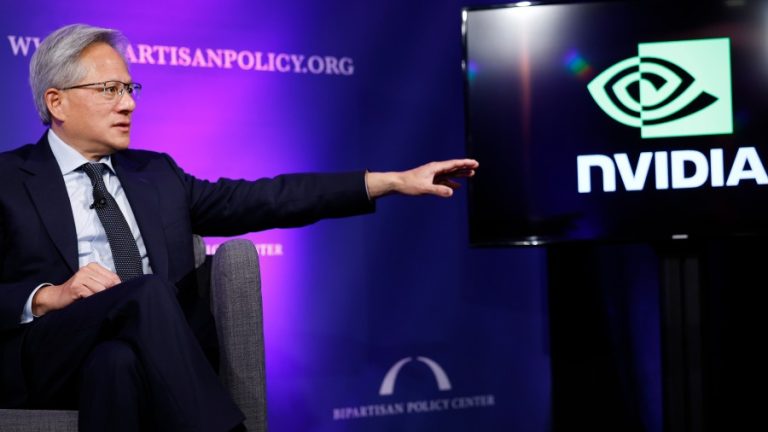
Major tech stocks experienced a rebound as well, with AI chip leader Nvidia rising more than five percent, and Amazon, Apple and Tesla stocks all experiencing a bump in their stock prices.
Markets were also reacting to Trump’s Monday executive order aimed at reducing prices on drugs sold in the United States.
Trump promised on social media to lower drug costs by at least 59 percent. Economists believe Trump’s plan will see the cost of drugs in other countries rise while boosting revenue for pharmaceutical companies.
Crude oil prices climbed Monday as well, as the global economy became less burdened by tariffs which will allow for more shipments of goods, resulting in the need for more fuel.
The U.S. dollar also strengthened on the news and everything from the euro to the Japanese yen to the Swiss franc experienced boosts.
However, the price of gold fell, as investors felt less of a need to buy something safe.