As the Trump administration announces its intention to cancel the student visas of Chinese citizens studying the U.S. due to national security concerns, members of the overseas Chinese dissident community are calling upon their compatriots present in the United States on student visas to take part in the movement to quit the CCP — the Chinese Communist Party — governing mainland China.
On May 28 (Wednesday), U.S. state secretary Marco Rubio confirmed that the government would begin revoking the visas of Chinese students “with connections to the Chinese Communist Party or studying in critical fields.” The next day, State Department spokeswoman Tammy Bruce said that the department would begin vetting all current and prospective visa holders from China in a “continuous” process.
U.S. officials and observers have increasingly raised concerns about the CCP’s manipulation of Chinese nationals, as well as outright spies, in the United States to further its espionage and political goals.
Meanwhile, in reference to these new developments, Chinese dissidents residing in the U.S. have exhorted their fellow overseas Chinese to take a stand against the Communist Party.
Prominent among these figures is Wang Zhiyuan, who heads the Global Service Center for Quitting the CCP.
Success
You are now signed up for our newsletter
Success
Check your email to complete sign up
“The malign CCP not only brings disaster to the Chinese people in China, but has been persistently spreading its subversive influence worldwide, even engaging in transnational repression,” Wang wrote in a May 30 op-ed published by overseas Chinese-language outlet The Epoch Times.
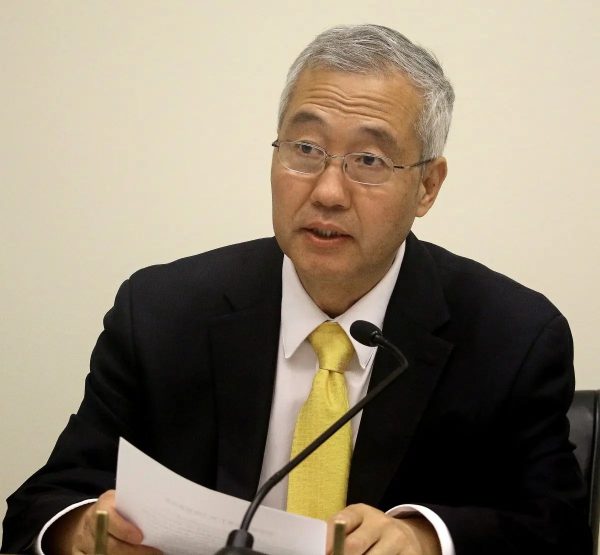
The Service Center, based in Flushing, New York, plays a main role in facilitating a grass-roots mass movement among Chinese around the world to renounce their allegiance to the CCP and its two youth organizations. Since its beginnings in 2004, the movement, known as “Tuidang” (退黨, or “quit the Party”) has tallied over 447 million participants.
In his op-ed, Wang suggested that Chinese students in the U.S. renounce the Communist Party and apply for a certificate with the Center that could help their case should the State Department scrutinize them.
Moreover, “this ‘Certificate of Withdrawal from the CCP’ shall serve as proof of your contribution to the surging tide of the Tuidang movement” sweeping across China, he wrote, “allowing you to earn a place of glory in the historical record.”
Whether giving their real names or pseudonyms, those taking part in the Tuidang movement to quit the CCP are publicly logged on its website.
Breaking with communism
While the CCP only counts about 95 million members, nearly all Chinese have joined either the Communist Youth League, geared for teens and young people, or its Communist Young Pioneers, which enrolls younger children.
When joining any of the three organizations, Chinese must swear an oath to give their life in struggle for the CCP, if need be.
Disintegrating the Culture of the Chinese Communist Party: Introduction
- Chapter One: Traditional Chinese Culture and Communist Party Culture
- Disintegrating the Culture of the Chinese Communist Party (Chapter Two, Part I): The Establishment of Communist Party Culture
The communists seized power over China in 1949 following decades of civil war. Though claiming to represent the rise of a modern Chinese nation, the CCP leadership instead orchestrated tyrannical campaigns that led to the deaths of over 80 million Chinese, while seeking to replace traditional Chinese culture with its atheist Marxism.
While China has seen many tyrannical rulers and destructive foreign invasions throughout the millenia, the CCP has presided over both the deadliest famine to afflict humanity, and stands as the deadliest regime in history.
In addition to calling for the reinterpretation and transformation of Chinese identity to fall in line with communist doctrine, the CCP’s philosophy of struggle also pits the Chinese state against other countries — primarily the United States, which Beijing sees as the main obstacle to its global ambitions.
While it is impractical and in some cases dangerous for Chinese to attempt to officially rescind their status as Party members, the focus of the Tuidang movement is on the individual choice and wish of those taking part.
Many statements forwarded to the Tuidang service center by those expressing their intent to quit the CCP have likened their step to “erasing the mark of the beast” caused by their previous membership in the Party and its youth groups.
A significant number of participants in the Tuidang movement are Chinese who have broken through the CCP’s internet censorship to access unfiltered information about the regime, or Chinese who have travelled abroad.
Especially in recent years, with the CCP’s increasing crackdowns on civil society, oppressive policies such as the “zero-COVID” lockdowns, and China’s worsening economic prospects, an increasing proportion of those renouncing the Party are young Chinese worried for the future of themselves and their country.