Online content creators are undeniably captivating — their antics can spark joy and draw massive audiences. But that may be exactly what the Chinese Communist Party (CCP) is banking on, using this appeal as a tool to extend its reach and influence.
On YouTube, American influencer IShowSpeed — who boasts over 40 million subscribers — livestreamed a series of eye-catching stunts, including delivering his KFC meal via drone, flying in a futuristic flying car, and showing off a triple-folding smartphone made by Huawei.
When he saw a dancing car in Shenzhen, the center of China’s technological advances, he expressed in a rather wild manner.
“You see what I’m talking about?” he shouted. “This is where they be making this stuff at — it’s Shenzhen!”
IShowSpeed has become one of several Western influencers who are promoting China’s technology and culture to the world; something that the CCP is allowing to help grow its own influence and propaganda. As such, it would give them more control over the flow of information worldwide.
China’s ‘gifts’ for influencers
Success
You are now signed up for our newsletter
Success
Check your email to complete sign up
In recent years, Russia and China are said to be spending around $10.7 million to increase their presence online throughout the world, mainly in countries in the Middle East, Africa and Latin America.
Unlike Russia, however, China’s approach is a softer tactic focused on using content creators to promote its goods and power.
In one instance, the Communist Youth League of China has offered influencers aged 35 or younger, who have over 300,000 followers, a 10-day trip around the country. Those selected may be eligible for travel expense reimbursement.
“It’s becoming more sophisticated,” Neil O’Brien, a Tory MP who is also part of the UK’s China Research Group, said. “Less crass stuff and more new media. Lord knows how much they are spending.”
“I think many people are, to a certain degree, underestimating the extent to which China is investing in disinformation because China doesn’t necessarily do it in an in-your-face-style like, for example, Russia does,” Helena Ivanov of the think tank Henry Jackson Society said.
“But the fact that it’s under the radar doesn’t mean that it’s not out there and I think China has been very good at capturing the ways through which it can disseminate its disinformation.”
Masking China’s dark side
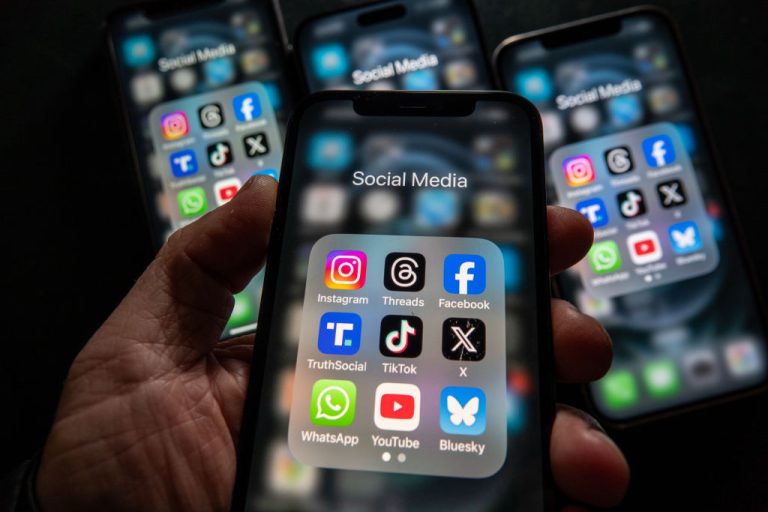
Younger users are being exposed to China’s messages through social media apps.
According to UK-based Ofcom, among the top five news sources for users aged between 16 and 24 last year included:
- YouTube
- TikTok
- X
Another survey by Ipsos reveals that nearly half of youths believe in influencers, with another 55 percent relying on them for daily news.
There are videos of vloggers visiting China to downplay the issues of human rights abuses happening to Uyghurs, while others are made to spread the “truth” about China and the “lies” of Western media.
Given TikTok’s position, it is feared that China can take advantage of the platform to spread disinformation. Some Chinese companies are said to be already acting on Beijing’s plans. The fashion brand Shein in 2023 had invited influencers on paid trips to their facilities in Guangzhou, diverting attention away from their alleged use of forced labor.
A deleted video from influencer Destene Sudduth, with four million followers on TikTok, claimed that Shein has a clean and joyful reputation with no tolerance towards forced labor.
However, it also raises the concern that Beijing may be gradually asserting its influnec, without making much effort to hide its messaging.
READ MORE:
- Inside the Silent Coup: How Xi Jinping Lost His Grip on China’s Communist Party
- Behind the CCP’s Attacks on Shen Yun and Falun Gong in the US
- Chinese Students in the US Urged to Quit the CCP as Trump Admin Moves to Revoke Visas
Turning hearts and minds
With more Western users turning to Chinese-made products, the CCP could utilize the rising numbers. This is especially evident with Donald Trump’s ongoing policies against social media personalities.
Beijing has called the U.S. a “small, stranded boat” left drifting in the trade war between the two countries, leading to greater efforts to bolster China’s propaganda drive.
One of the largest TikTok stars, Khaby Lame, was targeted by the immigration crackdown in the U.S., prompting him to leave the country. He was apparently caught by immigration officials for overstaying his visa.
Trump is also still trying to ban or force a sale of TikTok from ByteDance, even after he gave the company a third chance to find a buyer within another 90 days.
With cases like this, experts believe that influencers would relocate to another platform and share their content on rival platforms like YouTube.
“You can’t stop it any more,” Ivanov said. “Pandora’s box has opened.” She has warned that “the West cannot ignore China’s sophisticated new soft power strategy.”