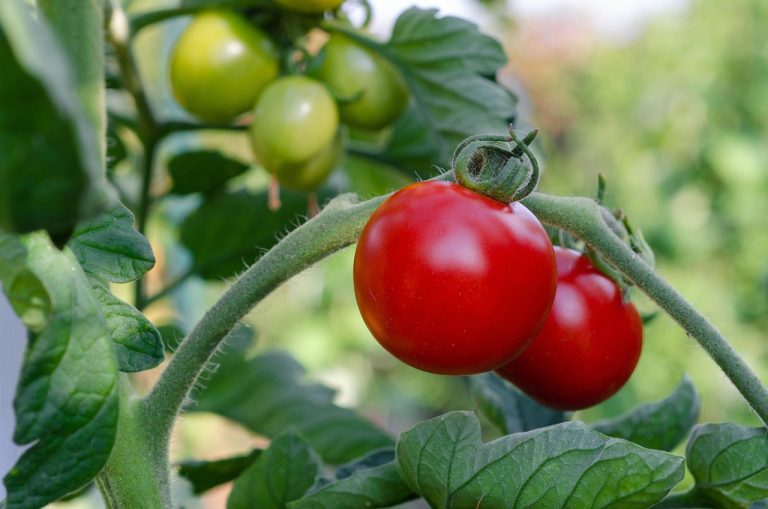
Tomatoes are, without question, the world’s favorite fruit. Not only are they commercially produced at an astounding rate of over 400 billion pounds annually, they are also the top choice among home gardeners. Seemingly the perfect plant for summer produce, tomatoes thrive in warm, sunny weather; so much so that many growers strive to keep them in check. Do you prune your tomatoes? Learn how, why, and when you should.
Understanding tomato plants
Tomato plants are classified into two categories. Indeterminate plants have a vining habit and will continue to grow and produce tomatoes until the day they are killed by frost, disease or damage. Determinate plants are bushy in habit, grow to a limited size, and produce heavily for a few weeks before they peter out. Pruning recommendations depend on which type of plants you’re dealing with.
How do you know what kind of plants you have?
Purchased plants will often have this information on the tag, as will seed packets in the description. If those artifacts got lost in the shuffle, look up the variety online. No idea what the variety name is? No worries, these identifying features on a mature (flowering) plant will help you determine whether it is determinate (D) or indeterminate (I):
- Growth habit: compact and stocky (D) vs. leggy and elongated (I)
- Flower/fruit position: towards the tip (D) vs. along the stem (I)
- Shoot production: terminates after flowering D) vs. continual (I)
- Flower/fruit production: lots at once (D) vs. spaced gradually (I)
Determinate plants are rarely pruned. These bush-like plants flower and produce heavily in a short period, and then they are done; but pruning is a common practice with indeterminate plants for many reasons.
Why prune your tomatoes?
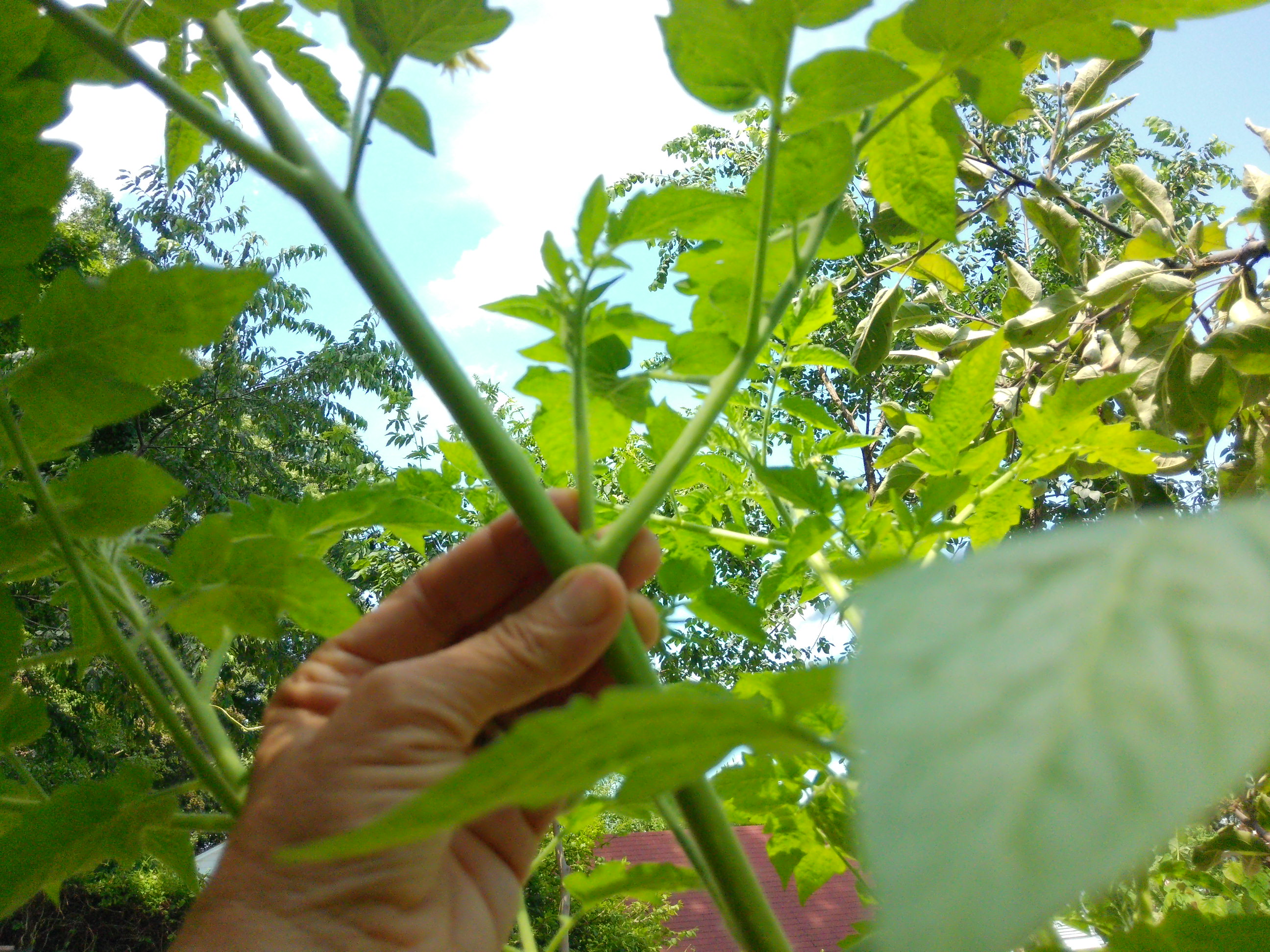
Pruning suckers off indeterminate tomatoes is beneficial for the following reasons:
- Stronger plants: Removing extra shoots allows more direct sunlight to reach the remaining plant, reducing the tendency to become leggy and floppy.
- Healthier plants: Removing extra shoots also allows better air flow, reducing the risk of fungal diseases.
- Larger fruits: Removing extra shoots enables the plant to focus more energy on the main leader’s fruits.
- Control the size of your plant: Indeterminate plants can become huge and unwieldy. If you have space restrictions or can’t keep up with giving new shoots the support they need, pruning is a must.
- Propagation: If you have a special tomato that you want to share or clone, larger suckers can take root within a week to produce another plant.
Success
You are now signed up for our newsletter
Success
Check your email to complete sign up
Pruning of determinate tomato plants is limited to lower leaves and any diseased foliage or stems. This is important for both types of tomatoes to keep them healthy.
Tomato pruning guidelines
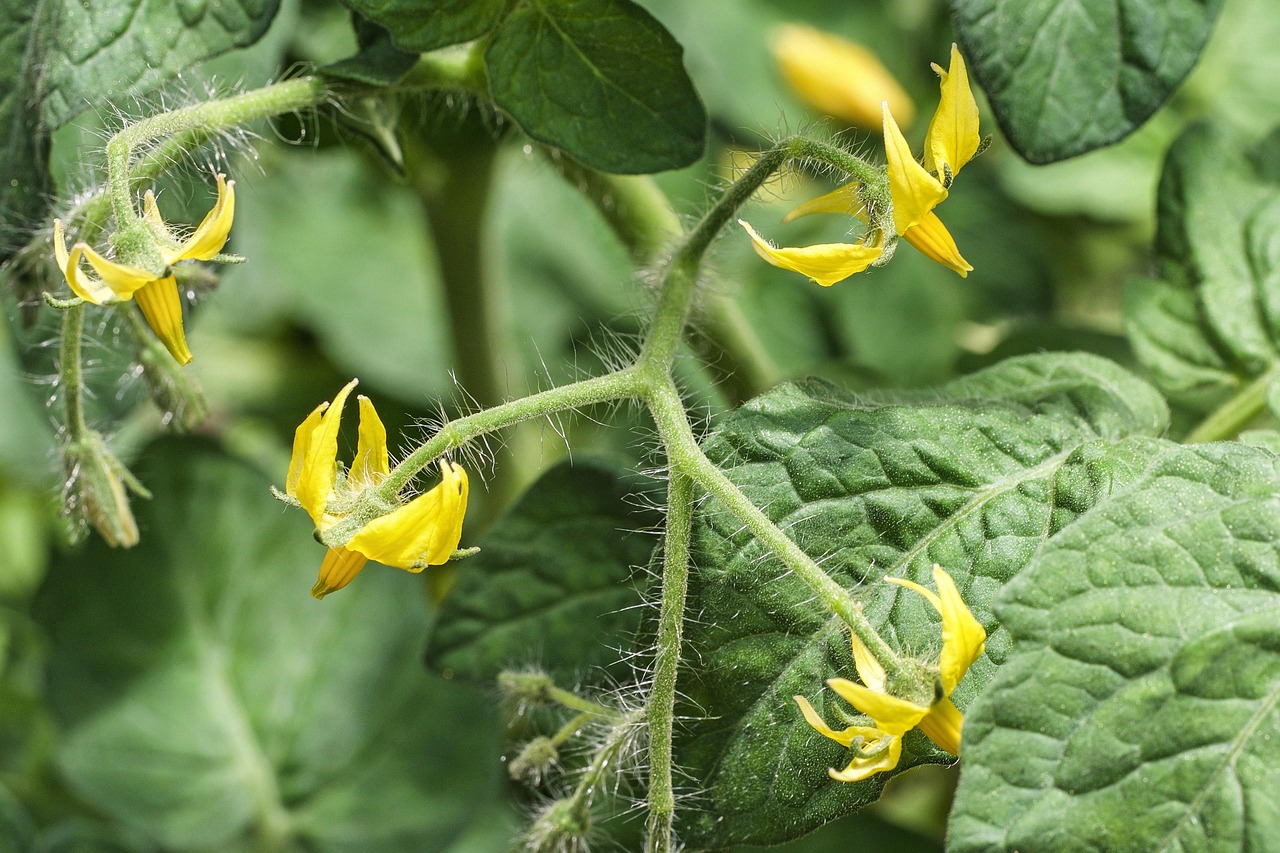
Begin pruning when the plant starts to flower. For both determinate and indeterminate plants, remove any leaves below the first cluster of flowers. This helps prevent fungal disease spread by rain splashing soil onto the lower leaves.
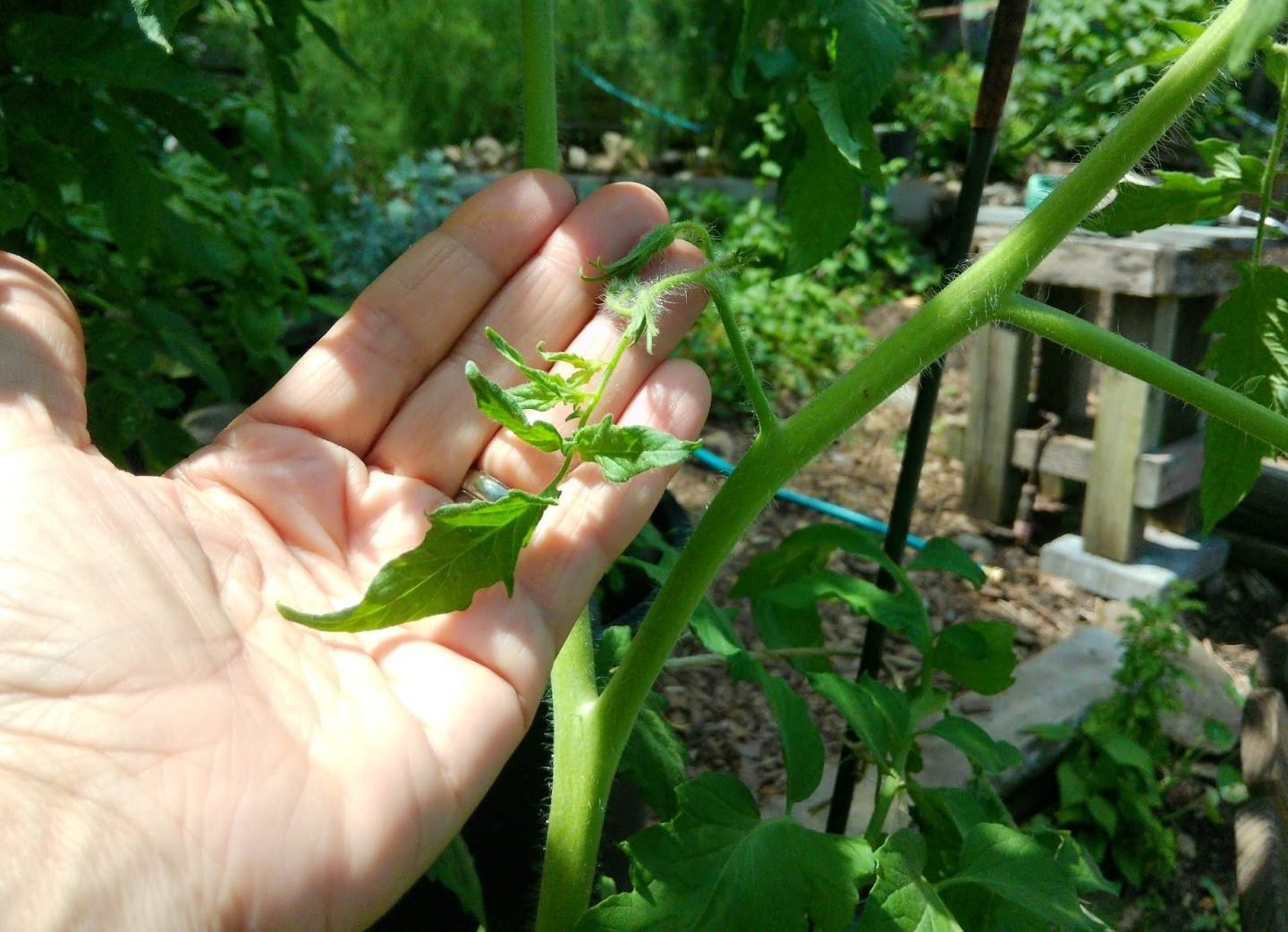
At this time you will also notice small suckers forming at the leaf nodes. When they are small they can be removed with a pinch of the fingers. Larger suckers call for sharp snippers.
Suckers that have developed into branches can be partially removed, to avoid stressing the plant and allow their developed foliage to remain for photosynthesizing and shading.
Which suckers to remove depends on what you want to accomplish. Keep in mind that the leader of indeterminate plants can grow up to 20 feet long in a single season, with each sucker growing into a substantial branch, producing lots of foliage along with some flowers and fruit.
If you want the most fruit possible, you can certainly leave all the suckers; but the fruits are likely to be somewhat inferior and the plants may become very difficult to manage.
If you are very tight on space and just want some big, beautiful fruit, you could remove all the suckers and have a single, leader vine to manage. Alternatively, the first sucker below the first flower cluster can be kept as a second leader.
You could also take the middle of the road, and selectively prune. Consider whether the sucker is in a position to get the light and space that it wants if it develops. For balance, remove the suckers nearest the ones you choose to keep.
As your indeterminate plants continue to grow, they will keep producing suckers. These can be removed every two weeks. Pruning suckers when they are small minimizes stress on the plant. Pruning should take place in the morning on a sunny day, to ensure quick healing of the wound.
As the season draws to a close, consider pruning the leader(s). This will stop the indeterminate pattern and tell the plant to put its remaining energy into the existing fruits over setting fruit that will not have time to develop.
Pruning mistakes to avoid
- Removing suckers from determinate plants: Be certain that you have an indeterminate plant before you start hacking away at it. Suckers on determinate plants are its limited source of flowers and fruit.
- Pruning off flowering stems: Flower stems can be mistaken for suckers when they are small, but they are borne on the stalk rather than at the nodes (where the leaf meets the stalk).
- Pruning wet plants: While plants need plenty of water for their roots, moisture on the leaves can support fungi, viruses and disease. It’s best to wait until foliage dries before working with your plants.
- Over-pruning: Taking away too much foliage at once can actually lead to sunburn of previously-shaded fruits and stems. To avoid stressing the plant, avoid removing more than one third of it.
- Rigid thinking: You will find all sorts of gardening advice saying “THIS is the way to do it!” but, in truth, every garden is different and you may need to feel it out and see what works for you.
As with anything else, open mindedness and a willingness to explore are your greatest assets in the garden.