The Japanese Ministry of Defense’s newest white paper directly identifies Communist China’s military activities and overall “external posture” as the number one threat to Japan’s national security, given the rapid expansion of Beijing’s armed forces and the increasing frequency of their operations near Japanese territory.
Published Tuesday, July 15, a digest version of the white paper, titled “Defense of Japan 2025,” emphasizes that Beijing represents the “greatest strategic challenge” to “which Japan should respond with its comprehensive national power.”
“China has been swiftly increasing its national defense expenditures, thereby extensively and rapidly enhancing its military capability in a qualitative and quantitative manner,” a statement by Japanese defense minister Gen Nakatani (中谷元) at the beginning of the paper says.
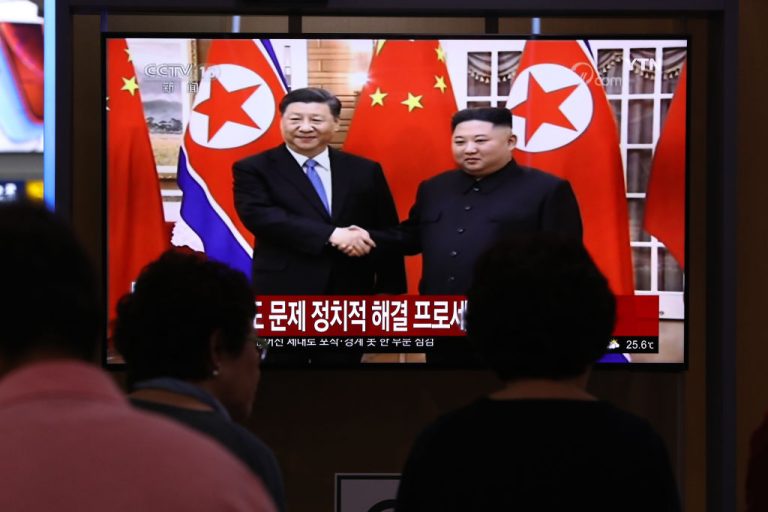
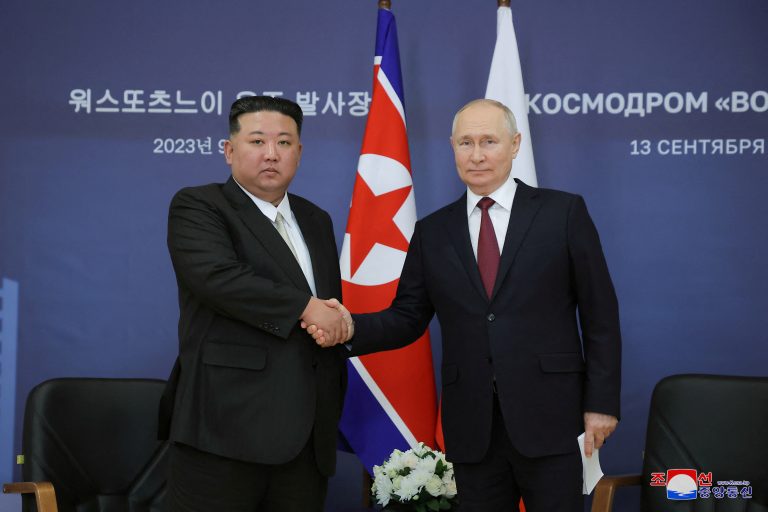
Nakatani also noted the growing threat of North Korea’s expanding nuclear arsenal, as well as deepening Chinese military cooperation with Russia in the form of joint naval and aerial exercises in the northeast Asian region.
- US State Secretary Rubio Meets With Officials From Japan, Korea at ASEAN Summit
- Japan Sets Its Sights on Global Quantum Leadership With Coordinated National Strategy
Rising threat to Japan, Taiwan
The white paper notes that China has significantly increased its defense budget for more than 30 consecutive years, “thereby extensively and rapidly enhancing its military capability in a qualitative and quantitative manner and intensifying its activities in the East China Sea, including around the Senkaku Islands, and the Pacific.”
Success
You are now signed up for our newsletter
Success
Check your email to complete sign up
“China’s external posture, military activities, and other activities are a matter of serious concern for Japan and the international community and present an unprecedented and the greatest strategic challenge which Japan should respond with its comprehensive national power and in cooperation and collaboration with its ally, like-minded countries, and others,” the white paper’s section on China’s military activities reads.

The Senkaku Islands, called the Diaoyu Islands in Chinese, are an uninhabited archipelago claimed by both countries but administered by Japan. The Chinese Communist Party (CCP) has increased rhetoric highlighting the issue starting in the early 2000s, while sending more military sorties near the islands.
Meanwhile, military activity by the CCP’s People’s Liberation Army (PLA) spans the East China Sea, the Sea of Japan, and the western Pacific Ocean. Of particular concern to Japan are the Chinese maneuvers between the so-called “first island chain” and “second island chain.”
The first island chain refers to the Philippines, Taiwan, the southern main Japanese island of Kyushu, and other minor islands. The second chain comprises the islands running from Papua New Guinea in the south, arching east towards the U.S. territory of Guam, and ending at Honshu, Japan’s largest island.
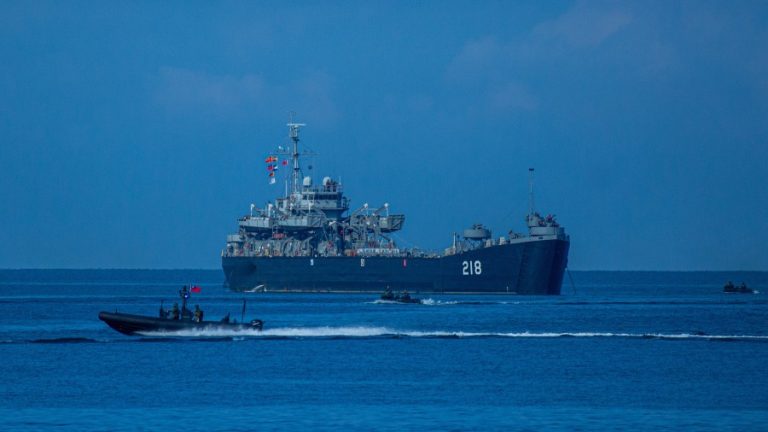
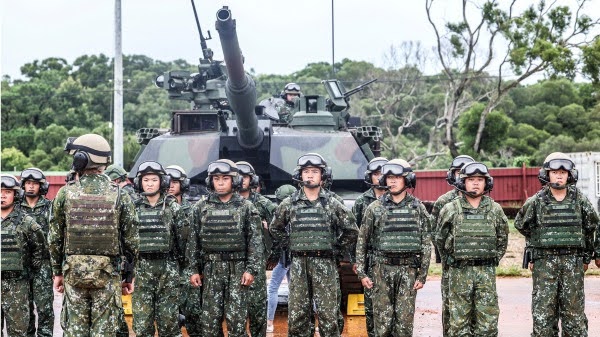
Taiwan occupies a strategic supply line between Japan and the Indian Ocean, as well as an important part of the first island chain. The CCP claims Taiwan as a part of its territory, and regularly sends warplanes and ships to intimidate the democratically governed island.
The overall military balance between China and Taiwan is rapidly tilting in China’s favor,” the Japanese defense ministry said in the white paper.
“It is believed that through the series of activities, China seeks to create a fait accompli where the [PLA] is operating, and improve its actual combat capabilities” in order to exert its will over Taiwan.
Incursions into Japanese territory
The white paper notes that last August, PLA aircraft violated Japanese airspace near Kyushu, which was followed up by a Chinese aircraft carrier sailing between the Japanese islands of Yonaguni and Irimote the next month.

This May, a China Coast Guard vessel intruded on Japanese waters around the Senkaku Islands, and launched a helicopter in a show of Beijing’s “continuing its unilateral attempts to change the status quo by force” around the islands.
“China’s intensified military activities have created a situation that could seriously impact Japan’s security,” the white paper reads.
In addition to warning about the PLA’s activities regarding Japanese and Taiwanese territorial waters and airspace, the Japanese defense ministry also highlighted Beijing’s ongoing efforts to reinforce its position in the disputed waters of the South China Sea.
The CCP claims almost the entirety of that region, infringing on international law as well as the territorial waters and island possessions of six other countries. PLA bases have been constructed on multiple islands in the sea, including some islands that themselves were artificially enlarged to accommodate the military installations.
Calls for deepening US-Japan defense cooperation
The Japanese defense ministry noted Tokyo’s recent efforts to strengthen Japan’s military forces in response to Communist China’s moves, as well as the need to work more closely with its allies in the region, particularly the U.S.
“The Japan-U.S. Alliance is essential to Japan’s national security, and Japan-U.S. bilateral exercises play a significant role in enhancing Japan’s deterrence and response capabilities,” the white paper reads, adding that Japan and the U.S. share “basic value such as such as democracy, respect for human rights, [and] the rule of law.”
Diplomatically, Japan sees the U.S.-Japan alliance as the cornerstone of its security. In addition to strengthening joint operational capabilities with U.S. forces, Japan is promoting intelligence sharing, joint development of defense technologies, and cooperation in equipment maintenance. At the same time, it is actively advancing multi-layered defense cooperation with countries like India, the Philippines, and Indonesia.
- Japan an ‘Indispensable Partner in Deterring Communist Chinese Military Aggression’: US Defense Secretary Hegseth
- US, Japan Reach Trade Deal, Including Lowered Tariffs and More American Exports
- Defense Pact Between Japan and Philippines Takes Ties to ‘Unprecedented Height’
To support these strategic initiatives, Japan’s defense budget for fiscal year 2025 will reach approximately 9.9 trillion yen, about 1.8 percent of its GDP, with plans to raise this to 2 percent by 2027. The government states that it will steadily increase defense spending, investing in critical areas such as missile defense, communications satellites, drones, and logistical ammunition to ensure the sustainability and resilience of its defense system.
Japan plans to deploy more cruise missiles, including the Type 12 anti-ship missile and the U.S.-made Tomahawk missile, as well as develop interceptor munitions to defend against the PLA’s hypersonic weapons.
This March, the Japanese Self-Defense Forces established its Joint Operations Command (JJOC), an organization under the defense ministry with unified authority over the three branches of the Japanese military. This, in addition to command over “units operating in the space and cyber domains” during peacetime, is intended to give the SDF a “flexible defense posture depending on the situation,” per the white paper.