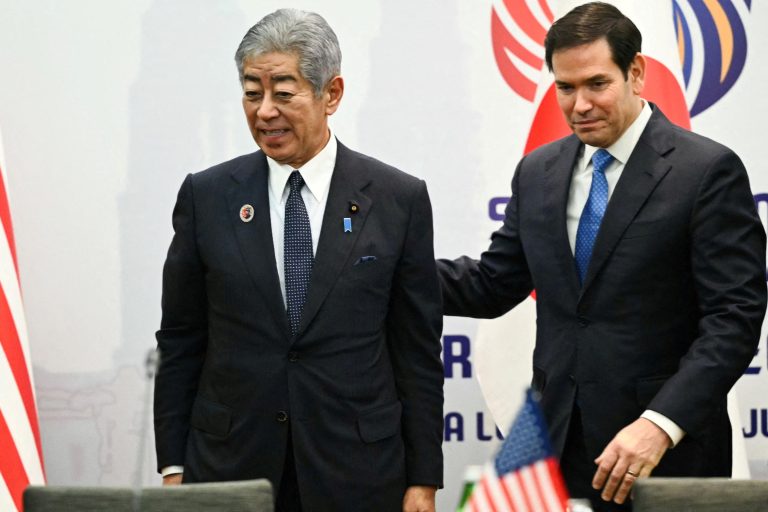
From July 8 to July 12, U.S. Secretary of State Marco Rubio travelled to Asia to attend the ASEAN summit and meeting with diplomats from American allies Japan and South Korea, as well as other countries.
On Friday, July 11, Rubio held trilateral talks with his Japanese counterpart Takeshi Iwaya and South Korea’s First Vice Foreign Minister Park Yoon-joo in Kuala Lumpuir, Malaysia, where the summit was held.
The Association of Southeast Asian Nations has 10 member states across the region; the summit included foreign ministers and other officials from Australia, China, the European Union, Japan, Russia, South Korea, and others.
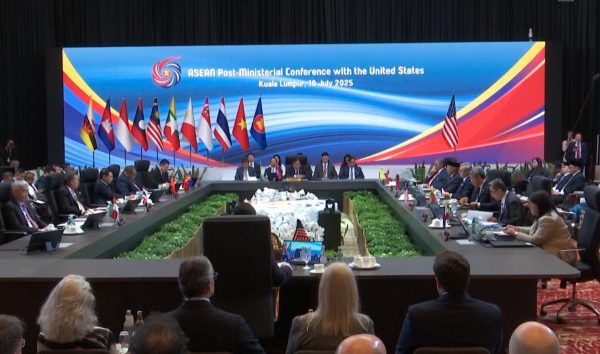
Rubio also met with foreign ministers Wang Yi and Sergei Lavrov of China and Russia.
A major theme of Rubio’s ASEAN trip was to address concerns from allies and partners about the stability of America’s ties to foreign countries as the second Trump administration pursues an aggressive tariff-based economic policy.
Success
You are now signed up for our newsletter
Success
Check your email to complete sign up
Earlier in July, U.S. President Donald Trump announced hefty tariffs to go into effect on Japan and South Korea, as well as eight Southeast Asian countries including Malaysia.
- US State Secretary Rubio to China’s Wang Yi: Trump-Xi Meeting to Occur Under ‘the right atmosphere’
- Observers Comment on US-Vietnam Trade Deal: ABC
- Chinese Premier Angles for Greater BRI Expansion in Egypt
In a sign of the upset, Japanese Prime Minister Shigeru Ishiba told a television news program on July 10 that Japan needed to wean itself from U.S. dependence in key areas, as reported by Reuters.
“If they think Japan ought to follow what America says as we depend heavily on them, then we need to work to become more self-sufficient in security, energy and food, and less dependent on America,” Ishiba said.
‘Our relationship with Japan is very solid’
The U.S. state secretary said that Ishiba’s words do not indicate a weakening of the U.S.–Japan alliance, emphasizing that “our relationship with Japan is very solid.”
“The idea that Japan’s military would become more capable is not something we would be offended by; it’s something we would actually be encouraged by,” Rubio said, adressing the Japanese leader’s statements about becoming less dependent on the U.S.
The state secretary had been slated to visit Japan and South Korea, but the trip was cancelled on July 3 in light of Rubio’s decision to focus on affairs in the Middle East.
Rubio stressed that Southeast Asia was a “focal point of U.S. foreign policy,” saying that “we have strong partnerships we have no intention of abandoning but rather strengthening and building upon. The United States is a committed partner to ASEAN.”
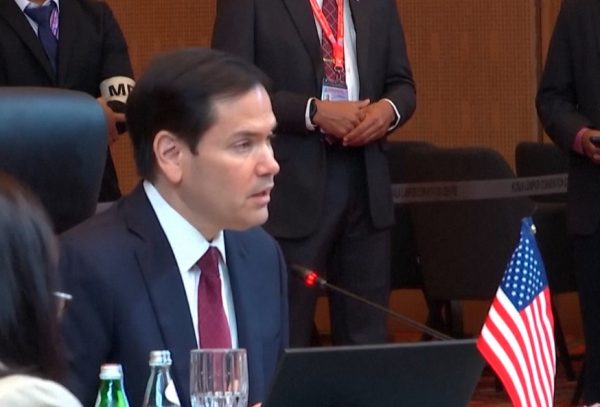
The diplomats from the U.S. Japan, and South Korea agreed to maintain a strong deterrence against North Korea as well as strengthen cooperation in fields such as energy, shipbuilding, critical minerals and other matters of supply chain security as well as artificial intelligence, South Korea’s Foreign Ministry said in a statement.
Meanwhile, the three countries’ defense chiefs also held an annual meeting in Seoul on July 11, where they recognized the importance of close trilateral cooperation in addressing security challenges posed by North Korea, in the Indo-Pacific and beyond, the South Korean defence ministry said in a statement.
Trade tensions
According to Gregory Poling, a Southeast Asia expert at Washington’s Center for Strategic and International Studies, “Rubio said the right things but has limited ability to reassure considering the underlying dynamics” of the Trump administration’s tariff policies and the concern they are causing among Washington’s allies and adversaries alike.
“All of these countries were receiving letters from the White House with their new tariff rates at the same time Rubio was trying to message continuity.”
- China’s ‘Internal Circulation’ Trade Policy Invites Backlash for Maximizing Exports, Restricting Imports
- Beijing Touts Hisense as World’s 2nd-Biggest TV Producer
- Nippon Steel to Raise $5.6 Billion in Subordinated Loans to Fund US Steel Purchase
President Trump has pressed Tokyo, Seoul, and other countries on what he believes is a disadvantageous trade relationship for the United States. He has made vocal complaints to Tokyo about the country’s limited purchases of U.S. autos, rice, and other goods, which are mostly due to Japanese consumers’ preferences rather than government barriers.
The U.S. is also trying to negotiate with South Korea to have Seoul allow the import of American beef from cattle older than 30 months. This push is causing some controversy in the country, which restricts this kind of beef due to concerns about mad cow disease and as a means of protecting the local cattle industry, which is more expensive but considered higher quality.
Similarly, Japan is in the throes of a national rice crisis, which has pushed prices up, but Japanese consumers report a preference for natively grown rice.
Christopher Johnstone, a former Biden White House official now with the Asia Group consultancy, told Reuters that while the current tensions between the U.S. and Japan could fade if the two sides can reach a trade agreement, Prime Minister “Ishiba’s comments reflect sentiment that is real and widespread.”
Reuters contributed to this report.