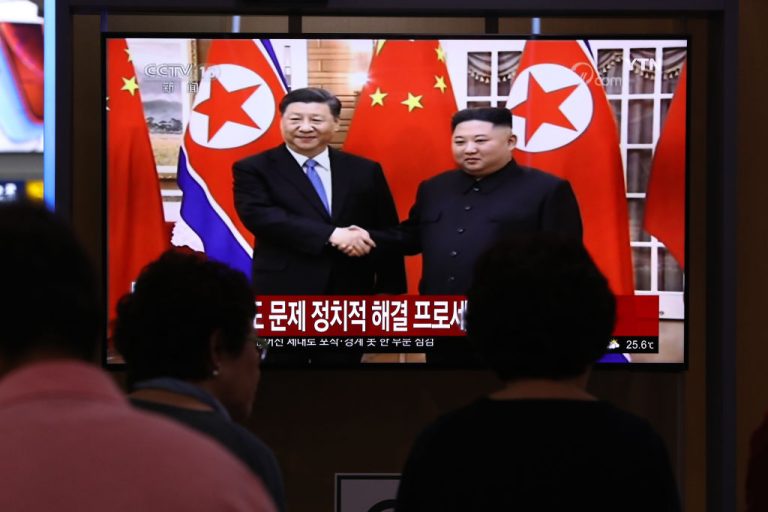
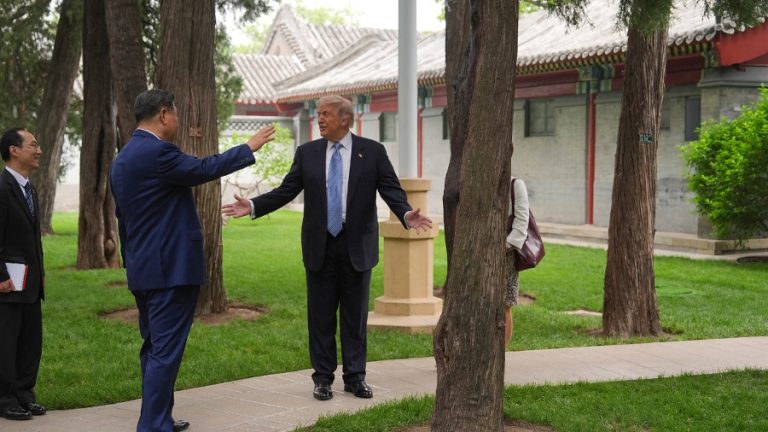
While walking side-by-side along with other national leaders at the ramparts overlooking Tiananmen Square in Beijing on Sept. 3, Chinese leader Xi Jinping and Russian President Vladimir Putin chatted about using transplanted organs to remain youthful and perhaps extend the human lifespan far beyond its natural limits.
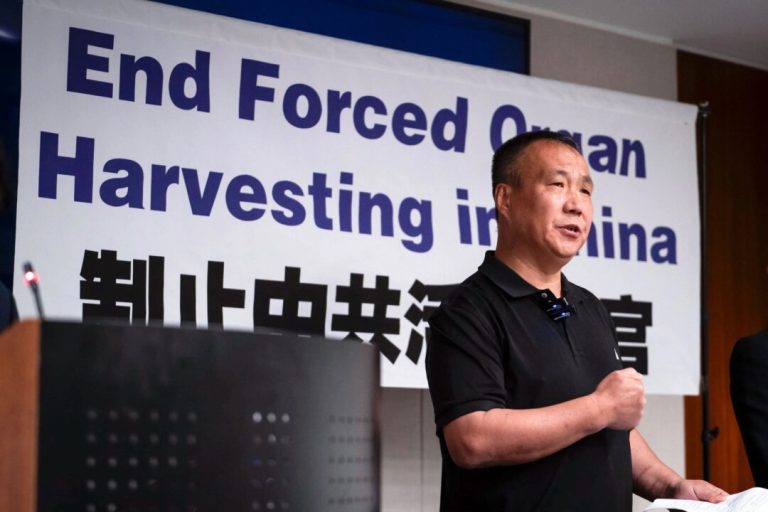
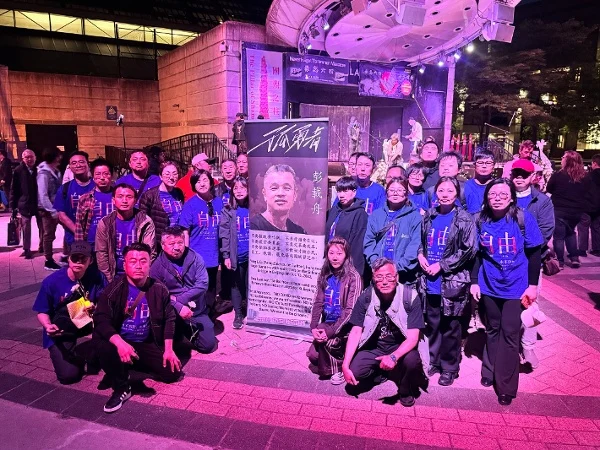
The remarks by the two leaders have focused attention on decades-long allegations of forced organ harvesting by the Chinese Communist Party (CCP), which experts say has resulted in the mass murder of people imprisoned for their faith or ethnicity. The victims are believed to be predominantly China’s Uyghurs and Muslims, as well as Christians and Falun Gong practitioners.
Snippets of the conversation were picked up by a hot mic as Xi and Putin — the latter with North Korean leader Kim Jong Un to his left — walked down a corridor during celebrations for the 80th anniversary of the Allied victory over Japan in World War II.
The moment was carried on the livestream provided by state broadcaster CCTV to other media, including AP and Reuters. China’s radio and TV administration said CCTV’s coverage of the event was viewed 1.9 billion times online and by more than 400 million on TV.
As Putin and Xi, both 72 years old, walked toward the Tiananmen rostrum where they viewed the parade with Kim, Putin’s translator could be heard saying in Chinese: “Biotechnology is continuously developing.”
Success
You are now signed up for our newsletter
Success
Check your email to complete sign up
The translator added, after an inaudible passage: “Human organs can be continuously transplanted. The longer you live, the younger you become, and [you can] even achieve immortality.”
In response, Xi, who was off camera, can be heard responding in Chinese: “Some predict that in this century humans may live to 150 years old.”
He added that while in the past, few people lived to 70, “these days at 70 you are still a child,” Xi said through a translator in Russian.
Though Kim was not seen taking part in the conversation, he appeared to be listening via a translator.
Xi’s mention of living to “150 years old” has been taken by some observers as a possible reference to the CCP’s “981 Health Project for Leaders,” an effort that appeared in a 2019 video advertisment by the elite 301 Hospital in Beijing.
Drawing attention to forced organ harvesting
The conversation between Xi and Putin was widely reported in international media. On social media, there were heated discussions about the CCP’s forced organ harvesting practices and how the Party’s elite treat regular Chinese citizens as “spare parts.”
Putin later confirmed that the conversation had taken place. “I think when we went to the parade, the chairman [Xi Jinping] talked about it,” Putin told reporters in Beijing when asked about the leaked conversation.
Meanwhile, CCTV withdrew the permission of its more than 1,000 media clients around the world, including Reuters, to use the footage and audio of the conversation.
Allegations that Communist China has been harvesting organs from prisoners of conscience first appeared in the early 2000s. According to various accounts, the harrowing practice began in the 1990s, mainly at execution grounds in the Xinjiang region of western China.
After the CCP, under then-leader Jiang Zemin, began its persecution of the Falun Gong spiritual group in 1999, the Chinese organ transplant industry expanded rapidly, with some investigators estimating that tens of thousands of incarcerated Falun Gong practitioners were being executed for their organs every year.
- Retired Chinese Doctor Recounts Live Organ Harvesting in Military Hospital: Exclusive Interview
- Surviving the Unspeakable: One Man’s Fight Against CCP-Sanctioned Organ Harvesting
Several U.S. lawmakers and human rights activists expressed concern about the subject of Putin and Xi’s conversation.
When asked about the exchange, House Speaker Mike Johnson (R-La.) said, “I will tell you that we’ve heard some horrific stories of these organ transplants and all of this in China, that they take it from unwilling donors … to put it mildly.”
Nina Shea, Center for Religious Freedom at Hudson Institute director and a seven-term commissioner on the U.S. Commission on International Religious Freedom, said that Xi-Putin conversation “lends credence to our concerns that they are creating a real-life science fiction dystopia by forced organ harvesting from those they see as political enemies.”
Rep. Chris Smith (R-N.J.) said in a press release, “The casual, almost anecdotal nature of Xi and Putin’s conversation about organ transplants underscores the need for the United States to act staunchly and swiftly to investigate and end the barbaric practice of forced organ harvesting once and for all.”
He then referred to legislation that he introduced to allow the U.S. to severely punish organ harvesters and preemptively prevent forced organ extractions.
House lawmakers have voted twice to pass legislation that would impose sanctions on perpetrators of organ transplant abuse in China. Those bills, the Stop Forced Organ Harvesting Act (HR 1503) and the Falun Gong Protection Act (HR 1540), are now waiting to be voted on by the Senate.
SinoInsider, a risk consultancy based in New York that focuses on elite Chinese politics, noted that “global attention on Xi and Putin’s conversation about organ transplants and ‘immortality’ could have greater ramifications for Sino-U.S. tensions down the road.”
“In searching for leverage points to pressure the PRC, the U.S. could seek to spotlight forced organ harvesting and the bleak human rights situation in China under the CCP,” they wrote in a Sept. 4 analysis.
Reuters contributed to this report.